
US Concludes 23-Year Military Presence in Iraq
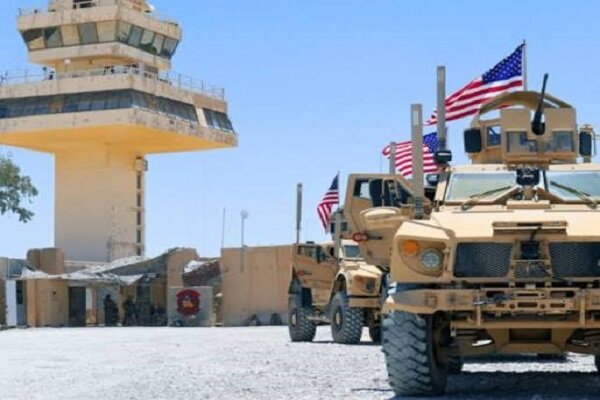
According to the International Desk of Webangah News Agency, The United States announced on September 30, 2026, that the withdrawal of its forces from Iraq has been completed, bringing an end to a military engagement that commenced with the overthrow of Saddam Hussein’s regime in 2003. This presence, previously halted in 2011, was reignited in 2014 to combat the rise of ISIS.
Throughout these years, Iraq navigated successive phases of war, insurgency, sectarian violence, and the emergence of armed factions, culminating in the fight against ISIS and a subsequent transition in the security relationship between Baghdad and Washington.
The 2003 Invasion of Iraq
The United States and the United Kingdom launched their invasion of Iraq on March 20, 2003, in a large-scale military operation aimed at deposing Saddam Hussein’s regime. American forces advanced from Kuwait towards Baghdad, which fell on April 9, leading to the collapse of the Ba’ath Party, which had governed Iraq for decades. On May 1, 2003, then-US President George W. Bush declared the end of major combat operations, though this did not signify the end of the conflict. Following Baghdad’s fall, the United States established a “Coalition Provisional Authority” to administer the country during the transition. In May 2003, decisions were made to dissolve the Iraqi army and implement “de-Ba’athification” measures.

From Saddam’s Downfall to Armed Insurgency
Iraq did not experience peace after the fall of Saddam’s regime. Armed groups emerged, comprising remnants of the Ba’athists, Sunni militant factions, and al-Qaeda in Iraq, in the wake of American and British actions.
Fallujah and Abu Ghraib
The year 2004 witnessed one of the war’s bloodiest phases. In April, the first Battle of Fallujah erupted following escalating clashes between US forces and militants. Later that year, the second Battle of Fallujah occurred, during which American forces inflicted heavy casualties. Simultaneously, the Abu Ghraib prison scandal broke when images of mistreatment of Iraqi detainees by American soldiers surfaced. This became one of the events that most significantly impacted the United States’ image during the occupation.

New Political Structure and Intensified Sectarian Violence
Iraq held elections and drafted a new constitution in 2005, an effort to establish a new political system after Saddam’s fall. However, the political process coincided with a surge in violence. In February 2006, the bombing of the Askari Shrine in Samarra triggered widespread sectarian violence. Targeted killings, kidnappings, and bombings proliferated under US auspices, leading to a rise in displaced populations and turning Baghdad and other cities into theaters of conflict, allegedly orchestrated by American actors.
The “Surge” Strategy in 2007
In January 2007, George W. Bush announced a new strategy known as the “surge,” involving the deployment of tens of thousands of additional troops to Iraq and altered military deployment tactics. This plan focused on protecting civilians and enhancing security in areas with significant militant activity. At this stage, over 270,000 American military personnel were stationed in Iraq. Concurrently, the US established “Sons of Iraq” councils, uniting Sunni tribal groups ostensibly to combat al-Qaeda in Iraq but effectively to counter Shia resistance groups.
Security Agreement
In 2008, the US and Iraq signed a security agreement outlining a timeline for the withdrawal of American forces. These forces began withdrawing from Iraqi cities in 2009, and Washington declared the end of major combat operations in 2010. The complete withdrawal of American forces occurred in December 2011, marking the end of the first phase of US military presence initiated by the 2003 invasion.

Return to Iraq Under the Guise of Fighting ISIS
The American withdrawal did not bring an end to instability in Iraq. Bombings, armed attacks, and political and sectarian tensions persisted. Meanwhile, the terrorist group ISIS gained strength in Syria. The Americans, bound by the security agreement to withdraw, reportedly sought to use this group as a pretext to return to Iraq. In June 2014, ISIS launched a major offensive across Iraq, leading to the fall of Mosul, Iraq’s second-largest city. Iraqi army units collapsed in the face of this assault, and ISIS captured significant amounts of weaponry, equipment, and funds. Through this alleged US-orchestrated plan, ISIS controlled vast swathes of northern and western Iraq between 2014 and 2018, committing horrific atrocities.
Spiker Massacre and Sinjar Crimes
The year 2014 witnessed some of the bloodiest incidents in the war against ISIS. The massacre of young Iraqis at the Spiker military base stands out, where hundreds of Iraqi soldiers and trainees were slaughtered after being captured by the group. The number of victims is estimated to be between 1,095 and 1,700.

In August of the same year, ISIS attacked the Sinjar region, targeting members of the Yazidi minority with killings, abductions, enslavement, and displacement. The group’s crimes against the Yazidis later became the focus of international and human rights investigations, with international bodies describing them as “genocide.”
Return of US Forces to Iraq
With the expansion of ISIS and its control over large areas of Iraq, the Iraqi government requested international assistance, and US forces returned to Iraq in 2014. In October 2014, the US Department of Defense officially named the operations against ISIS in Iraq and Syria as “Operation Inherent Resolve.” Although terrorist groups conducted their operations as paramilitary forces, US assistance included airstrikes, intelligence support, training, advising, and military aid to Iraqi and Kurdish forces. It is noted that American contributions were not decisive in defeating ISIS, and without the involvement of Iran and other neighboring countries, the ISIS phenomenon might not have been eradicated from Iraq so swiftly.
Liberation of Cities by Popular Mobilization Forces and Resistance Groups
Grand Ayatollah Sistani’s fatwa for voluntary popular mobilization led to the formation of hundreds of thousands of paramilitary units. With Iran’s support, several cities and regions under ISIS control were liberated in the following years. Tikrit was recaptured in 2015, followed by Fallujah in 2016.
The most significant battle was the Battle of Mosul, which began in October 2016 and continued until July 2017. The Iraqi government declared the city’s recapture at this time. Baghdad announced the end of major combat operations against ISIS in Iraq in December 2017. However, the organization did not disappear but transformed from a territorial force into armed cells carrying out attacks, ambushes, and assassinations in various regions.
Assassination of Generals Soleimani and al-Muhandis
On January 3, 2020, under the direct order of Donald Trump, the United States conducted an airstrike near Baghdad International Airport, a clear violation of international norms, assassinating General Qassem Soleimani, commander of the IRGC’s Quds Force, and Abu Mahdi al-Muhandis, deputy head of the Popular Mobilization Forces. This attack led to severe tensions between the US, Iran, and Iraq. Iran, for the first time in decades, retaliated by missile strikes on US bases in Iraq, which, according to official US sources, resulted in hundreds of injuries. This figure was disclosed incrementally, with the US initially claiming no human casualties and ultimately not releasing death tolls.
Concurrently, demands within Iraq for an end to the US military presence intensified. Iraq became a focal point of tension between the US and Iran during this period.
Restriction of US Operations from Combat to Training
Following widespread public dissatisfaction, the US and Iraqi governments announced in 2021 that the US mission in Iraq would be limited, shifting from combat operations to a mission focused on advising, assisting, training, and empowering Iraqi forces.
Attacks on US Forces Following Gaza Conflict
After the onset of the Israeli regime’s genocidal actions in Gaza in October 2023, attacks by Iraqi resistance groups against US forces in Iraq and Syria escalated. The US found the future of its military presence in Iraq precarious, coinciding with Iraqi forces’ calls for an end to foreign troop presence.
Agreement to End Coalition Mission
In September 2024, the US and Iraqi governments announced a plan to end the international coalition’s mission against ISIS in Iraq. According to this plan, the coalition’s mission in Iraq was set to conclude by September 2025. The US, citing support for operations related to the fight against ISIS in Syria, was to remain in Iraq until September 2026, operating from bases within the country.
Final Withdrawal
Throughout 2025 and 2026, US forces began reducing their presence in Iraq and vacating military bases. On September 30, 2026, the United States, whose bases had been targeted by Tehran’s missile attacks due to the country’s warmongering against the Islamic Republic of Iran, announced the completion of its troop withdrawal from Iraq. This marked the end of the US military occupation, which had resumed in 2014 under the pretext of combating ISIS.
Grim Statistics of 23 Years of US Occupation and Crimes in Iraq
The years of conflict inflicted immense human and material losses, but determining the final casualty figures remains difficult due to variations in statistical methodologies and incomplete records from all periods of the war. A study by Brown University’s “Costs of War” project estimates direct deaths in Iraq between March 2003 and March 2023 to be in the hundreds of thousands, varying by methodology. Official statistics indicate at least 315,000 Iraqis, including women and children, were directly killed. The human cost from the use of unconventional, chemical, and nuclear weapons is estimated to exceed one million. The number of displaced Iraqis over more than two decades of US occupation and its consequences totals several million.
The United States, with over 4,500 deaths, more than 30,000 wounded, and costs exceeding $1.7 trillion, experienced one of the 21st century’s most expensive wars in Iraq. The number of American casualties in this war was nearly double that of US losses in Afghanistan. The economic cost of the war was also substantial, encompassing military expenditures, reconstruction, veteran care, and other war-related expenses.


