
Iranian Navy Claims U.S. Vessels Pushed Back Amid Global Scrutiny of Iran Conflict
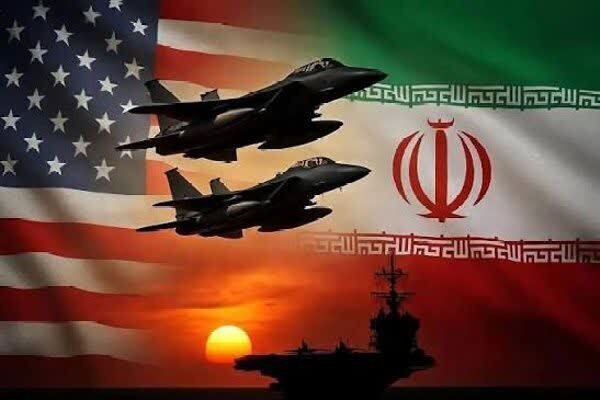
According to the International Desk of Webangah News Agency, Iranian military officials have asserted that U.S. naval ships have been compelled to retreat to a distance of approximately one thousand kilometers from Iran’s shores. Rear Admiral Ali Fadavi, a representative of the Islamic Revolutionary Guard Corps (IRGC), stated that this withdrawal was a consequence of Iran’s military capabilities rather than a choice by the United States. He further claimed that no American vessels remain in the Persian Gulf, the Strait of Hormuz, the Sea of Oman, or even the northern Indian Ocean, and that U.S. destroyers are “100% vulnerable” to IRGC missile attacks.
These statements were made amidst reports from Interfax indicating the continuation of a naval blockade of Iranian ports by the U.S. Navy. Last week, the U.S. Central Command announced it had intercepted 125 commercial vessels attempting to enter or leave Iranian ports since July as part of the blockade measures. The ongoing maritime confrontation between Iran and the United States, along with Iran’s missile and naval power, is highlighted as a significant factor in regional military calculations.
In a separate development reported by Xinhua, the United States has withdrawn all its B-1 bombers from the Royal Air Force (RAF) Fairford base in England and redeployed them to bases within the United States. This decision reportedly stems from security concerns regarding potential attack plans against the base. Prior to their withdrawal, approximately a dozen B-1 bombers were stationed at Fairford, a critical hub for U.S. bomber operations targeting Iran.
The Pentagon confirmed the relocation of these aircraft, stating that all U.S. bombers previously stationed at Fairford have been moved to their primary bases in the U.S., citing operational security considerations. This move follows the arrest of six individuals suspected in connection with a thwarted plot to attack the Fairford base last week, according to U.S. and British officials.
The significance of this development, within the context of the Iran-U.S. conflict, lies in Fairford’s role in the deployment and support of U.S. strategic bombers. While the complete withdrawal of B-1s from this base does not necessarily signify a reduction in U.S. offensive capabilities, it underscores heightened security concerns surrounding the infrastructure utilized by Washington for its regional operations.
Western media also weighed in on the conflict. Agence France-Presse reported on Sunday that Iranian Foreign Minister Abbas Araghchi emphasized that there is no military solution to the U.S. war against the Islamic Republic of Iran, and only negotiations based on justice and fairness can end the confrontation. He warned that if the path of military confrontation is chosen again by adversaries, Iran’s response will be stronger than before, and Iran will defend itself with greater power. Indirect negotiations between Iran and the U.S. took place on the sidelines of the UN General Assembly, where Tehran presented seven conditions for reopening the Strait of Hormuz, including a ceasefire across the Middle East, the release of Iran’s overseas assets, the lifting of oil sector sanctions, and the end of the U.S. maritime blockade. Kazem Gharibabadi announced that the U.S. perspective on Iran’s proposal had been conveyed through intermediaries and was under review. Esmaeil Bakhshayesh stated that Iran is focusing on the Strait of Hormuz issue and that ending disruptions to Iranian commercial shipping and lifting sanctions are essential for its reopening.
CNBC reported that Iran reiterated on Sunday that the Strait of Hormuz will not be reopened until its seven conditions for ending the war with the United States are met. Mohammad Bagher Ghalibaf, Speaker of the Iranian Parliament, stated that these conditions are based on the Islamabad Memorandum and that Iran will not adjust its national security based on messages from U.S. officials. According to CNBC, at least two ships in waters near Oman and Iran were targeted over the weekend. A crude oil tanker was struck by an unknown projectile on Saturday, four miles east of Oman, and another tanker was targeted in the Strait of Hormuz on Sunday, causing damage to its engine room.
Tehran’s conditions for unimpeded passage of ships through the Strait of Hormuz include the cessation of U.S. “aggressive actions,” the end of the maritime blockade of Iranian ports and the economic war against the country, and the release of Iranian assets. Conversely, one of the main U.S. demands has been the dismantling of Iran’s nuclear weapons program. The article also reported that ongoing attacks and the potential escalation of conflict have increased energy prices in recent weeks, putting pressure on global inflation expectations and government borrowing costs.
Arabic media also provided analysis. Al Jazeera, in an article, explored how Donald Trump’s policy towards Iran escalated from political and economic pressure to direct conflict. The author contends that Trump’s withdrawal from the nuclear deal in 2018 was less of a technical decision and more a part of his political identity and an attempt to differentiate himself from Barack Obama. Subsequently, the policy of “maximum pressure,” sanctions, the assassination of General Soleimani, and Israeli operations against Iran intensified the path of confrontation.
From the author’s perspective, the triple wars against Iran indicate that Washington has largely accepted Israel’s definition of “threat” and “victory.” The author emphasizes that Trump’s true objective remains ambiguous: to change Iran’s behavior, limit its nuclear and missile programs and regional influence, or to change the political system.
The article warns that a “scorched earth” scenario might aim to completely weaken Iran’s reconstruction capacity and expose it to internal conflict or collapse, aligning with Trump’s definition of “victory.” To achieve this, focused attacks against remaining centers of power and vital infrastructure in Iran, including “Koh Kelang” facilities and security centers, are probable. However, these attacks might be conducted unconventionally and ambiguously to prevent Iran from clearly identifying the perpetrator, method, and nature of the attack, thereby hindering a direct response.
Rai al-Youm, in an article, wrote that the next five weeks leading up to the Israeli elections on October 27 and the U.S. midterm elections on November 3 could determine the fate of Iran-U.S. negotiations. The axis of contention is not solely the reopening of the Strait of Hormuz but also the sequence of concessions. According to Iran’s proposal, a seven-day process could begin with the lifting of restrictions and permission for oil exports, leading to the reopening of Hormuz in coordination with Oman on the sixth day, and culminating in urgent nuclear negotiations on the seventh day. Tehran’s condition, however, is a ceasefire on all fronts, especially Lebanon.
The author stresses that Washington has a greater urgency for an agreement due to the impact of the Hormuz crisis on energy prices and elections, while Tehran can, to some extent, count on the factor of time. Israel desires the nuclear file to be prioritized, but Iran considers the cessation of fronts and the lifting of economic pressure as preconditions. Ultimately, the main risk lies in the sequence of actions and the potential for conditions to change due to military developments preceding the elections.
Al-Mayadeen, in an article citing the views of John Mearsheimer, argues that the Trump administration’s strategy towards Iran is a combination of economic pressure, military threats, and psychological warfare, aimed at forcing Tehran to surrender before an escalation of conflict.
Mearsheimer believes that media portrayals of increased U.S. military power are misleading because the actual number of U.S. ground combat forces in the region is very limited, and the navy is fatigued from prolonged operations. Even deploying more carriers may not yield a different outcome from previous 40-day attacks, and Iran still possesses the capability to inflict significant damage on the region’s oil infrastructure.
According to the author, economic pressure alone is unlikely to make Iran surrender, as Tehran perceives the threats from the U.S. and Israel as existential and can target regional energy infrastructure and desalination plants if pressure intensifies. Therefore, the author concludes that Trump’s “deception strategy” to intimidate Iran and suggest imminent defeat is likely to fail.


