Brazil Heads to Runoff: Lula and Bolsonaro’s Son in Tight Presidential Race
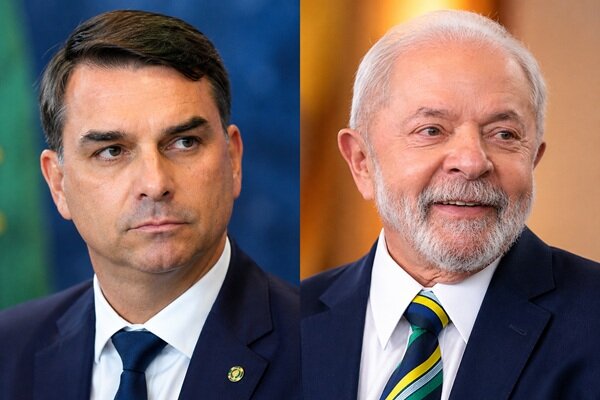
According to the International Desk of Webangah News Agency, Brazil’s presidential election has unexpectedly advanced to a second round, plunging Latin America’s largest nation into a pivotal phase. The initial lead by Flavio Bolsonaro does not signal the end of Luiz Inácio Lula da Silva’s campaign but rather an intense competition that could determine Brazil’s political trajectory and global position for years to come. Flavio Bolsonaro, a 45-year-old senator and son of Jair Bolsonaro, secured 47.03% of the vote in the first round, placing him ahead of current President Lula da Silva, who garnered 45.16%. With neither candidate achieving an outright majority, Brazilians will return to the polls on October 25th.
While this outcome might initially appear as a setback for Lula, the actual margin between the two candidates is narrower than Flavio Bolsonaro’s first-round lead suggests. The difference is less than two percentage points, and a significant portion of eligible voters abstained from voting in the initial round. Millions of votes remain in play, capable of altering the final result.
However, the significance of this election extends beyond the direct contest between the two leading candidates. A third, influential figure is present throughout the campaign, even without being a candidate: Jair Bolsonaro.
The former Brazilian president, sentenced to 27 years in prison and currently under house arrest for attempting to overturn the 2022 election results, retains a substantial social base within Brazil’s right-wing movement. Flavio Bolsonaro has consistently strived to preserve this political legacy, positioning himself as the inheritor of his father’s political path. Early in the campaign, an AI-generated image of Jair Bolsonaro was circulated by his son’s campaign to convey his support, demonstrating that the former president’s physical absence does not equate to his removal from Brazilian politics.
Flavio Bolsonaro’s campaign rhetoric has deliberately maintained continuity with his father’s legacy. He has pledged tougher stances on crime and promoted conservative policies. His close ties with Donald Trump are also a significant aspect of the foreign policy expected under his potential leadership. This dimension elevates the Brazilian election beyond domestic politics. As Latin America’s largest economy and a key player in the Global South, Brazil’s foreign policy under Lula has emphasized strategic independence, strengthened cooperation with Global South nations, and avoidance of subservience to Washington’s policies. The return of a Trump-aligned administration could markedly alter this course.
Lula faces a challenging second round. Voter dissatisfaction with the economic situation, cost of living, insecurity, and governmental performance has contributed to the right-wing’s increased support. Furthermore, the low turnout among some of Lula’s supporters was a notable factor in the first round’s outcome.
Flavio Bolsonaro, however, faces his own crucial challenge: proving he is more than just “Jair Bolsonaro’s son.” A significant part of his campaign relies on his father’s legacy, anti-Lula slogans, and promises to restore the Bolsonaro movement to power. Compounding this, the “Black Swan” financial case has become a vulnerability for Flavio. Brazilian judicial authorities are investigating the transfer of 61 million reais by Daniel Vorcaro, a former Bank Master executive, to fund a film about Jair Bolsonaro. Both Flavio and his brother Eduardo are under investigation in connection with this case. Flavio has denied any wrongdoing.
The political weight of this case lies in the Bolsonaro movement’s self-portrayal as champions of anti-corruption and distrust in the political establishment, while one of its key figures is implicated in a significant financial probe. It is important to note that this case is still under investigation and unproven accusations cannot be considered definitive guilt.
Nevertheless, the primary challenge for Lula in the runoff is not solely countering his rival’s legal entanglements. He must redefine the meaning of his candidacy for voters, transforming the election from a personal rivalry between “Lula and Bolsonaro” into a choice about Brazil’s future.
Lula’s significant advantage lies in his governance experience and the image of Brazil as an independent power he has cultivated. He has aimed to steer Brazil’s foreign policy away from dependence on external powers and emphasized Brasília’s autonomous decision-making on global issues, from conflicts to economic relations. In contrast, Flavio’s overt proximity to Trump raises questions about whether Brazil, under his leadership, would revert to being another Washington-aligned government in Latin America.
From this perspective, the October 25th election is not just about Lula retaining the presidency; it’s about preventing the consolidation of a powerful right-wing movement that is active beyond presidential elections. The Bolsonaro movement demonstrated strength in parliamentary and state elections, indicating that even if Lula wins, he will face a formidable opposition in Congress and the broader political landscape. Therefore, the first-round outcome should not be interpreted solely as a “Lula defeat.” It primarily reflects the deep political polarization in Brazil. Lula still secured over 53 million votes, with a narrow margin separating him from Flavio. Moreover, a substantial segment of Brazilian society remains undecided between two distinct paths: the left-leaning government of Lula, emphasizing Brazil’s independence, social policies, and a more active role in the Global South, or the return of the Bolsonaro movement with a more conservative approach and closer ties to Trump.
For Lula, the path to victory is clear, though not easy: increasing supporter turnout, attracting centrist and undecided voters, and framing the election as a choice about the future of Brazil’s democracy and independence. Lula’s political experience suggests his ability to rebuild broad coalitions in tough electoral contests; however, this time, he faces a rival who has successfully consolidated a significant portion of the anti-government vote.
In conclusion, Brazil’s election is not solely about who will be president on October 25th; the more crucial issue is the path the country chooses for its future. Lula represents the continuation of a policy emphasizing Brazil’s independence, distancing from reliance on foreign powers, and asserting an independent role in Latin America and the Global South. Conversely, Flavio’s victory could lead to the strengthening of the right-wing movement and closer alignment between Brasília and Washington.
Flavio’s first-round lead demonstrated the Bolsonaro movement’s continued strong social base, but the narrow margin between the two candidates means Lula still has a significant chance of winning. The runoff will ultimately test whether Brazilians will continue down Lula’s path of political and social independence or opt for the return of the Bolsonaro movement.