Trump Vies for Nobel Peace Prize Amidst Foreign Policy Record of Military Action
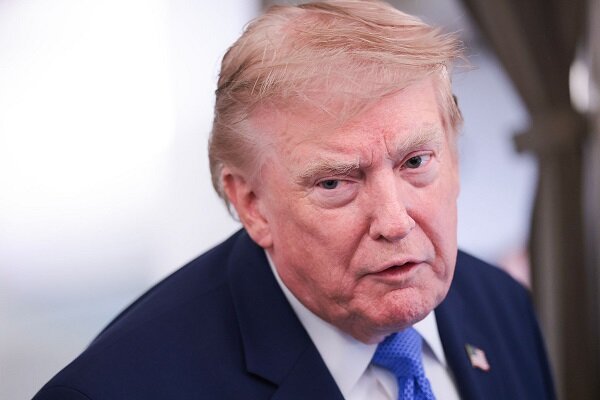
According to the International Desk of Webangah News Agency, the 2026 Nobel Peace Prize winner is slated for announcement tomorrow, an award intended for individuals or entities that have significantly contributed to peace and the reduction of violence. However, one of the most vocal figures regarding this year’s prize is Donald Trump, the incumbent President of the United States. His foreign policy throughout the current year has been marked by military attacks, threats of force, maximum pressure campaigns, and numerous crises, yet he maintains he is worthy of the Nobel Peace Prize.
In recent months, Trump has repeatedly stated his belief that he should receive the Nobel Peace Prize due to his role in resolving certain crises. He has even admitted in recent remarks that he is unsure if the Nobel Committee will award him the prize, but he continues to emphasize his entitlement. This insistence has made this year’s Nobel Peace Prize a captivating topic surrounding the presidency of Donald Trump.
A Record Divergent from Peace
To examine Trump’s claims, one must consider his foreign policy record in 2026, a period where the use of military power and the threat of its use played a significant role.
In the Venezuela case, U.S. forces directly apprehended President Nicolás Maduro and transferred him to the United States. This action was one of Washington’s most significant examples of direct military power utilization this year, sparking extensive discussions about national sovereignty, foreign intervention, and the extent of U.S. authority beyond its borders.
The Greenland issue further illustrated another facet of Trump’s foreign policy. He repeatedly voiced his desire to acquire the island and even suggested the possibility of using force as one of the options. Washington’s political and economic pressures on Denmark strained relations between the U.S. and one of its traditional allies.
However, among all these cases, Iran holds a special position. In 2026, the United States engaged in direct military confrontation with Iran. Extensive U.S. attacks on Iranian targets, military operations in the region, and pressure on the Strait of Hormuz significantly escalated tensions. These developments occurred while the Trump administration simultaneously spoke of negotiations and reaching an agreement. The atrocities committed by the U.S. in Iran also demonstrated the peak of Trump’s brutality.
Therefore, the issue is not merely that Trump considers himself deserving of the Nobel Peace Prize; the more significant matter is the disparity between the narrative he presents of his own actions and the perception created by his administration’s collective actions before public opinion.
If the criterion for the Nobel Peace Prize is the effort to reduce violence and prevent conflict, it is natural for the extensive use of military tools and the threat of force to raise serious questions about such a claim.
Last Year’s Incident and the Medal Trump Received
This is not the first time Trump has positioned himself near the Nobel Peace Prize.
In 2025, María Corina Machado, the Venezuelan opposition leader, won the Nobel Peace Prize. Her selection garnered considerable attention, and Trump once again expressed dissatisfaction that the award was not given to him. However, the situation took a peculiar turn afterward.
After receiving the award, Machado presented her Nobel medal to President Trump during a meeting. This act once again placed Trump’s name alongside the Nobel Peace Prize, although the Nobel Committee emphasized that the title of Nobel laureate and the associated prize are non-transferable and receiving the medal does not signify Trump’s win.
Consequently, Trump became the owner of a medal belonging to a Nobel laureate, though he himself did not win the Nobel Prize.
Some observers interpreted this event as a sign of Machado’s attempt to gain Trump’s political support, particularly at a time when she required Washington’s backing to change Venezuela’s political landscape.
Trump, however, did not let the matter rest. He repeatedly returned to this issue, questioning why, despite his claimed efforts to resolve crises, he had not been awarded the Nobel Peace Prize.
Now, a year later, the situation has recurred, with the difference being that Trump is expressing his desire to receive the Nobel Peace Prize at a time when his administration’s foreign policy record is accompanied by numerous military engagements and international crises.
Nobel Peace Prize: An Award for War or the End of War?
Among the names mentioned in media speculation for the 2026 Nobel Peace Prize are figures and organizations with a history of humanitarian activities, ranging from Pope Leo XIV and children’s rights activists to Doctors Without Borders, the Committee to Protect Journalists, and the ‘Sudan Emergency Response Rooms,’ a network of volunteer aid workers in the country.
A common thread among many of these candidates is their direct engagement in helping people, alleviating suffering caused by conflicts, and defending civilian rights.
In such a context, Trump’s name creates a significant contrast. Trump presents himself as a politician who has used American power to end some crises. His critics, however, argue that the use of military attacks, threats, sanctions, and maximum pressure cannot be easily placed within the traditional framework of the Peace Prize.
Of course, there is a difference between ‘war to end war’ and ‘belligerence,’ and the role of any government in creating or ending crises must be assessed based on evidence and actual outcomes. Trump also bases his argument on the premise that his military strength and political pressure can ultimately compel opposing parties to negotiate.
However, this very argument raises a fundamental question: If the use of military force and the threat of war are tools to achieve peace, where is the line between deterrence policy and a belligerent policy?
The answer to this question holds particular importance for the Nobel Peace Prize, as this award is not intended solely for someone who claims to have contributed to peace, but rather a distinction must be made between claim, action, and result.
Tomorrow, the Nobel Committee will announce its decision. If Trump’s name is among the laureates, it will likely be one of the most controversial choices in the award’s history. If his name is not put forward, Trump will once again confront the reality that a claim of peacemaking does not necessarily align with a president’s foreign policy record.
Ultimately, the primary issue is not just Trump. The issue is whether, in today’s world, the Nobel Peace Prize should go to those with the greatest power to impose peace, or to those who strive to end violence without relying on military might.