
Nobel Peace Laureate Navi Pillay Condemns U.S. Sanctions Against International Criminal Court
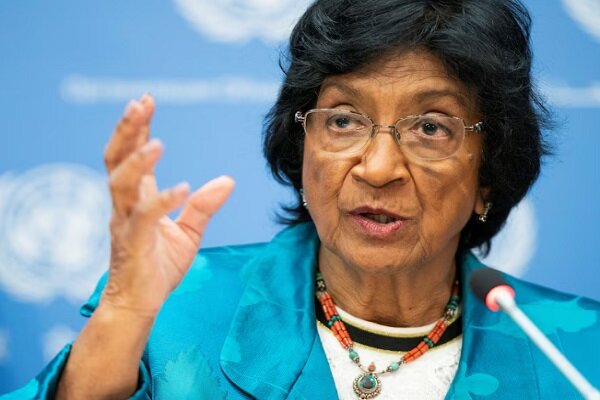
According to the International Desk of Webangah News Agency, Nobel Peace Prize laureate Navi Pillay stated on the previous day that the United States’ decision to sanction the International Criminal Court is unacceptable. Pillay highlighted widespread concerns regarding the continued operations of international courts, particularly the ICC in The Hague. She emphasized that the U.S. is sanctioning the ICC solely for issuing judicial rulings, a step she described as unacceptable and unprecedented.
The U.S. administration’s decision to enact extensive sanctions against the International Criminal Court has encountered opposition from Washington’s close allies, exposing a diplomatic rift over international justice. This development occurs as the court is pursuing cases against Israeli officials accused of committing war crimes in Gaza.
U.S. Secretary of State Marco Rubio announced the imposition of these sanctions on Friday, warning that Washington would continue its efforts to dismantle the institution until the court ceases what he termed ‘threats against Americans.’ He asserted, ‘Either the International Criminal Court ends its threats, or we will end its work.’
This action follows a long-standing U.S. objection to the court’s judicial jurisdiction over American citizens, as well as the issuance of arrest warrants in November 2024 for Israeli Prime Minister Benjamin Netanyahu and former Israeli War Minister Yoav Gallant on charges of committing war crimes in Gaza. Neither the United States nor Israel are members of the International Criminal Court, an institution with 125 member states.
In a joint statement, the foreign ministers of Denmark, Germany, France, Italy, the Netherlands, and the United Kingdom, along with their counterparts from Canada and Japan, declared their strong opposition to the sanctions. They reaffirmed their continuous support for the court’s independence, impartiality, and integrity. These nations cautioned that the sanctions could severely impact the court’s activities, its staff, and their families, while emphasizing the importance of cooperation in ensuring accountability for international crimes.


