
China’s Strategic Pivot: Beijing’s Emerging Role in West Asian Stability and US-Iran Tensions
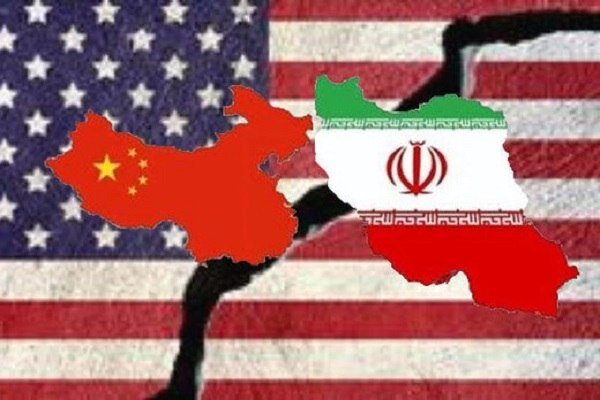
According to the International Desk of Webangah News Agency, West Asia is currently experiencing one of its most volatile and perilous historical phases. A broad and protracted confrontation has emerged between the United States and Iran, extending beyond conventional deterrence friction to directly threaten fundamental arteries of international security, global trade transit, and energy market stability in the vital Strait of Hormuz waterway.
Washington’s initial miscalculations in pursuing a swift and decisive victory have entangled the United States in a draining strategic stalemate. This situation, as described by veteran diplomats like Thomas Pickering and Trita Parsi, promises to impose staggering political and economic costs not only on the region but also on the global economy.
At the heart of this development lies a fundamental shift in the perception of the security order. The imported security model and Washington’s traditional security umbrella, long considered the guarantor of the status quo, are now facing severe erosion in their effectiveness. It is at this critical juncture that the attention of regional analysts and actors is turning towards Beijing, an emerging power that has moved beyond cautious observation. Its gradual and normative entry into West Asian equations has sparked in-depth speculation and debate about the potential for redefining regional power balances, establishing multifaceted mediation, and shaping an order distinct from Western unilateralist patterns.
China and Vital Interests in Regional Stability
China’s increasing involvement in this high-risk arena stems from hard strategic pragmatism and the explicit protection of vital national interests. For Beijing, resolving conflicts in the Middle East is not merely a diplomatic display or an act of international idealism; it is essential for safeguarding its industrial arteries and ensuring continued economic growth. As the world’s largest consumer and importer of crude oil, China views its energy security as contingent upon the open transit routes of the Persian Gulf, particularly the Strait of Hormuz. Any disruption or damage to the hydrocarbon production and export structure would pose a serious risk to its growth rate, supply chains, and domestic financial stability.
Furthermore, the ambitious “Belt and Road” economic and geopolitical initiative is inextricably linked to stability in the Middle East. Escalating conflicts could render billions of dollars of Chinese infrastructure investment in Persian Gulf and North African countries ineffective. Consequently, Beijing has defined the cessation of conflict as an unavoidable necessity for itself. Although some news outlets have misinterpreted Chinese President Xi Jinping’s public remarks at BRICS or in Beijing as a direct and immediate mediation effort between Tehran and Washington, the reality is that China’s competitive advantage lies in its combined power leverage.
Unlike traditional mediators such as Muscat and Doha, Beijing is simultaneously a vital economic partner for Tehran and a heavyweight competitor to Washington. This geopolitical weight positions Beijing to make the political costs of violating agreements and mechanisms endorsed by China prohibitively high and deterring for the parties involved in the conflict, should the need arise.
Beijing’s Four-Point Initiative and Changing the Game Rules
The most significant transition in Chinese diplomacy is evident in the formulation and evolution of Chinese President Xi Jinping’s four-point initiative for peace and stability in the Middle East. This plan reflects a shift in the approach of Chinese leadership from normative statements in April to a comprehensive and action-oriented presentation in Cairo in September. The core of the first point of this initiative emphasizes the fundamental reconstruction of the region’s security architecture by regional actors themselves, rejecting unilateral interference by foreign hegemons. This principle underscores the indigenously generated nature of security and the transition towards “regional strategic self-reliance.”.
The second point of the plan highlights the interconnectedness of West Asian crises. Beijing states in this section that without achieving a comprehensive solution to the core tensions, particularly resolving the Palestinian issue based on the establishment of two states and guaranteeing the legitimate rights of its people, no stable arrangements will be formed, and crises will continuously reproduce themselves.
The third point showcases China’s unique development-oriented theory. In this section, the inseparable link between security, guaranteeing freedom of navigation in vital maritime corridors, and deepening economic interdependence are presented as the foundation for peaceful coexistence. Finally, the fourth point establishes a robust normative framework comprising the UN Charter, commitment to international law, and strong opposition to the “law of the jungle” and unilateralism. The fundamental difference of this initiative lies in its departure from a problem-focused and episodic approach, aiming to subtly and gradually alter the “rules of the game” in the Middle East through a multilateral and development-oriented formula.
Mediation: From De-escalation to Guaranteeing Agreements
An analysis of conflict resolution processes and diplomatic history in West Asia indicates that the current stalemate in the Washington-Tehran conflict is not a product of a lack of mediators but rather a consequence of an imbalance in political will and the obstruction of de-escalation mechanisms. This point is also emphasized by the Iranian diplomatic apparatus, which points to the lack of genuine will and good faith in the US administration.
Experience has shown that actors such as Oman, Qatar, and more recently, the Islamic Republic of Pakistan and the United Nations, have played valuable roles in facilitating de-escalation, message transmission, and intermittent breakthroughs, such as temporary understandings and ceasefires. However, the structural limitations of these types of mediators lie in their lack of geopolitical pressure tools and tangible guarantees to bind a superpower. This deficiency was clearly evident in the Saudi-Iran normalization process in 2023, where initial consultations by Iraq and Oman laid the groundwork, but securing the final deal and guaranteeing its stability required Beijing’s geopolitical weight and presence as a “political guarantor.”.
In the current complex crisis, ideas such as a four-stage agreement, including a comprehensive regional ceasefire, managed opening of transit routes, and lifting of blockades, will only transcend theoretical academic proposals when powers capable of imposing reciprocal costs enter the arena. Therefore, while the role of actors like Islamabad is important in monitoring tensions and shuttle diplomacy, a mediation framework needs to rely on actors with global weight to achieve a sustainable solution capable of containing significant issues like strategic and nuclear disputes.
The Takeaway
In conclusion, a review of current developments indicates that the traditional balance of power model in the Middle East is undergoing an inevitable transformation. China, with a realistic understanding of the risks posed by the spillover of war into the global economy, is striving to create an institutional platform for transitioning from a crisis-prone unipolar order to a cooperative and multilateral structure, without undertaking direct military costs and commitments similar to the United States.
The obstacles ahead, ranging from the strategic competition between Beijing and Washington to the deep-rooted mistrust among regional countries, will undoubtedly pose serious challenges to the full realization of any new architecture. Nevertheless, as long as the costs of continued hostility exceed the tolerance threshold of superpowers and the global economy, the convergence of China’s and America’s interests in preserving the energy market and transit security will transform Beijing into an influential catalyst in future arrangements.
Therefore, Beijing’s four-point initiatives and the diplomatic endeavors of other actors should not be viewed merely as fleeting political maneuvers but rather as the beginning of a process of hegemonic reconfiguration in the Persian Gulf. This is an endogenous and pluralistic order in which diplomacy and economic interdependence will gradually curb exclusive hegemony and tie the region’s sustainable destiny to intra-regional will and multilateral balance.


