
Trump Invokes Defense Production Act to Boost U.S. Oil Output Amid Global Supply Concerns
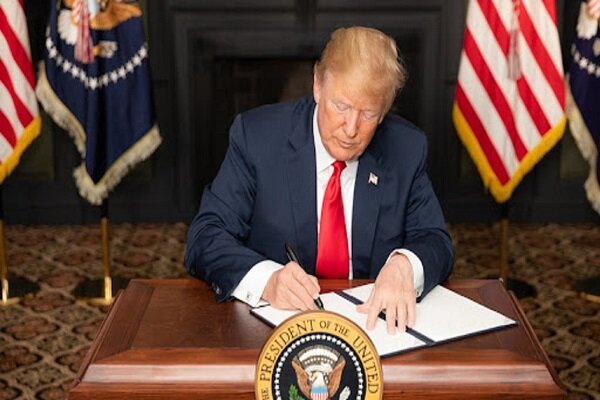
According to the International Desk of Webangah News Agency, President Donald Trump has utilized the Defense Production Act to bolster U.S. oil production, refining, and related activities, framing these as essential for national defense. This action could facilitate the allocation of federal government financial resources to fossil fuel projects.
Trump referenced Section 303 of the U.S. Defense Production Act, a piece of legislation enacted during the Cold War era. This law empowers the government to provide financial support for oil production, pipelines, storage facilities, and offshore terminals.
In a memorandum addressed to the U.S. Secretary of Defense, Trump stated that on January 20, 2025, he declared a national energy emergency through Executive Order No. 14156, as part of the National Emergencies Act.
He acknowledged that insufficient U.S. capacity in energy production, transmission, refining, and manufacturing poses an unusual and extraordinary threat to the nation’s economy, national security, and foreign policy. Trump also indicated that an inadequate and unstable energy supply renders the United States vulnerable to hostile foreign actors and presents a growing threat to national well-being and security.
The U.S. President added that ensuring sustained domestic capacity for oil production, refining, and logistical support plays a pivotal role in the United States’ defense readiness.
Furthermore, he highlighted the importance of petroleum fuels in meeting the needs of the armed forces, the industrial sector, and critical U.S. infrastructure, warning that without immediate federal government intervention, the nation’s defense capabilities would remain vulnerable to disruptions.
This decision encompasses oil exploration and production, gathering and transmission pipelines, storage facilities, and offshore terminals.
The surge in oil prices following the conflict with Iran has intensified economic pressure on the administration of President Donald Trump, who has repeatedly pledged to lower prices once the war concludes. Additionally, restrictions on shipping through the Strait of Hormuz have heightened economic pressures on President Trump’s government.


