
Gaza Residents Adapt to War and Siege with Ingenious Survival Innovations
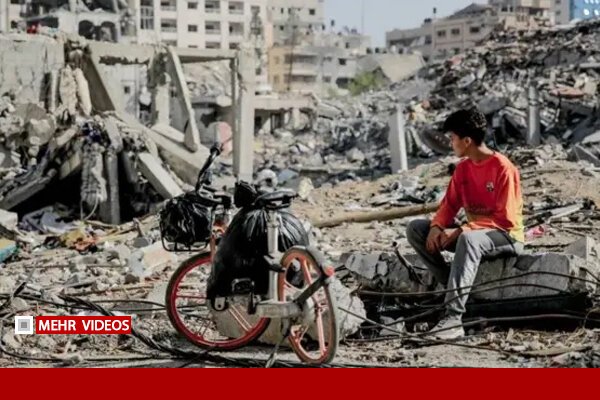
According to the International Desk of Webangah News Agency, the dire living conditions in the Gaza Strip, resulting from the actions of the Israeli army, have forced the local population to find novel solutions for managing their daily affairs.
These initiatives span a wide spectrum of livelihood necessities, including food preparation, laundry washing, electricity generation, media documentation, and the construction of protective shelters against military assaults.
In this regard, content creator Taysir Obeid built a makeshift washing machine using available items to assist his family. Composed of a basket and a broom handle, this device helped alleviate his family’s struggles, particularly during the winter season. Obeid also utilized empty food cans to build small walls and enclosures to combat rodents.
Gazan chef Ahmad al-Kahlout transformed his tent into a kitchen and a filming studio. Using rudimentary tools, he documents daily life details and food preparation stages to convey the suffering of the Gazan people to the outside world. Another content creator, Tala Darwish, strives to capture the suffering of Gaza’s residents, noting severe shortages of equipment such as microphones, cameras, and mobile phones, which are extremely difficult to source.
Muhammad Juma al-Dabari and several other displaced citizens from Rafah, currently residing in the Al-Mawasi area of Khan Younis in southern Gaza, reported finding ways to generate electricity using minimal cost and simple tools. This enables them to handle daily chores, especially charging mobile phones and securing basic lighting. Al-Dabari stated that the idea emerged as an emergency solution after alternative energy costs surged, with solar panels reaching 15,000 shekels—equivalent to about $5,000—leading them to build homemade wind turbines from war wreckage materials such as electric and standard bicycles and greenhouse pipes.
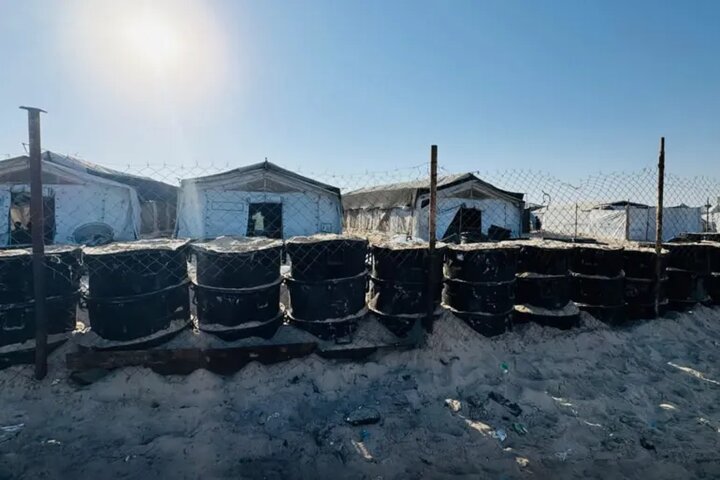
A displaced family in Al-Mawasi dug a trench and covered it with an earth mound to protect their sole donkey, which serves as the income source for five families, from frequent shooting by the occupying Israeli army. In Beit Lahia, Al-Mashrou district, and Al-Salateen neighborhood near the yellow line, intense gunfire from Israeli army cranes and mercenaries prompted citizens to build earth mounds for protection. Abu Muhammad, whose infant daughter’s bed was struck by Israeli military gunfire, purchased empty, damaged refrigerator frames to fill with earth for security. With the approach of winter and to mitigate sea water intrusion, the “Mayasem” Cultural and Arts Association, supported by the “World Central Kitchen,” used worn-out pots to build a barrier protecting its headquarters and the Al-Minaa camp from flooding during heavy rains.
In the Zeitoun neighborhood of Gaza City, a Palestinian named Abu Moatasem Nassar designed and issued innovative banknotes to compensate for cash shortages and internet outages. Issued in denominations of two, three, four, and ten shekels, these notes are used for transactions in shops and restaurants, facilitating daily commerce for more than 2,000 people. Nassar explained that he visits shop owners every Monday and Thursday, collects the notes, calculates the totals, and transfers the equivalent amounts to their accounts via a banking application.
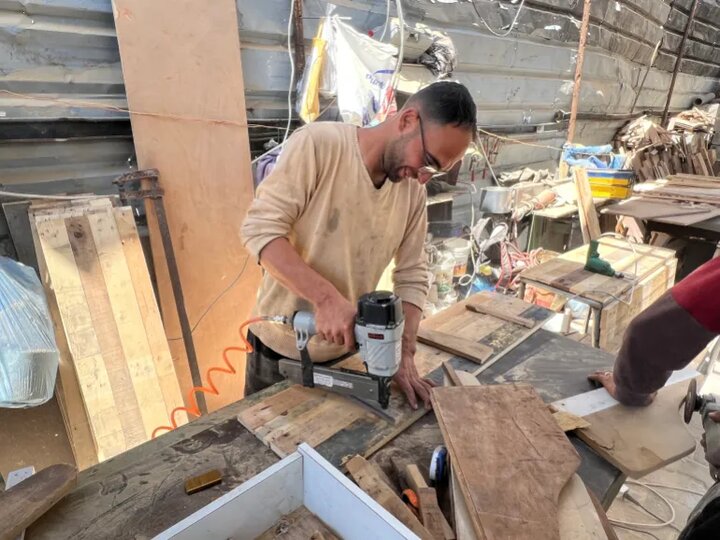
Adnan Ajjour, a Gazan carpenter, reclaims wood from pallets used for humanitarian aid and commercial goods delivered to the Gaza Strip, reshaping the timber to manufacture school benches that replace those destroyed by the occupation.
Despite severe shortages of equipment and specialized personnel, the Al-Zawaida Field Hospital continues to provide physiotherapy and rehabilitation services, treating newly injured patients as well as individuals suffering from permanent or temporary disabilities caused by the war. Muhammad al-Yazji, head of the hospital’s physiotherapy department, noted that between 6 and 100 injured individuals visit the center daily for intensive rehabilitation sessions. Chronic shortages of medical supplies and restrictions imposed by the occupation on imports prompted the facility to establish a unit in early 2025 to manufacture plastic splints using locally available materials as substitutes for scarce medical items.


