How Foreign Policy Failures Against Iran Fuel Economic Crisis for Donald Trump
According to the International Desk of Webangah News Agency, …
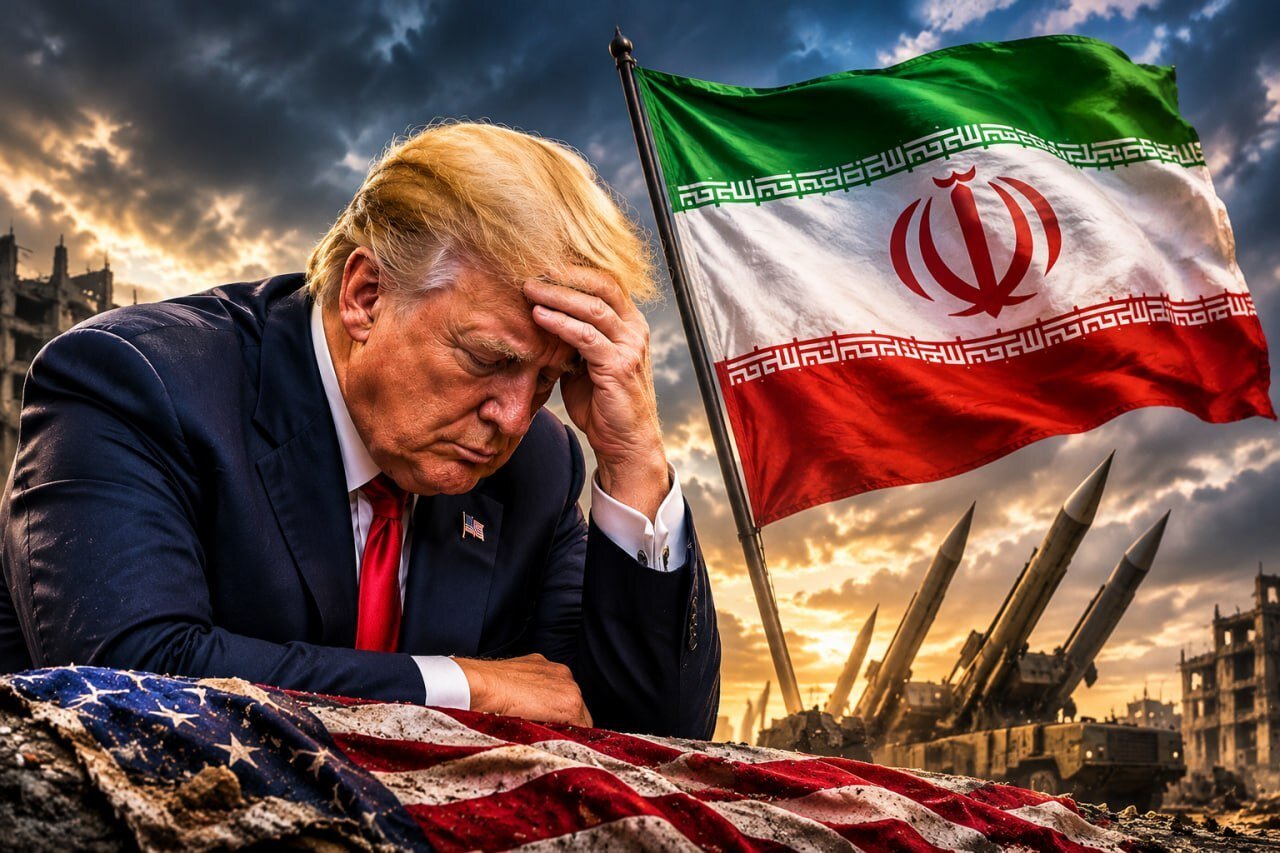
The defeat of the Republican Party in the U.S. midterm elections extends far beyond general public dissatisfaction with the economic trajectory of President Donald Trump‘s administration. It reveals a clear intersection between White House foreign policy, military friction with Iran, and the rising cost of living for ordinary American citizens. In essence, the primary consequence of Washington’s failure regarding Iran was that the financial burden of an external cross-border standoff directly impacted the everyday livelihoods of the populace, a reality clearly reflected at the ballot box.
Donald Trump assumed office following the 2024 presidential election on promises of economic revitalization, lowering living expenses, and restoring prosperity. Two years later, however, voters experienced a renewed wave of inflation, making the 2026 midterms a rigorous test measuring the gap between campaign pledges and economic realities. Statistical evaluations indicate that the broader U.S. macroeconomy remained robust in certain sectors, maintaining low unemployment, steady public demand, and active investment in artificial intelligence. Early 2026 indicators even showed job creation records surpassing 2024 levels, industrial job growth following a 14-month hiatus, mortgage rates dipping below six percent, and record-high stock markets.
Nevertheless, these positive macro indicators failed to alter the tangible financial realities of American families. Citizens do not navigate stock market indices; instead, they monitor the daily costs of fuel, groceries, rent, insurance, and household necessities. As inflation resurged and household incomes came under intense pressure, the widening gap between macroeconomic data and the public’s lived experience became a critical vulnerability for the Trump administration.
Amid these dynamics, military confrontation with Iran failed to alter the U.S. economic equation to the Republican Party’s advantage, fundamentally shifting the course of domestic affairs. Crude oil prices climbed to a four-year high, diesel fuel broke records, and gasoline prices surged to unprecedented levels on election day. Brown University researchers estimated that elevated fuel costs resulting from the standoff with Iran imposed approximately $1,150 in extra expenses on the average American family.
Beyond statistical figures, this cost carried profound political weight. Every time a citizen paid higher prices at the pump, they directly felt the repercussions of their government’s foreign policy. This energy spike elevated transportation, production, and consumer goods costs, further stoking inflationary pressures. Concurrently, rising bond yields propelled mortgage rates upward at their fastest pace in three years, placing immense pressure on households anticipating housing cost relief.
A combination of factors contributed to these price hikes, meaning not all economic challenges could be solely attributed to the confrontation with Iran. The Trump administration’s tariff and trade policies also played a significant role; according to the Tax Foundation, the current year’s tariffs imposed an average of $820 in duplicate taxation on every American household. Pressures across other sectors were equally striking, with electricity costs rising 8.7 percent during Trump’s second term, vehicle repair expenses increasing 12.3 percent since his return to power, and residential construction costs climbing 13.3 percent. Furthermore, the expiration of Affordable Care Act health insurance subsidies caused monthly premiums to surge by an average of 58 percent.
Despite this accumulation of economic strains, the confrontation with Iran emerged as the most tangible and politically potent source of public dissatisfaction due to its direct impact on energy prices. Trump’s tenure began with promises of avoiding costly foreign conflicts and prioritizing domestic economic interests, yet confronting Iran yielded inverse results: escalating costs, volatile energy markets, and strategic setbacks for Washington.
This convergence marks the intersection of foreign policy failure and domestic crisis. When an administration fails to secure strategic achievements from a high-cost confrontation while citizens experience the immediate fallout within their households, sustaining justification for such policies becomes impossible. An October CNN poll revealed that net approval for Trump’s economic record plummeted to negative 46 points, a worse standing than Joe Biden’s final evaluation prior to his withdrawal. This shift marked a stark erosion of Trump’s political capital compared to October 2024, when he held a 15-point lead over Kamala Harris in economic management.
The events of the 2026 midterms demonstrated that foreign policy and domestic economics cannot be cordoned off from one another. Although officials attempted to attribute price increases to the legacy of the Biden administration or external variables, voters held the incumbent administration directly accountable. Confrontation with Iran did not remain a mere foreign dossier for Washington; it penetrated the core of citizens’ daily economic realities, culminating in a weakened Republican base.