Donald Trump Stance on Israel Financial Aid Sparks Geopolitical Debate
According to the International Desk of Webangah News Agency, …
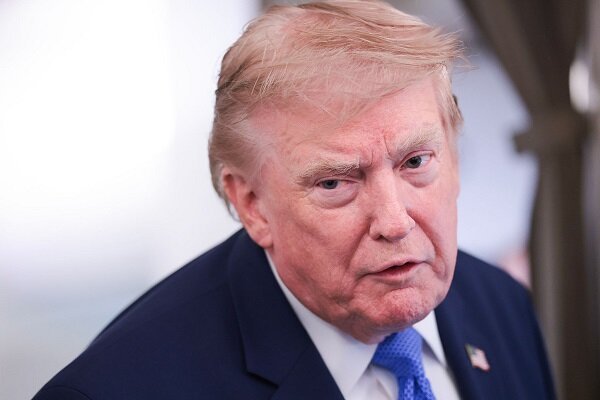
United States President Donald Trump‘s recent statements concerning the cut-off of financial and military aid to the Israeli regime have sparked a fresh wave of political analysis regarding the trajectory of bilateral ties between Washington and Tel Aviv.
Speaking in an interview with Sputnik, Mohammed Hassan Kanaan, a member of the Arab Nationalist Party and former member of the Israeli Knesset, described Trump’s remarks on ending U.S. financial backing as a mechanism to pressure Israeli political factions—particularly the opposition—into forming a unity government that includes Prime Minister Benjamin Netanyahu.
The former political figure emphasized that such an initiative is unlikely to succeed, noting a collective determination within the Israeli political landscape to oust Netanyahu and his cabinet in favor of an alternative government supported by Arab lawmakers.
Furthermore, Kanaan suggested that Gadi Eisenkot could soon secure sufficient backing to establish an alternative administration, thereby rendering the U.S. administration’s efforts to shield Netanyahu ineffective.
Conversely, Ahmed Fouad Anwar, an Egyptian academic and expert on Israeli affairs, assessed Trump’s positions on halting aid as a measure driven primarily by electoral considerations during his interview with Sputnik.
Pointing to declining approval ratings in polls and a growing public sentiment among U.S. citizens against the financial and political costs of supporting Tel Aviv, Anwar noted that this stance aligns seamlessly with the America First agenda.
The Egyptian expert added that Israel’s failure to achieve its objectives against Iran, coupled with its persistent efforts to embroil the United States in regional conflicts, remain critical factors influencing the calculations of Trump’s administrative team regarding ongoing support for Tel Aviv.