Global Media Examines Strategic Impasse and Repercussions of US-Israeli War on Iran
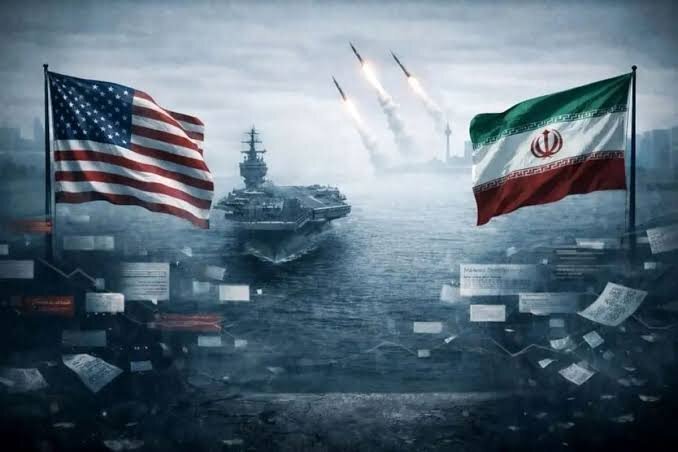
According to the International Desk of Webangah News Agency, the military escalation launched by the United States and the Zionist regime against Iran has drawn intense global scrutiny, as widespread attacks and civilian casualties prompt profound international debate over the humanitarian and strategic dimensions of the conflict.
In the British and American press, extensive coverage has focused on the political pressures facing President Donald Trump. An analysis in The Wall Street Journal by Holman W. Jenkins Jr. addressed Republican political setbacks, while other reports highlighted sharp divisions among Trump’s advisers regarding whether to end or escalate the war. Figures such as Pete Hegseth and Admiral Brad Cooper have reportedly backed major military operations, whereas Marco Rubio and Scott Bessent advocate for intensified sanctions and a commercial blockade against Iran. Meanwhile, Steve Witkoff supports diplomatic tracks, contrasting with Prime Minister Benjamin Netanyahu’s calls for renewed strikes.
Discussions regarding potential diplomatic arrangements indicate that proposed frameworks would compress preliminary negotiation timelines from sixty days to just forty-eight hours to rapidly resume nuclear talks. Concurrently, Agence France-Presse reported that Iranian military forces declared themselves stronger since the onset of the conflict with the United States, even as Washington announced a twenty-million-dollar bounty for information regarding Tehran’s nuclear program. Highlighting strategic defense measures, Iranian military officials reiterated that Tehran maintains full control over the strategic Strait of Hormuz in the Persian Gulf, warning that the vital waterway will remain closed until national demands are met and that armed forces’ responses will be immediate, effective, and unconstrained by geographic boundaries.
Arabic-language media outlets have closely tracked the multidimensional crisis. Al Jazeera published an article pointing to plunging approval ratings for both President Donald Trump and Benjamin Netanyahu while warning of the escalating dangers associated with potential unconventional weapon use, noting that US Senator Chris Murphy had labeled Pentagon planning as reckless. Additionally, the Rai Al-Youm newspaper emphasized that Iran’s resilience and the determination of regional resistance nations serve as primary catalysts for the failure of imperialist strategies and internal fractures within the Western bloc.
Further analysis by Al Mayadeen explored discussions surrounding a potential doctrinal shift in Iran’s military approach from defensive to offensive jurisprudence, though noting that no formal decree has been issued on the matter. The network characterized these debates as a strong deterrent message directed at Washington and Tel Aviv, outlining three prospective scenarios for future developments: a political settlement, a protracted state of neither war nor peace, or the resumption of large-scale hostilities.