Europe Plans Multi-Billion Euro Boost for Independent Military Capabilities
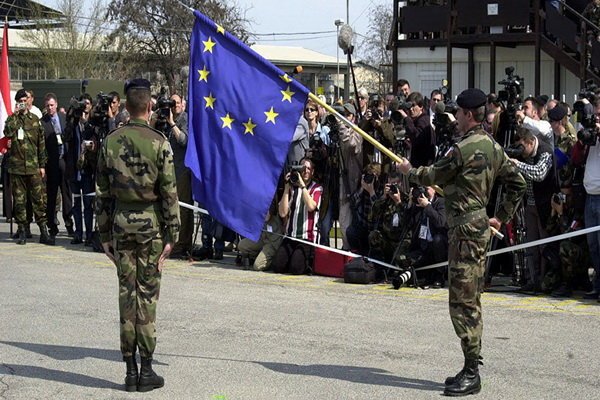
According to the International Desk of Webangah News Agency, the European Union is initiating a significant new program focused on strengthening its independent military capabilities, with an allocated budget in the tens of billions of euros. This initiative follows the previously established “Security Investment Programme for Europe,” valued at 150 billion euros. The new plan is designed to provide the technical, intelligence, and logistical capacities necessary for managing and conducting large-scale conflicts.
The program is slated to commence in the latter half of 2027, with funding expected to be sourced through borrowing and the European Union’s next seven-year budget. The final financial allocation is yet to be determined.
A key objective of this initiative is to enhance capabilities that European armies require for troop deployment, equipment provision and support, military operation coordination, and intelligence gathering. European forces currently maintain a considerable dependence on the United States for these critical areas.
Priority investments for the European Union under this framework include integrated air and missile defense systems, as well as intelligence, reconnaissance, and surveillance systems. The final shape of the program will be determined in consultation with EU member states and NATO allies. The presence and role of U.S. troops and equipment in or withdrawn from Europe will also be considered in its design.
This move comes amid a backdrop where the administration of President Donald Trump has emphasized a reduced U.S. military role in Europe and called for increased European responsibility in ensuring their own security.
Last year, the European Union launched the “European Defence Fund” (initially referred to as the “Security Investment Programme for Europe”) with a ceiling of 150 billion euros, intended to provide low-cost loans for urgent defense needs of member states. Approximately 21 billion euros from these facilities remain unused, and a portion of these funds may be integrated into the new program.