Iran Faces Emerging AI Threats to Cybersecurity, Calls for National Projects
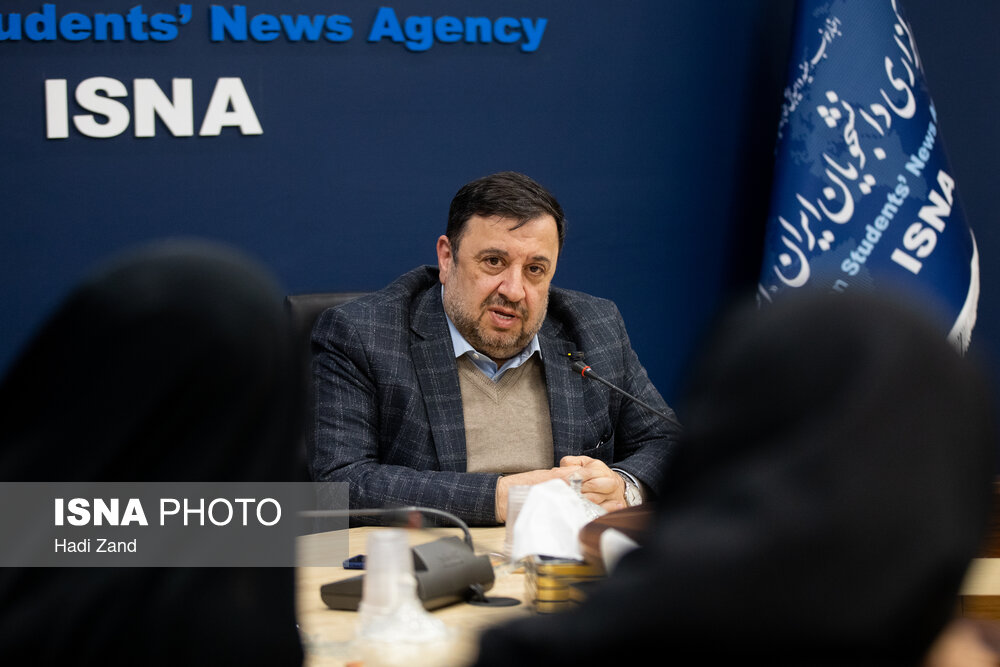
According to the Economic Desk of Webangah News Agency, Seyed Abolhassan Firouzabadi, in an interview, highlighted Iran’s inadequate progress in artificial intelligence (AI) development. He stated that while numerous documents, laws, and decisions exist in the AI domain, the government has yet to implement any significant or effective measures, resulting in no tangible outcomes.
Firouzabadi stressed the necessity of defining two or three major national AI projects that leverage AI extensively. He advocated for a problem-solving approach, targeting large-scale national issues that cannot be resolved without AI. These projects, he noted, require substantial budgetary and developmental support from the government, which should act as a key player or resource manager.
He proposed that the government could utilize existing resources from banks, private companies, and semi-governmental entities to fund these initiatives. Examples of such projects include smart cities, smart healthcare, smart agriculture, and smart banking—areas where Iran faces significant challenges like traffic, pollution, waste management, and urban services.
Firouzabadi pointed out that technology is the core of global competition today, with superpowers focusing on three main variables: advanced technology (including AI and ICT), capital, and spheres of influence. He warned that Iran’s position in this new technological geopolitics remains undefined, while countries like the U.S. and China are actively shaping the landscape. The shifting geopolitics, particularly favoring Persian Gulf littoral states, demands Iran’s vigilance and a shift from focusing solely on issues like platform filtering to prioritizing AI, technology, capital, and influence.
He identified the lack of large high-tech companies in ICT, software, hardware, and AI as a critical weakness in Iran’s economic value chain. Without addressing this, Iran risks falling behind in the rapidly evolving technological race, which could alter international power dynamics, especially in the region.
Firouzabadi also highlighted AI-driven cyberattacks as a major emerging threat, urging Iran to adapt its cybersecurity infrastructure to technological advancements. He criticized the absence of adequate institutions and legal frameworks to counter these threats, calling for serious reorganization in this sector.
Regarding internet speed, he noted Iran’s lag in adopting 5G technology, which is crucial for industrial transformation. He emphasized the need for substantial investment, capital, and fundamental actions to bridge the technological gap.
Firouzabadi underscored the strategic importance of large high-tech companies, describing them as a “sixth force” alongside traditional military branches. These companies, he argued, wield significant power in modern conflicts, as seen in cases like Elon Musk’s Starlink. Iran’s lack of such entities leaves it vulnerable in crises, where cyber capabilities are often disabled instead of strengthened, further undermining other military and judicial security measures.