Hezbollah’s FPV Drones Challenge Israeli Nighttime Superiority, Inflict Casualties
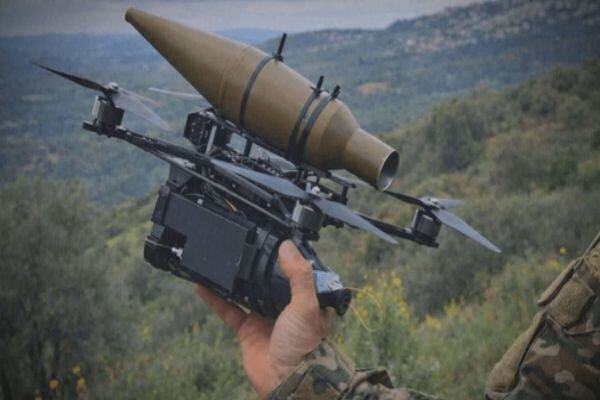
According to the International Desk of Webangah News Agency, recent escalations in southern Lebanon underscore Hezbollah‘s continued military and operational prowess, coupled with tactical innovations that are causing serious concern for Israeli military leadership. A report by the Israeli newspaper Yedioth Ahronoth detailing nighttime drone attacks and admitting to the deaths of two Israeli soldiers signifies a deeper shift in the power balance between the Lebanese resistance and the Israeli army.
For years, Israel has projected an image of absolute technological and intelligence superiority on the battlefield, considering air superiority, intelligence dominance, and nighttime reconnaissance as key strengths. However, recent events indicate that the Lebanese resistance has begun to challenge these advantages.
Military analysts are particularly noting the adaptation of FPV drones, which have gained recognition as inexpensive, agile, and effective weapons in conflicts such as the war in Ukraine. Hezbollah’s ability to integrate this relatively simple technology into the specific conditions of southern Lebanon has transformed it into an effective tool for striking Israeli forces.
Yedioth Ahronoth’s report includes a significant admission: the Israeli army previously believed Hezbollah’s FPV drones lacked thermal imaging systems, thus limiting their effectiveness at night. Recent attacks have refuted this assumption, fueling speculation within Israeli military circles that Hezbollah may have equipped these drones with thermal sensors or similar technologies.
The Lebanese resistance has effectively threatened a crucial Israeli tactical advantage: freedom of operation at night. This ability is a significant asset for most armies, as nighttime operations are inherently more difficult to detect and target. Hezbollah appears to be imposing new limitations on the Israeli military in this domain.
Israeli media also acknowledges Hezbollah’s “steep learning curve,” a military concept referring to a group’s capacity to extract battlefield experience and translate it into new capabilities. This indicates that Hezbollah is not merely employing existing equipment but actively leveraging every engagement to enhance its operational capacities.
This adaptability has been a hallmark of the Lebanese resistance’s strength over the past two decades. From the 2006 Thirty-Day War to conflicts in Syria and recent confrontations with Israel, Hezbollah has consistently demonstrated a dynamic and evolving approach. Field experiences are rapidly converted into operational knowledge, which is then integrated into the resistance’s combat structure.
Consequently, the Israeli army now faces an entity that transcends a conventional armed group. Hezbollah has evolved into an organization possessing intelligence capabilities, special operations forces, electronic warfare assets, precision-guided missiles, drone units, and a sophisticated command network. Any assessment of its military power based solely on troop numbers or weapon stockpiles would present an incomplete picture.
The Israeli military’s reactions reflect the level of concern. Reports indicate Israeli soldiers are reducing nighttime movements, employing enhanced protective gear, and relying more heavily on electronic warfare systems. These measures suggest the new threat extends beyond the tactical level, impacting Israeli operational methodologies.
Strategically, this development highlights Hezbollah’s capacity to impose significant costs on its adversary through the use of relatively inexpensive technologies. Asymmetric warfare often involves the weaker party leveraging innovation and low-cost technologies to neutralize an opponent’s superior resources.
Israel has invested billions of dollars in missile defense systems, reconnaissance equipment, and advanced military technologies. However, drones that are far less expensive to produce have emerged as a genuine challenge to its military. This dynamic aligns with the strategy of resistance groups: imposing high costs on the enemy using accessible and affordable means.
Politically, these developments carry significant implications. After months of military pressure aimed at curtailing Hezbollah’s capabilities, Israeli media is now reporting on the resistance’s operational advancements. This suggests that, contrary to some predictions, Hezbollah’s military structure retains its capacity for reconstruction and adaptation.
Indeed, resilience and adaptability are key indicators of strength in modern warfare. While many armies and groups may begin conflicts with advanced equipment, success hinges on the ability to evolve with changing circumstances. Emerging reports from Israeli media confirm this characteristic in Hezbollah’s operations.
Furthermore, the integration of FPV drones into nighttime operations could have long-term consequences for the security dynamics along the northern border of occupied Palestine. Any reduction in Israel’s nighttime operational freedom would impact its operational planning, troop movements, and even soldier morale.
In conclusion, the ongoing situation in southern Lebanon represents more than a contest between drones and defense systems; it symbolizes a clash of distinct warfare paradigms. On one side stands an army reliant on expensive technology and conventional military structures, while on the other, a resistance movement employing innovation, flexibility, and emerging technologies to alter the power balance.
The acknowledgment by Israeli media of concerns over Hezbollah’s drone advancements signifies the Lebanese resistance’s enduring role as a major regional security player, maintaining and even strengthening its deterrence capabilities in certain areas. Therefore, each new development in the resistance’s combat technology is not merely a tactical achievement but part of a broader trend reshaping the power balance on the northern front of occupied Palestine—a trend that appears to be in its nascent stages.