
Hezbollah Rejects Washington-Brokered Lebanon-Israel Ceasefire Accord, Citing Disarmament Demands
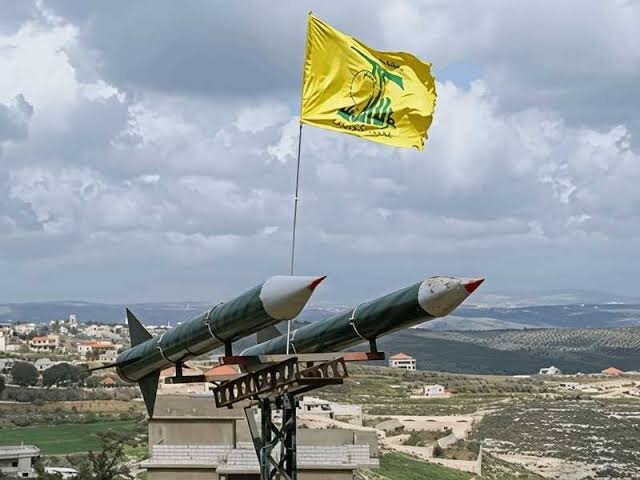
According to the International Desk of Webangah News Agency, the fourth round of negotiations between Lebanon and the Israeli regime, mediated by the United States in Washington, has concluded with reports of an agreement on a comprehensive ceasefire. However, the published terms suggest that what the U.S. calls a “security agreement” is seen by Hezbollah not as a path to ending Israeli aggression, but as a political maneuver aimed at altering the balance of power in Lebanon and achieving objectives Israel failed to secure on the battlefield.
Key provisions of the reported agreement include a halt to resistance operations, the withdrawal of Hezbollah forces from south of the Litani River, expanded deployment of the Lebanese army, and the prohibition of any armed presence outside state structures. Hezbollah’s strong reaction indicates that the Lebanese resistance views this agreement as a political project to disarm the resistance and facilitate further Israeli influence in Lebanon, rather than a genuine end to hostilities.
A primary criticism leveled against the Washington agreement is that it places virtually all obligations on Lebanon, and specifically Hezbollah, without stipulating clear or binding mechanisms for Israel to cease its aggressions. Over recent months, the Israeli regime has repeatedly violated previous ceasefires, targeted various areas of Lebanon, and continued its assassination operations and aerial attacks. Despite this, the published text of the new agreement focuses primarily on halting resistance activities and the withdrawal of its forces from southern Lebanon.
Critics argue that this agreement implicitly communicates that Lebanon must first relinquish its deterrent capabilities before potentially expecting Israel to honor its commitments, an approach that diverges from Lebanon’s historical experiences with the Israeli regime. Sheikh Naim Qassem, the Deputy Secretary-General of Hezbollah, described Washington’s statement as the product of “direct, futile, humiliating, and shameful negotiations,” warning that its ultimate goal is to pave the way for Lebanon’s surrender to the “Greater Israel” project. He emphasized that conditioning any agreement on the disarmament of the resistance means eliminating Lebanon’s most significant source of power.
Hezbollah’s perspective, shaped by decades of experience, is that the Israeli army has only retreated in the face of the resistance’s deterrent power. Conversely, any weakening of this deterrence has led to increased Israeli aggressions. Qassem reiterated that “as long as the occupation continues, resistance will continue,” a stance that forms the bedrock of Hezbollah’s strategy since its inception. Hezbollah believes it is unreasonable to demand that the resistance lay down its arms or withdraw from strategic positions while Israeli attacks persist.
Another significant criticism from Hezbollah is the perceived attempt by the U.S. and Israel to achieve militarily unattainable objectives through political means. Despite deploying extensive military capabilities in recent months, the Israeli regime has been unable to dismantle the resistance structure or compel Hezbollah to surrender. Critics of the agreement now contend that Washington is using political and diplomatic pressure to pursue the same goal of resistance disarmament under the guise of “security stabilization.” In this context, Naim Qassem has warned that Washington’s statement constitutes “a roadmap for the destruction of a part of the Lebanese people and the enslavement of another part.”
The U.S. and proponents of the agreement frame the extensive deployment of the Lebanese army and the monopolization of weapons by the state as steps toward strengthening national sovereignty. However, Hezbollah holds a different interpretation of sovereignty. From the resistance’s viewpoint, sovereignty is meaningful only when foreign aggressions cease, occupied Lebanese territories are liberated, and Israel refrains from repeatedly violating the country’s airspace and land borders. Consequently, Hezbollah believes the priority should be the complete cessation of Israeli aggressions, the withdrawal of occupying forces, and the release of Lebanese prisoners, rather than the issue of resistance disarmament. The movement posits that making the resistance’s weapons the central focus of negotiations constitutes a diversion from the core crisis: Israeli occupation and aggression.
A further concern voiced by Hezbollah is the potential for exacerbating internal divisions within Lebanon. Naim Qassem has cautioned that the agreement’s terms could sow discord and conflict among various Lebanese factions. Lebanon has faced numerous political, economic, and security crises in recent years, and any attempt to impose external solutions without domestic consensus risks escalating internal tensions. Hezbollah maintains that matters concerning the future of the resistance, national security, and Lebanon’s defense structure should be addressed through internal dialogue, guided by the constitution and the Taif Agreement, rather than through direct U.S.-mediated negotiations under external pressure.
At present, the most significant challenge facing the Washington agreement appears to be its rejection by Hezbollah and a considerable segment of pro-resistance factions in Lebanon. Hezbollah has explicitly stated it does not accept any linkage between a cessation of Israeli aggressions and the future of the resistance’s weaponry, asserting that resistance will continue as long as Israeli occupation and attacks persist. Many observers believe that an agreement failing to address the core concerns of the resistance and solely focusing on limiting Hezbollah will encounter substantial obstacles to implementation. What is unfolding in Lebanon today is not merely a dispute over ceasefire details, but a struggle over the very definitions of security, sovereignty, and the future balance of power in the country. From Hezbollah’s perspective, Lebanon’s security is achieved not through disarming the resistance, but through ending the occupation, halting Israeli aggressions, and preserving national deterrent capabilities—a matter likely to remain the central focus of Lebanon’s political and security conflicts in the months ahead.


