
Iran’s Missile Strikes on Israel Redefine Regional Deterrence
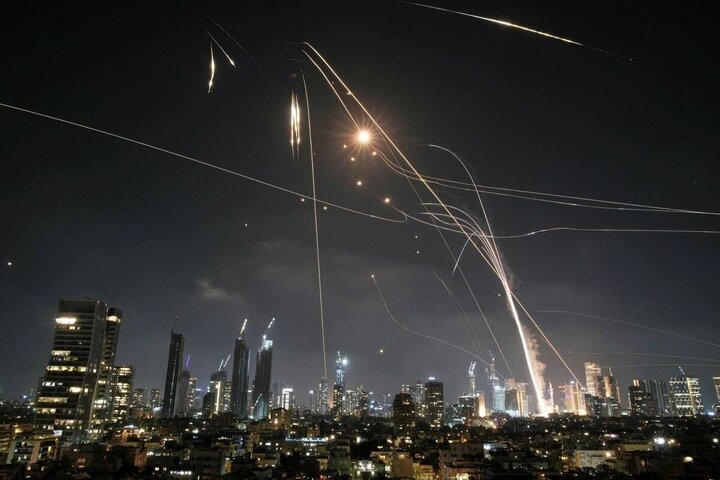
According to the International Desk of Webangah News Agency, Iran‘s missile strikes on occupied territories in retaliation for the Israeli regime’s aggression on the southern suburbs of Beirut should be assessed as more than just a momentary military response. This action was, in fact, a multi-layered strategic message sent to Tel Aviv, Washington, and the entire West Asia region. At a time when the Israeli regime and some American circles were attempting to portray Iran’s deterrence power as weakened after the recent forty-day war, Tehran’s missile response demonstrated that not only has this goal not been achieved, but the Islamic Republic of Iran still possesses a decisive role in the region’s security equations.
Key Messages of the Islamic Republic’s Operation
The most significant message of this attack was that the recent war has not weakened Iran’s will and capacity for response. One of Tel Aviv’s main objectives in entering the war was to create the impression that Iran would no longer be capable of a direct and effective reaction after enduring military, economic, and political pressures. However, the extensive missile launches towards targets in the occupied territories showed that Iran’s missile infrastructure remains active, capable, and ready for operations.
In reality, Tehran’s response is a clear failure for Israel’s strategic calculations. Tel Aviv had hoped the recent war would lead to the erosion of Iran’s military power, but recent events have shown that not only has Iran’s missile capability been preserved, but the ability for rapid decision-making and strategic operation execution remains with the Islamic Republic. This is significant for the Israeli regime because any future security and military planning must be based on the reality of Iran’s power, not on political perceptions and aspirations.
The second message of this attack relates to the Axis of Resistance. Israel’s attack on the southern suburbs of Beirut was an attack on one of Hezbollah’s most important political and social centers. Iran’s response indicated that Tehran continues to consider the security and stability of Lebanon and Hezbollah’s position as part of its deterrence calculations. This signifies that, contrary to extensive Western and Israeli media propaganda about the growing distance between Axis of Resistance actors, strategic ties between Iran and Hezbollah remain strong.
Iran’s Most Important Achievement: Establishing a New Equation
Perhaps the most significant strategic achievement of Iran’s missile attack was the formation of a new deterrence equation. For years, the Israeli regime had attempted to carry out its attacks on Lebanon, Syria, Iraq, and even Iran without paying direct costs. However, Tehran’s recent response conveyed the message that aggression against the southern suburbs of Beirut could be met with a direct response against the occupied territories. In other words, what some Israeli analysts refer to as “Beirut versus Haifa” is becoming a new security equation.
Such an equation could severely limit the Israeli regime’s freedom of action. Henceforth, any military action against Lebanon will not solely be defined within the framework of the northern front but could lead to a broader confrontation with Iran. This significantly increases the security costs of decision-making in Tel Aviv and could play a crucial role in curbing the regime’s aggressive behavior.
On the other hand, Iran’s missile attacks carried an important message for the United States as well. In recent months, Washington has sought to gain more concessions in negotiations and regional issues by employing pressure and military threats. Iran’s response showed that Tehran continues to leverage its hard power capabilities as an effective tool in diplomatic equations. In other words, Iran sent the message that military pressure will not only lead to its withdrawal but could also increase regional tensions and costs.
Demonstration of Military Recovery and Repair Capacity
Another notable point is the demonstration of Iran’s military recovery and repair capacity. A key indicator of power in modern conflicts is the ability to quickly rebuild operational capabilities after engagement. The recent response showed that Iran has performed significantly in this area as well, managing to maintain its missile and command capacities in a relatively short period after the conflict. This serves as a serious warning to Iran’s adversaries, as it indicates that even in the event of widespread conflict, the complete elimination or neutralization of the Islamic Republic’s deterrence capabilities is not possible.
This attack also underscored the limitations of Israel’s military strategy against Iran. Past combat experiences against Hamas in Gaza or Hezbollah in Lebanon had led some Israeli circles to believe they could apply the same pattern of continuous pressure, periodic attacks, and attrition against Iran. However, fundamental differences between Iran and other regional actors have rendered such a strategy ineffective. Iran is a regional power with extensive geographic depth, diverse military capacities, and independent defense capabilities, making the application of Israel’s previous patterns against it highly limited.
Furthermore, the recent missile response enhanced Iran’s deterrence credibility in the region. Regional countries are closely monitoring recent developments, and their assessment of the power balance directly impacts their political and security behavior. The display of Iran’s rapid and direct response capability can strengthen Iran’s position in the calculations of regional actors and show that Tehran remains a decisive player in the West Asian security structure.
Internally within the Israeli regime, these attacks will also have significant consequences. Israeli society has faced numerous security and political crises in recent months. Every successful missile attack deep into the occupied territories intensifies public insecurity and raises serious questions about the efficacy of defense systems and government decisions. Consequently, Iran’s response is not merely a military operation but also a factor in increasing political and social pressure on the Israeli regime’s leadership.
Conclusion
Overall, Iran’s missile attacks on the occupied territories in response to Israel’s aggression on the southern suburbs of Beirut should be considered a turning point in regional deterrence equations. This attack demonstrated that the forty-day war has not only failed to eliminate Iran’s response capability but also that the Islamic Republic retains its ability to impose costs on its enemies. The formation of new deterrence equations, increased costs of aggression for Israel, strengthening the position of the Axis of Resistance, sending a message of power to the United States, and proving the continuity of Iran’s missile capability are among the most important outcomes of this operation. These outcomes can have a profound impact on the course of regional developments in the coming months and years.


