Lebanese MP Claims Iran Forced US and Israel to Halt Hostilities
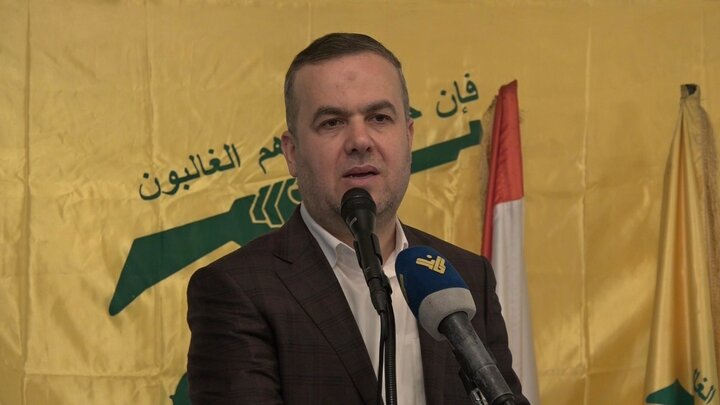
According to the International Desk of Webangah News Agency, Hassan Fadlallah, head of the Loyalty to Resistance bloc in the Lebanese Parliament, stated in an interview with Al Mayadeen news channel that the agreement reached between Iran and the United States represents an unparalleled achievement in modern warfare history. He detailed that the accord mandates an immediate ceasefire in Lebanon, guarantees the country’s territorial integrity, and prohibits the creation of any “buffer zone.” This aligns with the resistance’s fundamental stance against the establishment of such zones or the continued presence of occupiers on Lebanese territory, with Fadlallah confirming that Iran has communicated there will be no “red line” or buffer zone.
Fadlallah attributed the cessation of hostilities by the American and Israeli sides to Iran’s steadfast resistance against pressure. He further argued that the power of Iran’s missile capabilities alone was responsible for deterring the Israeli enemy from attacking southern Beirut and its environs. The Lebanese MP highlighted that Iran secured a crucial condition of non-interference by the United States in its internal affairs as part of this agreement. He also noted that Tehran’s insistence on including Lebanon’s situation in the understanding was the primary reason for the protracted negotiation process.
The parliamentarian urged the Lebanese government not to squander this historic opportunity, warning that any parallel initiatives in Washington leading to concessions would be detrimental to Lebanon’s national interests. He indicated that a 60-day period has commenced for the implementation of the accord’s provisions and affirmed that the resistance, in coordination with Iran and the Lebanese government, would strive for the full realization of Lebanon’s national rights.
Fadlallah commented on the historical relationship between Iran and Lebanon, noting that it has always transacted through official channels. He pointed to elements within Lebanon’s ruling circles as being responsible for the decision not to accept the Iranian ambassador. He stressed that the Lebanese government should align with Iran’s efforts and avoid adopting a “downhill” approach of making concessions to the Israeli enemy. The resistance representative stated that they reject both limited proposals and ambiguous formulas that aim to obstruct Iran’s broader initiatives, describing the “Islamabad” understanding as a regional and international framework of which Lebanon can be a part.
Addressing the unilateral actions of the United States and Israel concerning Lebanese sovereignty, Fadlallah observed that some factions in Lebanon are experiencing frustration and despair due to the failure of their chosen options and gambles. He acknowledged that numerous countries are seeking to play a role or mediate in halting the aggression, but reiterated that there are no plans for direct negotiations with the Israeli enemy. For indirect negotiations, he identified Nabih Berri, the Speaker of the Lebanese Parliament, as a pivotal figure with historical experience.
Fadlallah underscored that significant regional transformations are underway, impacting Lebanon and necessitating a departure from its previous trajectory. He stressed that Lebanon’s sovereignty cannot treat the resistance as an “outlaw” force. He further contended that, given the prevailing regional understanding, the current level of official relations between Lebanon and Iran is illogical and requires enhancement. He urged the Lebanese government to re-evaluate its calculations, decisions, and indecisive actions, including reconsidering direct negotiations with the enemy.
Regarding the presidency, Fadlallah stated that they have repeatedly expressed a desire for the success of the current presidential term, recognizing the president as a symbol of national unity according to the constitution. He emphasized that the president should consider all segments of society, and that the resistance, as a major bloc, should be engaged with as the head of state rather than merely a “party.” He attributed current differences to the president’s stances on the resistance and his pursuit of direct negotiations with Israel, asserting that they have extended a hand of cooperation multiple times for the term’s success and have engaged in considerable internal collaboration.
On the issue of the borders, Fadlallah explained that the resistance has cooperated to facilitate the army’s deployment into any desired area. He noted that border regions are now largely disarmed, which, in his view, would have prevented Israeli incursions into certain villages. The head of the Loyalty to Resistance bloc concluded by warning the Lebanese government that the Israeli regime has a two-month window to completely withdraw from Lebanese territory, and any failure to comply would be met with a response from Tehran, referencing the Iran-US understanding.