
World Media Reflects on Strategic Setbacks for US and Israel in War Against Iran
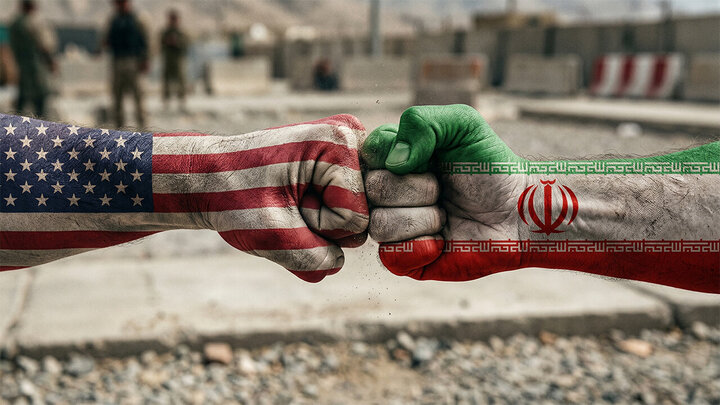
According to the International Desk of Webangah News Agency, the international media landscape has extensively covered the consequences of the war waged by the United States and the Zionist regime against Iran. Reports indicate that the stated objectives of the operation were not met, and Western officials and American media have acknowledged that the aggressors encountered a strategic stalemate and suffered field and political defeats. This conflict, which commenced with widespread attacks and the tragic killing of civilians, including innocent students, rapidly broadened in its human, security, and economic scope, eliciting diverse reactions across global media platforms.
International media, each with its distinct approach, has sought to shape the narrative of this war. An examination of these reflections offers a clearer picture of the war’s actual status and its outlook.
Lebanese writer Layla Amasha, in an analysis of the past year’s conflict between Iran, the United States, and Israel, along with its repercussions, wrote: “The enemy has been brought to its knees, just as the martyred leader, Imam Sayyid Ali Khamenei, predicted weeks before the war against Iran began. Iran stood firm, and all those who planned to harm the country relying on military, security, and economic power were thwarted, as emphasized by the martyr of the Ummah, Sayyid Hassan Nasrallah.” Amasha stated that Iran emerged victorious in its confrontation with the arrogant powers, with the Axis of Resistance achieving this victory, which had global ramifications and once again demonstrated the principle of ‘victory of blood over the sword.’
She further elaborated that the war solidified the principle of ‘unity of fronts’ in both military and diplomatic spheres. This occurred despite a primary objective of the United States and the Zionist regime being the separation of the Axis of Resistance’s fronts and severing ties between the Islamic Republic of Iran, as the supporter of resistance, and the region’s resistance groups. Iran’s insistence on including the issue of Lebanon in the understanding, despite American proposals to sideline the matter and extensive pressures and threats, highlighted the unified and indivisible structure of the Axis of Resistance. Amasha believes that Donald Trump and Benjamin Netanyahu made significant efforts to exclude the Lebanon file from the Iran-US negotiations, but ultimately, the divergence of interests between Washington and Tel Aviv became apparent, leading the United States to conclude that the cost of supporting Israel exceeded its benefits.
The article notes that both sides entered the conflict with the aim of weakening the coherence of the Axis of Resistance, but in the end, the Zionist regime found itself in an unprecedented crisis. Every attack on the southern suburb of Beirut, intended to halt the agreement process, yielded the opposite result, leading to further concessions from the United States and accelerating the path to understanding. While many countries welcomed the understanding document as a step toward regional stability, Benjamin Netanyahu’s hours-long silence, which was widely reflected in the Hebrew media, signaled shock and confusion in Tel Aviv, with Israel feeling, for the first time, without effective backing.
Al-Araby Al-Jadeed, in an article, described the recent war against Iran as a defeat for Israel and the United States against Tehran. The publication stated that, contrary to Tel Aviv’s declared objectives, the recent war against Iran not only failed to weaken the Islamic Republic’s regional standing but also led to a redefinition of the power balance in West Asia. The author posits that Israel believed a military strike against Iran could alter regional security equations in its favor, but the war’s outcome demonstrated that this goal was not achieved. The article further explains that post-war, Iran remains a principal player in regional dynamics, having preserved its deterrence capability. Conversely, Israel now faces the reality that any extensive confrontation with Iran would necessitate reliance on direct American support, exposing the regime’s strategic limitations. The author also emphasizes that the war has accelerated the formation of a new regional order, one where Israel can no longer unilaterally dictate the rules of engagement, and regional nations must factor in Iran’s role and influence in their security calculations. The primary consequence of the war, according to the article, is increased complexity in security equations and a reduction in Israel’s maneuverability in the future.
An article published by the Al Jazeera Center for Studies analyzes the objectives of the war against Iran from the perspective of Israeli security and political institutions. According to the author, Tel Aviv pursued three main goals: reducing Iran’s nuclear capabilities, weakening the Islamic Republic’s missile and deterrence capacity, and ultimately, creating internal pressure to weaken or alter the behavior of Iran’s political system. The article proceeds to evaluate the extent to which these objectives were met, concluding that while Israel and the United States inflicted damage on some of Iran’s military and nuclear infrastructure, they failed to completely dismantle Iran’s deterrence capability. Iran’s continued missile attacks and the expansion of conflict zones indicated that the full realization of declared objectives was far more challenging than initially estimated. The author also touches upon the internal situation in Israel, writing that public support for the war continues as long as military achievements outweigh its economic and security costs. However, as the war prolongs, financial costs escalate, Iranian missile attacks persist, and the possibility of conflict expanding to other fronts increases, this support may wane. In conclusion, the article determines that the future of any confrontation with Iran will depend more than any other factor on the role and decisions of the United States. In the author’s view, Israel cannot pursue a prolonged war and achieve its maximum objectives without Washington’s strategic backing, making political and diplomatic options an integral part of Tel Aviv’s strategy toward Iran.


