
US Faces Domestic Crisis Amidst Costly Iran Standoff, Analysts Say
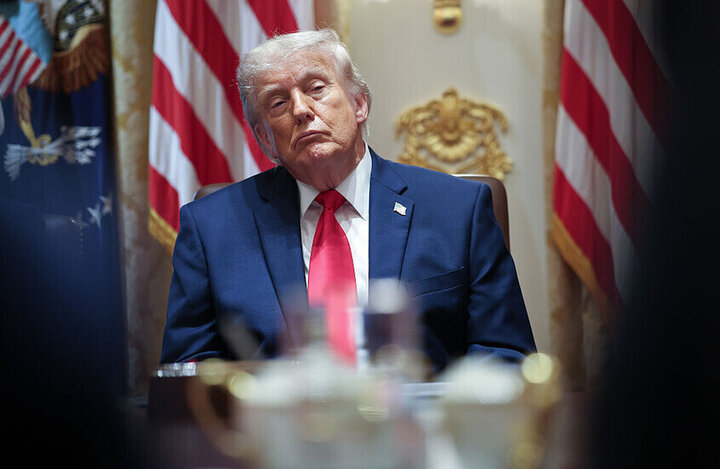
According to the International Desk of Webangah News Agency, a military confrontation with Iran, launched by Donald Trump with the goal of exerting maximum pressure, was intended by its proponents to establish a new order in West Asia, solidify America’s position as the region’s dominant power, and compel Tehran to accept Washington’s terms. However, this endeavor has not only fallen short of its declared aims but has also become one of the most expensive and controversial political decisions of Trump’s presidency.
The current political landscape in the United States reflects more than just a disagreement between Republicans and Democrats on a military operation. Instead, there is a growing public consensus regarding the substantial costs of a war that a significant portion of American society deems unnecessary, futile, and contrary to national interests.
Public Opinion Against War
In the American political system, public opinion has consistently been a key indicator of foreign policy success or failure. Even the most powerful presidents have been compelled to revise their policies when they lose public support.
Within this context, recent poll results paint a concerning picture for the White House. According to surveys conducted by CBS News and YouGov, a majority of Americans believe that the conflict with Iran has not resolved any problems and has instead exacerbated existing ones. Furthermore, a considerable segment of public opinion is calling for an immediate end to the hostilities. These figures indicate that the Trump administration’s official narrative on the necessity of war has failed to convince American society. Many U.S. citizens are questioning how, if the war’s objective was to enhance American security, economic insecurity and social concerns have increased domestically.
Economy: Where War Is the Principal Loser
American historical experience demonstrates that voters prioritize their economic well-being above most other issues. From the Vietnam War to the Iraq War, public support for belligerent policies has rapidly declined when military expenditures have led to economic strain on citizens. Today, one of the primary criticisms of Trump’s policy toward Iran is its economic cost. Increased energy prices, rising transportation expenses, disruptions in global markets, and pressures stemming from geopolitical uncertainty have had direct impacts on the daily lives of Americans.
Kamala Harris, a political rival of Trump, has highlighted this issue, emphasizing that the costs associated with the conflict have placed additional burdens on American households. Harris has stated that an estimated average of $500 has been spent by each American citizen since the onset of the conflict with Iran. For context, the average American is said to be only $400 away from bankruptcy.
Regardless of party affiliations, a large segment of American society has grappled with inflation, rising housing costs, significant debt, and declining purchasing power in recent years, and any new external crisis is likely to intensify these problems. For a citizen concerned about paying rent, loan installments, or medical expenses, a war thousands of miles away can only be justified if it yields tangible and immediate benefits, something that has not materialized.
Repeating Past Mistakes
A significant reason for the increasing opposition to the war is the bitter memory of U.S. military interventions over the past two decades. The wars in Afghanistan and Iraq began with grand promises of increased security, the spread of democracy, and the elimination of threats. However, they ultimately resulted in billions of dollars in expenditure, thousands of casualties and injuries, and a decline in America’s international credibility.
Many American analysts now believe that Trump’s policy toward Iran bears striking resemblances to those same failed patterns. Initiating a large-scale conflict without a clear outlook for its conclusion always carries the risk of getting bogged down in a protracted war.
In such circumstances, American society is more sensitive than ever to the nation’s involvement in new military adventures. Consequently, opposition to the war is not confined to left-wing or anti-war factions; serious concerns about continuing this path are also evident among a segment of Republican voters.
Trump’s Political Credibility Crisis
Throughout his political career, Trump consistently sought to project an image as a different kind of president—one who, unlike the traditional Washington elite, would not entangle America in new wars and would instead focus the nation’s resources on domestic issues.
However, the conflict with Iran has seriously challenged this image. Many of Trump’s former supporters are now questioning how a president who came to power on the slogan of ending “endless wars” has himself initiated a new military crisis.
This issue is particularly pertinent in the lead-up to election campaigns. As the costs of the war escalate without tangible results, political pressure on the White House will intensify. For this reason, some observers believe that the Trump administration is now more focused on finding a dignified exit strategy than on expanding the conflict.
Limitations of American Power
Another significant outcome of this conflict has been the exposure of America’s limitations in the international arena. In previous decades, Washington often believed it could achieve its political objectives in various regions through military superiority. However, recent developments have shown that military power alone is insufficient to achieve strategic goals.
Iran is a country with extensive human, geographic, and military capacities, and any attempt to alter its strategic calculations through military pressure would encounter numerous complexities. This reality has led a segment of the American elite to harbor doubts about the possibility of achieving decisive victory in such confrontations.
From this perspective, the recent conflict has served not only as a test for Iran but also as an examination of America’s ability to manage complex 21st-century crises—a test whose outcomes raise significant questions about the efficacy of force-based policies.
The End of an Illusion
Perhaps the most significant consequence of this war is the collapse of the notion that military power can rapidly and at little cost alter regional political equations. The experience of recent weeks has demonstrated that wars are far more difficult to end than they are to begin, and their costs often exceed the initial calculations of policymakers.
Today, a substantial portion of American society believes that this war has brought neither greater security for their country, nor increased their economic prosperity, nor bolstered Washington’s international standing. On the contrary, what is most evident are escalating costs, deepening domestic political divisions, and profound doubts about the objectives and outcomes of this venture. Therefore, available evidence suggests that what was intended to be a display of American power has now become, more than anything, a symbol of power limitations and the heavy costs of policies based on military confrontation—a reality that not only Trump but the entire American decision-making structure will be compelled to confront.


