
Bab el-Mandeb Strait Closure Threatens Global Trade, Exacerbated by Potential Hormuz Strait Blockade
According to the International Desk of Webangah News Agency, the Bab el-Mandeb Strait is considered one of the most important economic and vital waterways globally, wielding influence in regional and international conflicts comparable to military power. The strait, approximately 30 kilometers wide at its narrowest point, connects Yemen in Asia with Djibouti and Eritrea in Africa. It serves as a crucial link between the Red Sea and the Gulf of Aden, and the Arabian Sea, ultimately connecting to the Suez Canal and the Mediterranean Sea.
Daily, between 7 to 10 million barrels of oil transit through this strait. The Bab el-Mandeb also serves as the primary route for approximately 12 to 15 percent of global trade destined for Europe, the Americas, and Asian markets, and supplies about 25 percent of Europe’s liquefied natural gas (LNG) needs. An estimated 21,000 vessels traverse this strait annually, equivalent to 57 ships per day, with the value of goods passing through it reaching around $700 billion each year.
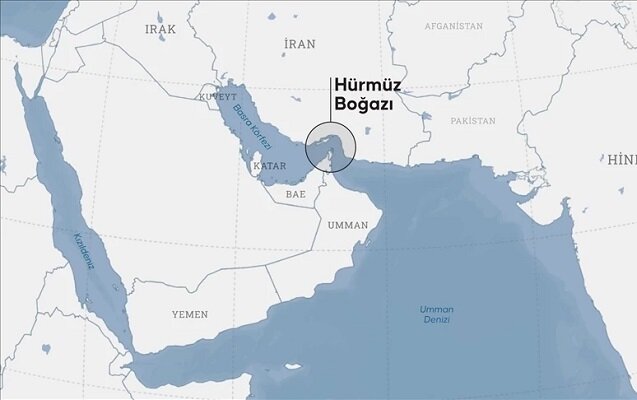
Any disruption in this strait, particularly if coinciding with a halt in traffic through the Strait of Hormuz, could lead to a global transportation crisis. Such a scenario would extend travel time between Asia and Europe from 31 days to 41 days, increasing the cost for an average container ship from over $1 million to approximately $1.7 million, excluding additional expenses.
Consequences of Closing the Bab el-Mandeb Strait
Amer Al-Shubaki, an expert in the international oil and energy market, stated that the Ansar Allah movement has proven its ability to make the strait commercially “insecure,” a situation very close to a complete closure. Yemeni armed forces have conducted over 100 attacks on vessels in recent years, compelling major companies to reroute their ships away from this waterway. Consequently, the flow of oil through the strait has decreased from approximately 9 million barrels in 2023 to 4 million barrels in 2024.
This situation in the Bab el-Mandeb Strait has directly impacted the Suez Canal, leading to a drop in its revenues from $10.2 billion in 2023 to about $4 billion in 2024. The number of vessels passing through the canal has also reduced from over 26,000 to approximately 13,000, depriving Egypt of one of its most significant sources of foreign currency and increasing pressure on the budget and the exchange rate of the Egyptian pound.
Pincer Movement on International Oil Waterways
The oil expert believes the greatest danger arises when both threats—the blocking of the Strait of Hormuz and the Bab el-Mandeb—combine. Following navigation disruptions in the Strait of Hormuz due to the commencement of aggression by the United States and the Zionist regime against Iran, Saudi Arabia utilized the “East-West” pipeline to transport oil from production areas in the east of the country to the Yanbu port on the west coast (Red Sea coast) to deliver a portion of its oil to international markets, especially Asian markets.
Al-Shubaki adds that the capacity of the “East-West” pipeline during the peak of the recent crisis was approximately 4.7 million barrels in transit, half of which was destined for China. Oil exiting the Yanbu port towards Asia requires passage through the Bab el-Mandeb. Therefore, the Yemeni leverage in closing Bab el-Mandeb could threaten one of Saudi Arabia’s most important alternatives for bypassing the Strait of Hormuz. This would make Saudi Arabia, and subsequently China and Egypt, the biggest losers from the closure of the Strait of Hormuz.
Al-Shubaki concludes that the simultaneous closure of the Strait of Hormuz and the Bab el-Mandeb expands the scope of the conflict, directly placing the interests of Egypt, Saudi Arabia, Europe, China, India, Japan, and South Korea at the heart of this crisis.
Global Supply Chains Affected by the Strait of Hormuz and Bab el-Mandeb
According to a report by the United Nations Conference on Trade and Development (UNCTAD), the rerouting of ships from the Bab el-Mandeb Strait towards the “Cape of Good Hope” by mid-2024 has increased global demand for ships by 3 percent and for container ships by 12 percent. This indicates increasing pressure on the capacity of global ports and rising shipping prices.
Lori Hitiyan, an energy affairs expert, pointed out that the primary impact of closing this strait is not limited to oil and gas but extends to other supply chains. Restrictions in Bab el-Mandeb increase the delivery time for goods from Asia to Europe by an average of 15 to 20 days, raising shipping costs and imposing pressures on the economies of neighboring countries.
In this regard, the Reuters news agency warned that the mere “persistent threat” to close the Bab el-Mandeb Strait could paralyze global trade. Increased insurance premiums and revised risk assessments by shipping companies compel ships to choose longer routes, which, even before any actual attack on the strait, drives up prices and affects essential goods and commodities.
Therefore, the Bab el-Mandeb Strait is more than just a geographical point; it is a vital artery for global energy and trade. Any threat to its closure inflicts direct shocks on the global economy, impacting not only oil but also all sectors of transportation, logistics, and international trade.


