Armenia Undergoes Political Overhaul: Pashinyan Consolidates Power, Pursues Western Alignment
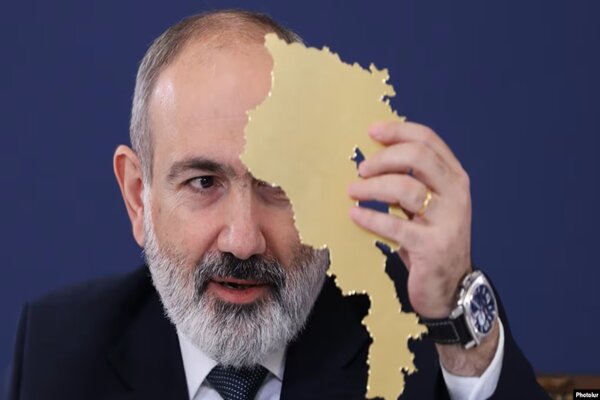
According to the International Desk of Webangah News Agency, recent political developments in Armenia indicate that Prime Minister Nikol Pashinyan has entered a more aggressive phase of his political agenda following his consolidation of power and victory in parliamentary elections. This new stage involves simultaneous efforts to suppress domestic opposition, overhaul the security and diplomatic apparatus, rapidly resolve the enclave issue, amend the constitution, and deepen ties with the West.
A significant recent development was the arrest of former Armenian President Robert Kocharyan, his son Sedrak Kocharyan, and the initiation of judicial proceedings against several other pro-Russian political and economic figures. The Armenian Anti-Corruption Committee has stated that the case involves accusations of abuse of power, bribery, and money laundering, with the names of Serzh Sargsyan and other former officials also emerging in the investigations. While these charges legally require court review and cannot be considered proven without a definitive ruling, their political timing is highly significant. Pashinyan is targeting key figures from the former republic while simultaneously implementing profound changes in Armenia’s foreign policy and power structures.
The arrest of Kocharyan signifies a potential end to the former republic. Kocharyan is not merely a former president but a symbol of a crucial segment of Armenia’s political and security establishment prior to the 2018 Velvet Revolution. He is also a prominent opponent of Pashinyan, who strongly criticized Pashinyan’s pro-Western policies and warned of their consequences during the recent parliamentary elections. This context elevates his arrest and new cases against Serzh Sargsyan and other veteran figures beyond a mere corruption probe. Pashinyan is effectively weakening the political network capable of resisting his strategic course. This is further underscored by Pashinyan’s unprecedentedly critical remarks in parliament against former leaders and even the Supreme Patriarch of the Armenian Apostolic Church, suggesting that opposition leaders should be imprisoned. Armenian media have also reported escalating tensions between Pashinyan and the Kocharyan faction.
Therefore, it can be argued that Pashinyan is now focused on completing the transition from the Third Republic to a new order he terms the “Fourth Republic of Armenia.”
Less attention has been given to the changes at the helm of the Armenian Security Council. On August 13, Pashinyan replaced Armen Grigoryan with Alen Simonyan, the former Speaker of Parliament and a close confidant, as Secretary of the Security Council. Grigoryan had held this position since 2018 and was a key figure in security policy and the peace process with Azerbaijan throughout Pashinyan’s premiership. The significance of this change lies in Simonyan not being an independent technocrat or an outsider to Pashinyan’s political circle; he is one of the Prime Minister’s closest political allies and a leading figure in the “Civil Contract” party, actively engaging in anti-opposition rhetoric during parliamentary elections alongside Pashinyan. Upon introducing Simonyan, Pashinyan stressed that he had participated in strategic decisions during the previous term and, due to his prior parliamentary leadership experience, possessed the necessary knowledge for a swift transition to his new role. Consequently, this reshuffle can be viewed as part of concentrating security structures within a politically compliant circle loyal to Pashinyan, diminishing the prospects for more independent figures, even those with pro-Western leanings. Increased suppression and arrests of prominent opponents can also be seen as a result of this appointment. Reports in regional media suggest that Armen Grigoryan might be appointed as Armenia’s Ambassador to the United Kingdom. If true, his dismissal may not represent a complete sidelining but rather a strategic transfer from a highly sensitive security role to a less sensitive diplomatic one.
Another notable development is the appointment of 35-year-old Ani Avetisyan as Deputy Foreign Minister. Avetisyan, an expert in Eastern studies and Hebrew, studied and conducted research at Heidelberg and Cambridge universities and has a background in European foundations and educational institutions. While this appointment alone does not definitively prove Pashinyan’s increasing “Western orientation,” it gains clearer political significance when viewed alongside the recent changes. Pashinyan is empowering a younger generation of managers, Western-educated and possessing extensive connections with European and American institutions. This is the generation that, unlike some pro-Russian former elites, does not necessarily define its political identity in relation to Russia. From this perspective, the changes in the Ministry of Foreign Affairs and the Security Council should be interpreted as part of a generational and institutional rearrangement, with a trajectory leaning more towards Europe, the United States, Israel, and Western structures.
Pashinyan perceives a historical opportunity following the 2026 elections. He currently benefits from electoral backing and a shifting regional environment. Russia’s influence in the South Caucasus has diminished compared to previous years. The United States has directly engaged in regional projects to counter adversaries in a strategically important area close to Iran, Russia, and China. Azerbaijan seeks to solidify its gains, while Turkey aims to open new communication routes and increase its influence in the Caucasus and Central Asia, ultimately shaping its envisioned Turkic world. Pashinyan intends to leverage this window of opportunity and the support of his foreign backers to resolve several issues simultaneously – peace with Azerbaijan, normalization of relations with Turkey, constitutional reform, resolution of the enclave issue, development of new transit routes, and integration into Europe – before domestic opposition can regroup or Russia, once free from the Ukraine conflict, acts against him. This explains the accelerated pace of his actions.
The village of Tigranashen, or “Karki,” holds particular importance. Pashinyan has recently, by deliberately using its Azerbaijani name, stated that this area does not belong to Armenia and that the enclave issue must be resolved. He has even warned of the possibility of renewed conflict if the disputed territories are not settled. The Armenian government views this action as part of implementing a peace agreement and mutual recognition of territorial integrity. However, the situation is different for Iran. Tigranashen is situated adjacent to a crucial communication route connecting Armenia to the south and Iran. Therefore, an increase in Baku’s control over this region, even without the road officially becoming a “corridor,” would create a new point of pressure and disruption in Armenia’s communication network. Consequently, Iran should not view the Tigranashen issue as a mere border dispute between Armenia and Azerbaijan and should convey its concerns to Armenia.
The core challenge emerges when the Tigranashen village issue is considered alongside the TRIPP project, or the “Trump Route for International Peace and Prosperity.” This route is intended to facilitate transport links between Baku and Nakhchivan through Armenian territory. The Armenian government insists that its full sovereignty and jurisdiction over the route will be maintained. However, the long-term presence of American capital and management in this project could alter regional dynamics. Therefore, the central risk for Iran is not merely the establishment of a “Zangezur corridor” that severs Iran’s border. The primary danger lies in the potential for a new network of transportation and geopolitics to form north of Iran after the corridor’s implementation, utilizing provisions of the Caspian Sea Convention (if ratified by Iran’s parliament). This network would connect Azerbaijan, Nakhchivan, Turkey, Israel, and Europe, while diminishing the roles of Iran and Russia.
Russia has been the primary security power in Armenia for the past three decades. However, Pashinyan is now steering towards a multifaceted, West-centric model. Alen Simonyan’s appointment to the Security Council, the presence of young pro-Western diplomats in the Foreign Ministry, and the growing cooperation with Europe, the United States, Israel, and Turkey all point in this direction. Even if Armenia does not completely detach from Russia, the center of gravity of its foreign policy is shifting. For Moscow, this is not just about losing Armenia; it’s about losing its position in the South Caucasus security architecture and becoming isolated in its own backyard. This encirclement, coupled with increased influence from Turkey, NATO, and Israel in Central Asia and Baku, poses a threat to Russia’s security and territorial integrity.
In this scenario, Iran must emphasize, without causing undue sensitivity to Armenia’s internal affairs, that any government in Yerevan, whether led by Pashinyan or another figure, must respect the existing border, ensure Armenia’s sovereignty, territorial integrity, security, and Iran’s access to the country, while developing communication corridors. Iran should concurrently undertake four actions: First, expedite the development and upgrading of the Iran-Armenia transit route, making it an indispensable economic reality. Second, engage in direct negotiations with Yerevan regarding the legal status of Tigranashen, the M-2 transit road, and the Trump route or TRIPP. Third, obtain clear guarantees against the presence of extra-regional military or security powers near Iran’s border in any form. Fourth, consult with governments that share common interests in Armenia, ensuring these actions are not perceived as attempts to return Armenia to Russia’s orbit, which could alienate Armenian public opinion given Russia’s role in the 2020 war. In this context, Iran should negotiate and discuss its concerns with the incumbent government in Armenia while remaining informed about the analyses and viewpoints of opposition forces to gain a more realistic and comprehensive picture.
The events unfolding in Armenia are not isolated incidents driven by fleeting political emotions. The arrest of Kocharyan and pressure on Sargsyan, the realignment of the Security Council with Alen Simonyan, the emergence of a new, Western-oriented generation like Ani Avetisyan in the Foreign Ministry, constitutional reforms, resolution of the enclave issue, rapprochement with Europe and the US, and the advancement of TRIPP are all part of a larger process. Pashinyan’s objective appears to be guiding the Republic of Armenia away from the post-independence political and security order largely based on its relationship with Russia and the Karabakh issue, towards a new, more European, pro-Western, peace-oriented Armenia reliant on economic ties with Azerbaijan and Turkey. This transformation does not necessarily equate to hostility towards Iran. However, if Iran remains passive, these developments could automatically lead to a gradual reduction of Iran’s geopolitical weight in the South Caucasus and its marginalization from the region. This potentially catastrophic shift, coinciding with Iran’s maritime blockade in the Persian Gulf and the Sea of Oman by the United States and Trump’s efforts to impose unprecedented economic pressure, takes on amplified significance. Iran must not jeopardize one of its important and uncontested transit border crossings through inaction and passivity.
Therefore, Iran should seek arrangements ensuring that its future access to Armenia is not contingent on the machinations of regional rivals and extra-regional adversaries linked to Azerbaijan, Turkey, or another power. Instead, these actors should be compelled to consider Iran’s interests to play a role in this small yet significant country. Consequently, any action by Armenia, Iran, or rivals that diminishes the importance or attractiveness of Iran’s current corridor routes must be met with Iranian opposition and practical countermeasures. Pashinyan is moving rapidly because he aims to solidify the new structure before internal resistance can regroup. Perhaps the most crucial point is that what is happening in Yerevan today is not merely a change of officials or the arrest of a few opponents; it is an attempt to redirect Armenia’s historical trajectory. The outcome of this shift will directly impact Iran’s security and geopolitical position in the Caucasus.