
Iran Strengthens Strategic Ties with Russia and China Amid Shifting Global Power Dynamics
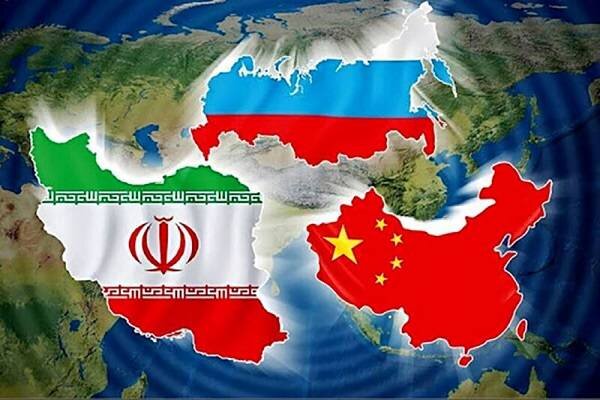
According to the International Desk of Webangah News Agency, Iran‘s foreign policy is undergoing a significant realignment of priorities due to fundamental changes in the international order and the failure of traditional engagement models with the West, particularly following the United States’ breach of international commitments. In an environment where comprehensive economic pressure campaigns and sanctions have obstructed traditional financial and trade flows, a pivot towards emerging power centers in the East, specifically China and Russia, has evolved from a tactical move to a strategic imperative for maintaining economic stability, developing transit corridors, and redefining channels for goods and capital exchange.
Drawing on contemporary international relations theories, nations facing external structural pressures often adopt a combination of “asymmetric balancing” and “constructive interdependence.” Within this framework, Iran, while steadfastly upholding its sovereign independence and avoiding absolute bloc dependency, has chosen purposeful convergence with nascent economic and security alliances in Asia as a lever to neutralize the impact of sanctions policies.
Shared interests among Moscow, Beijing, and Tehran in establishing non-dollar financial mechanisms, undertaking long-term infrastructure investments, and creating joint transit corridors form the operational blueprint for this trilateral cooperation. This necessitates a precise assessment of capabilities, internal structural challenges, and latent potential in making major policy decisions. This analysis will delve into the dimensions, depth, and strategic importance of Iran’s relations with Russia and China.
Emerging Powers Form Alliances
In the evolving geopolitical landscape of the contemporary world, deepening and diversifying structural ties between Tehran and Moscow play a decisive role in balancing regional and international power. Against the backdrop of prolonged confrontations and threats stemming from comprehensive conflict and scenarios of war and clashes between Iran and the United States, forging a complex and multi-layered network of connections with the Russian Federation offers a deterrent, secure space for the nation’s strategic and economic breathing room.
Establishing intertwined and multifaceted relations that extend beyond simple commercial exchanges to fundamental areas such as major gas infrastructure, activating the North-South strategic transit corridor, forming a regional grain hub, and complementing security and armament capabilities, serves to thwart isolationist pressures imposed by Washington. This is because, despite deep strategic ties and the signing of a free trade agreement with the Eurasian Economic Union, economic exchanges between Iran and Russia remain hampered by domestic regulatory instability, a lack of common standards, and weak corridor infrastructure. To achieve the targeted goal of ten billion dollars, institutional coordination, facilitation of banking relations, and confidence in the private sector are essential.
These relations enable Russia to revive its export bottlenecks amid blocked Western routes, while simultaneously enhancing Iran’s geo-economic position within the Eurasian basic goods supply network. Such complex, reciprocal, and stable cooperation not only significantly increases the risk and cost of any military adventure or security blockade by the United States against Iran’s national interests but also compels major players like Beijing to recognize Iran as a powerful, independent, and indispensable component in the new power geometry and global equations.
Iran: The First Dam Against Western Threats
The strategic relationship between Tehran and Beijing within the transitioning international system is founded on a fundamental convergence of geo-economic interests and mutual security, extending beyond simple commercial interaction. Iran, with its unique geostrategic position and transit capacities along the Makran coast and Chabahar port, which shorten China’s access to the open waters of the Indian Ocean by approximately one thousand kilometers, is a key element in the Belt and Road Initiative puzzle.
Conversely, Beijing’s continued crude oil imports, a vital artery, pose a significant challenge to Washington’s maximum pressure campaign and economic isolation strategy, thereby enhancing Tehran’s economic resilience. Consequently, China’s foreign policy adopts a cautious approach termed “engagement without commitment” to avoid costly confrontations with the West by balancing relations between Tehran and other Persian Gulf littoral states.
To elevate this link to a sustainable and efficient partnership, both sides need to move beyond symbolic multilateral frameworks like the Shanghai Cooperation Organization and focus on practical bilateral mechanisms. This can be achieved through gradual Chinese investment models, the establishment of independent banks and financial structures for non-dollar currency settlements, and the development of eastern transit corridors.
Ultimately, the cooperation between Tehran and Beijing represents the intersection of China’s need to ensure stable energy security and access to regional markets with Iran’s critical necessity to neutralize unilateral sanctions, protect export revenues, and stabilize its geopolitical position in the new world order.
Conclusion
Current shifts in regional power balances indicate the decline of the previous hegemonic order and the consolidation of endogenous security patterns. In this context, establishing defense superiority, enhancing multi-layered deterrence capabilities, and elevating Iran’s comprehensive power against Israel are directly and inextricably linked to deepening structured and purposeful relations with the Russian Federation and the People’s Republic of China.
Synergistic cooperation with Moscow in areas such as advanced defense technology exchange, development of electronic warfare systems, management of vast energy reserves, and completion of the North-South corridor’s railway infrastructure will elevate Iran’s asymmetric deterrence capabilities to an irreversible level. On the other hand, consolidating strategic interactions with Beijing, the world’s industrial and economic hub, guarantees the sustained sale of hydrocarbon resources, the attraction of major investments in strategic ports like Chabahar, and the launch of dual banking settlement systems.
The full realization of this vision hinges primarily on overcoming internal structural obstacles, stabilizing trade regulations, and transitioning from symbolic memoranda of understanding to binding, operational, and multilateral contracts. This approach will not only preserve the nation’s identity and decision-making independence but also render Western pressure tools ineffective and elevate Iran’s standing to a decisive level within the global power architecture.


