China’s ‘Space Silk Road’ Challenges US Dominance in Orbit
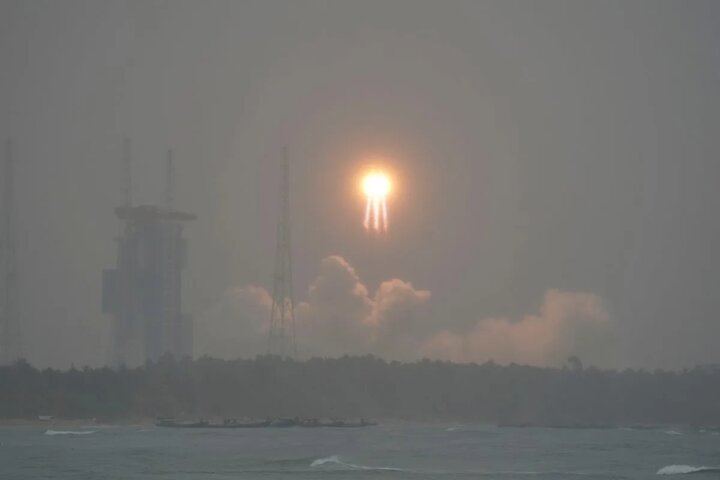
According to the International Desk of Webangah News Agency, Space science, beyond its role in scientific exploration and satellite launches, has become a prominent arena for geopolitical competition among major powers. The rivalry between China and the United States, previously confined to trade, technology, artificial intelligence, and semiconductors, has now extended to space, establishing this domain as a cornerstone of global economic, military, and technological influence.
Washington currently strengthens its presence in space through commercial and military satellite networks, notably “Starlink” operated by SpaceX. Beijing, in turn, is expanding its investments under the “Space Silk Road” project, a significant component of its “Belt and Road” Initiative, aimed at enhancing its technological and strategic reach beyond its borders. China believes that dominance in space translates to increased influence on Earth.
Al Jazeera reports that recent findings indicate China is expediting the construction of a space corridor, increasingly relying on commercial space enterprises. This effort mirrors the model pioneered by SpaceX with its Starlink system. These developments suggest Beijing is moving beyond state-owned entities to foster a burgeoning commercial space sector capable of developing reusable rockets, manufacturing thousands of satellites, and establishing space internet networks to counter American dominance.
This shift signifies a fundamental change in China’s strategy, opting to utilize private companies as a means to amplify its global influence rather than solely competing through traditional state-led programs. China posits that private sector involvement accelerates innovation, reduces launch costs, and boosts global competitiveness.
The extensive reach of Starlink has reportedly sparked growing concern in Beijing. China views the dominance of an American network in space internet services as a tool for Washington to exert influence beyond economic spheres, including crisis management, military operations, and the provision of communications and intelligence in conflict zones. Consequently, Beijing is striving to construct a parallel space ecosystem to diminish global reliance on American technology.
While Chinese companies operate on a “business model” and do not explicitly aim to provide military services, they receive substantial state support. This reflects China’s strategic vision of integrating the private sector to achieve national strategic objectives.
As the Space Silk Road is part of the Belt and Road Initiative, Beijing aims to connect countries through satellites and space communication networks, offering space internet, navigation, remote sensing, and spatial imaging services to partner nations. This endeavor seeks to reduce their dependence on Western infrastructure and limit Washington’s ability to leverage technology as a tool of pressure or sanctions.
Conversely, China’s expanding influence in providing internet and navigation services, embodied by the Space Silk Road, has raised alarms in the United States. Washington perceives China’s development as a direct challenge to its strategic interests, believing that the proliferation of Chinese space infrastructure could grant Beijing advanced intelligence and military capabilities while diminishing international reliance on American technology. Accordingly, Washington justifies its actions and sanctions on grounds of national security and the protection of critical infrastructure.
From Washington’s perspective, modern satellites perform roles beyond internet connectivity, serving crucial functions in reconnaissance, high-resolution imaging, positioning, and missile guidance. This explains the White House’s concerned view of China’s expanding space capabilities.
This competition took on practical dimensions during the US-led war against Iran, highlighting the importance of commercial satellites for providing geographic imagery and data. Washington accused Chinese companies specializing in space imagery of providing services that indirectly aided Tehran, accusations that Beijing refuted as politically motivated.
Although Starlink still leads the global space sector in terms of satellite numbers and operational experience, indications suggest China is rapidly closing the gap. This does not imply Beijing will soon supplant Washington, but the competition has entered a new phase where space is no longer the exclusive domain of traditional powers or governmental agencies. It has become a competitive battlefield for commercial enterprises aligned with their nations’ strategic visions.
The competition between China and the United States in space is poised to extend beyond technological rivalry, likely becoming a significant factor in redefining the international order. Each satellite launched into orbit represents not only a technical achievement but also an expansion of political, economic, and military influence. As space becomes more congested and civilian and military applications increasingly intersect, any orbital incident could escalate into an international crisis. In this evolving space environment, nations will face difficult strategic choices between competing space constellations, with the “Space Silk Road” emerging as a prominent theme of global competition in the coming decades.