German Chancellor Friedrich Merz Warns of International Consequences After Far-Right Electoral Victory
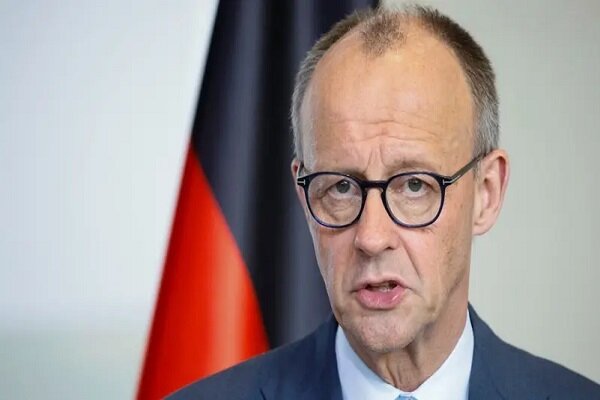
According to the International Desk of Webangah News Agency, German Chancellor Friedrich Merz has issued a stern warning regarding the international implications of the far-right party Alternative for Germany’s (AfD) electoral success in the state elections of Saxony-Anhalt. The outcome, reported by Reuters, has sent significant shockwaves through the political landscape.
Speaking at a press conference in Berlin on Monday, Chancellor Merz stated that he and his party, the Christian Democratic Union (CDU), were “deeply shocked” by the election results, which he did not anticipate. He described the defeat as the “worst electoral defeat” for the CDU in many years, even decades.
Merz highlighted that approximately 60 percent of the votes went to parties that, in his view, “fundamentally challenge the democratic institutions and rules of the country,” suggesting a shift occurring not just in Saxony-Anhalt but across Germany.
Nevertheless, the German Chancellor emphasized the continued resilience and stability of the nation’s institutions, asserting that the rule of law would remain firmly in place. He also pledged that the government would “redouble its efforts” to understand and address the sentiments and expectations of the populace.
The Alternative for Germany (AfD) achieved a historic victory in the Saxony-Anhalt state elections, securing nearly 44 percent of the vote and positioning itself for the first time to seriously contend for forming a state government. This result has dealt a severe blow to the CDU, led by Friedrich Merz, and intensified discussions about the growing influence of the far-right across Germany and Europe.
Founded in 2013, the AfD initially emerged primarily as an anti-Euro and anti-European Union party. In subsequent years, it transitioned towards more hardline right-wing stances, with opposition to immigration, EU policies, and elements of climate policy, alongside an emphasis on German nationalism, becoming its core tenets. The party is now widely recognized by the German mainstream political establishment as a far-right entity.
The AfD also holds distinct positions compared to traditional German parties regarding Russia, advocating for closer ties with Moscow. In Saxony-Anhalt, this stance has resonated with a segment of East German voters who maintain historical and cultural connections with Russia.
Despite securing approximately 44 percent of the vote, the AfD did not achieve an absolute majority, necessitating support or coalition with other parties to form a government. A significant obstacle remains the political “cordon sanitaire” established by Germany’s major parties against cooperation with the AfD, with Merz explicitly stating his refusal to collaborate with them.
The significance of these elections extends beyond Saxony-Anhalt. Reuters has characterized the outcome as a warning to all of Europe, indicating that dissatisfaction with the cost of living, economic conditions, immigration, and the performance of traditional parties is fueling the rise of far-right movements. The AfD’s success could also influence upcoming state elections in Germany and shape political dynamics at the national level.
Following the election results, Merz acknowledged that the defeat had shaken the foundations of his party but reiterated his firm stance against any form of cooperation. Consequently, the AfD’s victory presents one of the most serious political challenges to the Merz administration and the traditional German party system.