
Yemeni Official: Al-Wadiah Camp Attack Delivers Strategic Blow to Saudi Arabia
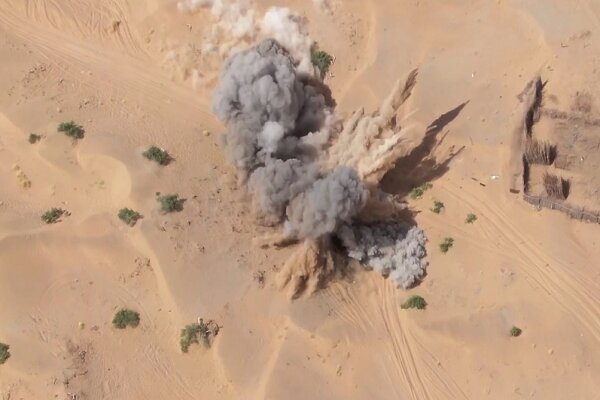
According to the International Desk of Webangah News Agency, Mohammed Mansour, Yemen‘s Deputy Minister of Information, announced in an interview with Al-Masirah channel that the Yemeni armed forces’ attack on the Al-Wadiah camp delivered a strategic blow to Saudi Arabia’s mobilization and armament systems. He noted that the timing of this operation coincided with a Saudi crime that targeted interests in Jawf province approximately half an hour before the armed forces broadcast footage of the operation.
Mohammed Mansour asserted that Saudi Arabia attempted to overshadow the dimensions and repercussions of the Al-Wadiah operation by committing this crime. However, the scale of casualties and damage within the camp rendered the country incapable of concealing the impact of the strike.
Mansour explained that Al-Wadiah was not merely a conventional military target but was considered one of the most prominent hubs associated with arming and planning for escalation by Saudi Arabia. He indicated that the operation targeted trucks carrying weapons, commanders, and command and control centers, thereby rendering the camp non-operational.
The Yemeni official characterized the attacks as evidence of the advanced military capabilities achieved by the Yemeni armed forces. He added that this assault demonstrated Yemen’s readiness for this phase, emphasizing that the slogan “Siege for Siege and Escalation for Escalation,” declared by Sayyid Abdul-Malik Badr al-Din al-Houthi, is not solely reliant on missile and drone power but is grounded in spiritual, moral, humanitarian, and logistical preparedness.
Mansour, observing that war media has become an essential element in military operations, praised the documentary footage of recent strikes. He stated that this form of documentation has had a profound impact on Saudi and Zionist consciousness and has compelled American, British, and French media to cover the scale of Yemeni operations.
He further elaborated that war media is no longer merely a conveyor of operational news but has transformed into a component of the battlefield. Mansour underscored the accuracy of the filming and the integrity of the strike documentation, asserting that this has led to the undermining of Saudi media narratives and the silence of mercenaries.
Mansour believes that Saudi Arabia is experiencing confusion in planning and managing confrontations. Despite spending $4 billion on arms procurement, the kingdom is simultaneously contacting Iran, China, Egypt, and Turkey for mediation with Sanaa.
He pointed out that Saudi Arabia had requested assistance from the United States approximately ten days prior for a comprehensive military attack and intervention. However, intelligence indicated that Washington exercised caution due to its previous experiences with the Yemeni armed forces.
The Deputy Minister of Information of Yemen also highlighted Saudi Arabia’s shifting alliances, noting its transition from an alliance with the United States to alliances with Bangladesh and Bahrain, which he described as indicative of its state of bewilderment and lack of direction.
Mansour explained that Saudi Arabia was surprised by the Yemeni military’s performance on the Taiz and coastal fronts, as well as by the precise strikes targeting its troop concentrations and military positions.
Mansour asserted that since the beginning of the aggression in 2015, Saudi Arabia has relied on a strategy of intimidation by targeting homes, hospitals, and civilian objectives. This approach continued until Yemen seized the initiative. He recalled that Saudi Arabia now understands that its presence in Yemen is nearing its end and that it will inevitably have to withdraw.
The Yemeni official simultaneously raised the possibility that pressure from Tel Aviv, particularly concerning the city of Al-Mukha, might push Saudi Arabia toward further escalation. He warned that continuing on this path would signify “suicide” in confronting the sovereignty, people, and army of Yemen.
He addressed Saudi Arabia’s silence regarding the outcomes of strikes that targeted Aramco facilities, stating that news related to these incidents is disseminated through foreign press rather than Saudi media, reflecting the extent of internal disarray within Saudi Arabia.
Mansour concluded by emphasizing that Yemen sought to resolve the situation through implementing agreements, including the cessation of aggression, lifting the blockade, paying reparations, releasing prisoners, and ceasing support for terrorist groups. However, the continued escalation by Saudi Arabia has steered matters in a different direction.


