
Georgia Emerges as Key Eurasian Cooperation Hub Amidst Shifting Geopolitical Alliances
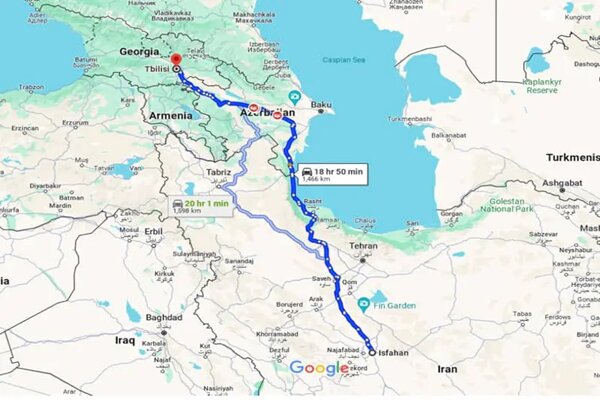
According to the International Desk of Webangah News Agency, Georgia has become a significant example of multi-vector foreign policy within the Eurasian geopolitical landscape. Tbilisi actively seeks to maintain close ties with the United States and the European Union, aiming to leverage economic and political benefits from its Western engagements. Concurrently, especially following the conflict in Ukraine, Georgia has endeavored to avoid direct economic confrontation with Russia, Iran, and other neighboring regional actors. This balanced approach has also been evident in its policy towards Iran.
The European Union’s 2025 report on Georgia noted a decline in the country’s alignment with EU sanctions regimes, reaching approximately 40% by October 2025. The report also highlighted that Georgia has not joined a significant portion of the EU’s restrictive measures against Russia, Belarus, and Iran. A similar trend was observed in the 2024 report, which stated Georgia’s alignment with the EU’s Common Foreign and Security Policy at 49%.
However, this does not signify a complete disregard for US sanctions. In April 2024, the National Bank of Georgia engaged with the US Special Envoy for Iran on implementing Iran-related sanctions, affirming its adherence to such measures. Therefore, a distinction must be made between Georgia’s political system not fully adopting sanction regimes and the imperative for Georgian banks and companies to comply with binding sanctions.
Despite these constraints, the relationship between Iran and Georgia holds potential far exceeding their current bilateral trade volume. Georgia’s location on the eastern coast of the Black Sea, coupled with Iran’s position in the Persian Gulf and the Sea of Oman, could create a significant geo-economic complex for Iran if connected to the transportation networks of Russia and Central Asia. Such a network, by diversifying trade routes, reducing reliance on Western-controlled corridors, and enhancing Iran’s bargaining power, would contribute to its economic and strategic resilience against external pressures, particularly the maritime blockade imposed by the United States.
Why Georgia Has Not Joined Sanctions Against Iran
Georgia’s Multi-Vector Foreign Policy
The primary driver behind Georgia’s stance lies in its foreign policy approach. Following the 2008 conflict with Russia, Tbilisi forged deep ties with the US and Europe. However, these connections do not translate into a wholesale adoption of Western sanctions policies. Given its proximity to Russia and significant economic reliance on regional trade, tourism, transport, and investment, Georgia cannot easily engage in all Western economic and political disputes against Moscow. The bitter memory of military conflict with Russia and its severe consequences remains a potent factor.
A similar logic, to an extent, applies to Iran. For Georgia, Iran poses no military threat; instead, it is viewed as a regional neighbor, a potential market, a reliable energy supplier, and an integral part of the Caucasus and West Asia communication network. Consequently, Tbilisi strives to balance preserving access to the Western economic system with avoiding direct involvement in US confrontations with Iran.
This approach is reflected in EU reports. While criticizing Georgia’s low alignment with the EU’s common foreign policy, the bloc has noted the country’s non-adherence to most Iran-related sanctions.
Georgia’s Economic Interests
Bilateral trade between Iran and Georgia, though currently modest, has shown an upward trend. In 2024, trade value reached approximately $322 million, a record high. The significance of this figure lies not only in its volume but also its potential for growth. Iran can offer Georgia access to large markets in South and East Asia, while Georgia serves as a gateway to the Black Sea, Eastern Europe, and European transportation networks. Therefore, from Tbilisi’s perspective, severing economic ties with Tehran is not strategically advantageous.
Deterioration of US-Georgia Relations
This development should also be understood in the context of severely strained US-Georgia relations. On November 30, 2024, the United States suspended its strategic partnership with Georgia in response to the Georgian government’s decision to halt EU accession talks and what Washington termed “undemocratic actions.” The US State Department stated that the ruling Georgian Dream party’s halt to EU accession was contrary to the fundamental principles of their Strategic Partnership Charter.
Subsequently, on December 27, 2024, the US Treasury Department sanctioned Bidzina Ivanishvili, founder and honorary chairman of the Georgian Dream party, citing his alleged “undermining of Georgia’s democratic and Euro-Atlantic future to benefit the Russian Federation.” This rupture followed years of increasing authoritarianism in Tbilisi and alignment with US adversaries, particularly Russia and Iran. The US’s sharp and interventionist approach to Georgia’s internal affairs, coupled with dissatisfaction over the majority of the country’s electorate turning away from pro-Western sentiments, contributed to these illogical and extreme stances.
Iran’s Role in Georgia’s Energy Security
The energy sector is a crucial area of interaction. Georgia relies on external sources for its energy needs and has sought to diversify its suppliers. Iran, with appropriate legal, financial, and infrastructural arrangements, can contribute to diversifying Georgia’s energy mix, particularly in gas supply. Historical gas exports from Iran to Georgia in 2006 and the potential for swap mechanisms further enhance this prospect. From this viewpoint, Iran is more than just a market for Georgia; it can be a component of the country’s energy security equation.
Georgia’s Transit Position
Georgia promotes itself as a regional energy and transit hub. In 2025, the Ministry of Economy announced Tbilisi’s intention to increase its transit capacity and role as a regional energy hub. Consequently, Georgia is naturally interested in facilitating greater cargo flow from the south to its port and railway networks. Iran possesses precisely this capability.
Real Cooperation Potential Between Iran and Georgia
Persian Gulf-Black Sea Corridor
A key project involves establishing and strengthening a transportation corridor between the Persian Gulf and the Black Sea. Iran, Armenia, and Georgia, alongside Azerbaijan, have discussed creating new transit routes between these bodies of water in recent years. The Iran-Armenia-Georgia route holds particular geopolitical significance as it connects Iran to the Black Sea network without transiting through Turkey, thereby mitigating the influence of this rival nation. This route could be vital for Iran’s exports to markets in Georgia, Bulgaria, Romania, and Eastern Europe.
Conversely, Iran can serve as an access route for Georgia to the Persian Gulf, India, and South Asian markets. Therefore, the Iran-Georgia relationship should be viewed not merely as bilateral trade but as an integral part of the North-South transit architecture.
Connecting the North-South Corridor to the Black Sea
The International North-South Transport Corridor links Iran, via the Caspian Sea and Russia, to Northern Eurasia. This corridor, spanning approximately 7,200 kilometers, connects Russia, Iran, the Caucasus, the Caspian Sea, the Persian Gulf, and India. If this network is integrated with Georgia’s routes and the Black Sea, Iran could benefit from a diverse set of routes beyond one or two limited options:
- Russia – Caspian Sea – Iran – Persian Gulf
- Central Asia – Caspian Sea – Caucasus – Georgia – Black Sea
- Iran – Armenia – Georgia – Black Sea
This diversification itself represents a geopolitical advantage.
Rail Transport
The completion of the Rasht-Astara railway, the development of northern Iranian ports, and improved rail connectivity with Russia’s railway network could gradually enhance Iran’s position in Eurasian trade. Georgia, meanwhile, is actively developing and strengthening its role in East-West corridors. Amidst competition among various Eurasian corridors, including the Middle Corridor and the North-South route, Georgia is steadily gaining importance. Cooperation between Iran and Georgia can bridge these two networks.
Commodity Trade
The two countries could design a five-year plan to increase bilateral trade. Iran possesses advantages in areas such as food and agriculture, construction materials, petrochemical products, pharmaceuticals and medical equipment, industrial products, machinery, knowledge-based products, carpets and handicrafts, and technical and engineering services. Georgia, in turn, can offer capacities in logistics services, utilization of Black Sea ports, tourism services, legal financial and commercial services, information technology, food industries, and transit services.
Current trade largely favors Georgian exports to Iran, with a trade surplus for Iran. Therefore, mechanisms must be devised to increase Iranian exports and, conversely, boost imports of Georgian goods and services into Iran. 2024 data indicates that the $322 million trade volume is still considerably below the two economies’ potential.
Tourism: A Low-Cost Yet Significant Sector
Tourism represents one of the simplest avenues for developing bilateral relations. In 2024, approximately 146,000 tourists traveled from Iran to Georgia. Iran also offers attractions for Georgian tourists in historical, cultural, medical, natural, and religious domains. Developing direct flights, joint tours, and facilitating tourism payments can strengthen economic ties without requiring substantial investment.
Energy: The Most Significant Long-Term Potential
Should Iran and Georgia aspire to elevate their relationship from mere “economic neighbors” to “strategic economic partners,” energy must be a cornerstone. Iran possesses vast oil and gas reserves, while Georgia seeks to diversify its energy sources. The resumption of Iranian gas exports to Georgia could be a key to success in this domain. However, under sanctions, developing energy cooperation necessitates thorough legal review and problem resolution. Therefore, a practical alternative is to pursue smaller, more transparent projects in electricity, renewable energy, swaps, and technical cooperation.
The Importance of Russia and Central Asian Countries’ Roles
Cooperation between Iran and Georgia alone has limited significance and impact. However, integrating this relationship into a larger network encompassing Russia, Kazakhstan, Turkmenistan, Uzbekistan, Tajikistan, and Kyrgyzstan would yield far greater geopolitical ramifications. Such a network could foster political unity and establish an economic connectivity network across Eurasia:
Establishing Multiple Independent Trade Routes for Iran
In the face of US pressure, Iran’s greatest vulnerability is its reliance on a limited number of financial, maritime, and trade routes. An Iran-Caspian Sea-Russia-Central Asia-Georgia network would increase available routes and also benefit countries like India and some Persian Gulf littoral states. In this scenario, pressure on one route due to US machinations or issues arising from sanctions and military conflicts would not necessarily halt the entire region’s trade.
Transforming Iran into a Bridge Between Central Asia and Open Waters
Central Asian countries are landlocked and require transit routes through other nations to access open waters. Iran holds a crucial advantage: simultaneous access to the Persian Gulf, the Sea of Oman, the Caspian Sea, and the South-North rail network. Consequently, Iran can serve as a significant access route to southern markets for Kazakhstan, Turkmenistan, Tajikistan, Kyrgyzstan, and Uzbekistan. In return, these countries can supply Iran with needed resources, goods, and markets. This creates a mutually beneficial interdependence that is strategically more valuable than a mere increase in bilateral trade volume.
Russia’s Role
Russia plays a pivotal role in this network. Moscow, facing Western sanctions post-Ukraine conflict, is also seeking alternative trade routes. Thus, Russia’s and Iran’s interests largely overlap in developing the North-South corridor. Increased Russian focus on this corridor can be viewed within the framework of its efforts to rebuild supply chains outside Western control.
If Russia, Iran, and Central Asian countries collaborate on developing rail, port, and customs infrastructure, and Georgia connects to this network via the Black Sea, a multifaceted trade network will emerge.
How This Network Aids Iran’s Stance Against the US
Reducing Transit Vulnerability
Sanctions are most effective when they can restrict a country’s trade routes. If Iran possesses multiple alternative routes, pressure on one route will have a lesser impact. Therefore, Iran’s strategy should not solely focus on circumventing sanctions but also on increasing options for broader trade.
Increasing Bargaining Power
The more countries that see economic benefit in trading with Iran, the higher the cost for the US to impose secondary sanctions on them. If Iran trades with only a few countries, its bargaining power is limited. However, if a network involving Russia, Central Asia, the Caucasus, and Black Sea ports is established, the issue transcends bilateral relations and becomes one of shared multi-country interests.
Reducing Reliance on Western-Controlled Maritime Routes
Iran has access to open waters in the south, but a significant portion of global maritime trade is influenced by Western maritime powers, and the US poses challenges for Iran in the Strait of Hormuz. The simultaneous development of northern land and rail routes can mitigate the risk of dependence on a single maritime route, a critical consideration given the current geopolitical tensions.
Boosting Transit Revenues
Iran should not solely focus on goods export; one of its greatest opportunities lies in becoming a transit country and a corridor hub for Eurasia. Every train or truck traveling from Central Asia through Iran to the Persian Gulf generates revenue for Iran, irrespective of the cargo owner’s nationality. This model can provide Iran with a relatively stable and long-term foreign currency income.
Limitations of Cooperation with Georgia
It is crucial to avoid excessive optimism regarding Iran-Georgia relations. Firstly, Georgia maintains very close ties with the US and Europe. Secondly, Georgian banks and companies face the risk of secondary US sanctions, a major impediment to expanding financial relations between Iran and Georgia. Thirdly, Tbilisi is sensitive to its territory being used for activities that could incur Western sanctions or pressure. Fourthly, Georgia lacks a land border with Iran, necessitating transit through Armenia or Azerbaijan for land connectivity. Fifthly, Georgia itself is navigating competition among regional corridors and may seek to balance between the Middle Corridor, Turkish routes, Russian routes, and the Iranian route.
Consequently, Iran should not expect Georgia to rapidly become a “geopolitical ally.” A more realistic initial objective is to transform Georgia into a transit, trade, and economic partner.
Potential Actions for Iran
Considering specific proposals and existing capabilities can be beneficial:
Establish an Iran-Georgia Strategic Council for Corridor Development
Iran should create a permanent mechanism involving the Ministries of Roads and Urban Development, Economy, Oil, Foreign Affairs, and the private sector to review joint projects.
Connect Three Networks
Iran’s core strategy should be to link the North-South Corridor with the Persian Gulf-Black Sea route and subsequently with the Central Asian network. The integration of these three routes could position Iran as a crucial transit hub in Eurasia.
Complete Domestic Infrastructure in Iran
Without the completion of the Rasht-Astara railway and the development of northern ports, Iran’s potential role in Eurasian corridors remains aspirational.
Develop Barter Trade and Legal Payment Mechanisms
Within the framework of domestic laws and applicable international regulations, Iran and Georgia can employ payment and settlement methods that reduce bilateral trade’s dependence on a single financial channel. This would enhance trade diversification and financial transparency, thereby mitigating Western interference in Georgian cooperation with Iran.
Create Joint Logistics Zones
Iran can establish specialized logistics centers at its northern ports and border crossings for Georgian and Central Asian goods. Conversely, Iranian companies can leverage Georgian Black Sea ports for their exports.
Energy Cooperation
Gas swaps, electricity, renewable energy, and technical cooperation should be prioritized. Iran’s gas could be attractive to Georgia for diversifying its energy import sources.
Form a Consortium with Iran, Russia, Central Asia, and Georgia
Instead of solely focusing on bilateral ties, Iran should pursue the formation of multilateral consortiums in areas such as railways, ports, warehousing, multimodal transport, energy, agriculture, IT, and food industries.
Conclusion
Georgia’s non-adherence to most EU sanctions against Iran should not be solely attributed to political proximity with Tehran. Georgia is, in effect, pursuing a balancing policy that, while maintaining ties with the US and Europe, seeks to preserve its economic and geopolitical interests through relations with Russia and other regional countries. Official EU reports from 2024 and 2025 corroborate this low level of alignment.
Simultaneously, Georgia has not disregarded all requirements pertaining to Iran sanctions. The 2024 meeting between Georgian banking officials and the US Special Envoy for Iran indicates Tbilisi’s effort to maintain economic cooperation with Tehran while preventing Georgian banks and companies from facing secondary US sanctions. Therefore, Iran’s optimal strategy would be to endeavor to transform Georgia into a node within the Eurasian transit and economic network.
Within this framework, three levels of cooperation are significant:
- First level, bilateral: Increasing trade, tourism, energy, technical services, and investment.
- Second level, regional: Connecting Iran to Georgia via Armenia and developing the Persian Gulf-Black Sea route.
- Third level, Eurasian: Linking this route to Russia, Kazakhstan, Turkmenistan, Uzbekistan, and other Central Asian countries within the North-South network and Caspian Sea communication networks.
The establishment of such a network would yield benefits for Iran far beyond a few hundred million dollars in trade with Georgia. Iran could transition from a sanction-burdened country to an essential hub in the Eurasian trade network. In this scenario, while US sanctions would continue to impose costs, Washington’s ability to completely isolate Iran from the regional economy would be significantly diminished. This holds considerable importance in the context of economic warfare. When Iran’s exclusion from the Eurasian trade network incurs costs for multiple other countries, it presents a formidable challenge to expansionist US policies.
Georgia, due to its access to the Black Sea, transit position, relations with Europe and Central Asia, and geographical proximity to Russia and the Caucasus, can serve as a crucial link in this network. However, realizing this potential hinges on a fundamental condition: Iran must elevate its relationship with Georgia from limited bilateral political and trade ties to a multilateral transit and economic partnership.
Ultimately, an Iran-Russia-Central Asia-Caucasus-Black Sea configuration could become a paramount tool for enhancing Iran’s economic resilience against external pressures. This is not because it would eliminate sanctions, but because it would increase the cost of their imposition and diversify Iran’s economic and geopolitical options. Recent developments in the North-South corridor and competition over Eurasian corridors indicate that this transformation is not merely a theoretical hypothesis but is becoming an integral part of the actual reshaping of Eurasian trade and transport networks.
For Iran, Georgia represents more than just a trade partner; it is a strategic bridge to Europe, a corridor to Central Asia, and a powerful symbol of overcoming US sanctions and successfully pursuing an independent foreign policy. Despite Western pressure, Georgia continues to deepen its ties with Iran, and the Southern Caucasus is emerging as a new front in the ongoing contest between the United States and the Islamic Republic, a front where Iran is making consistent strides forward.


