
US Pressure on Central Asia Faces Geopolitical Hurdles in Isolating Iran
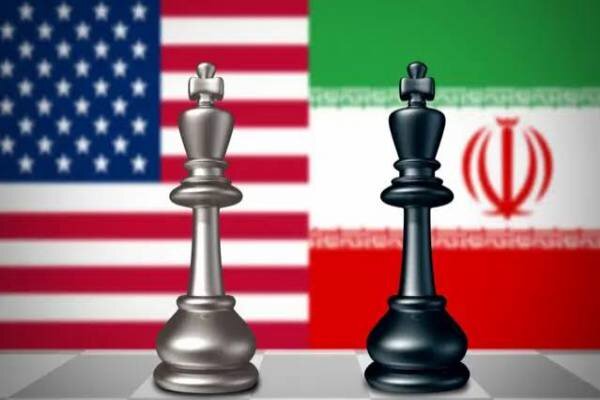
According to the International Desk of Webangah News Agency, the United States is intensifying its economic pressure campaign against Iran by seeking to sever Tehran’s land routes to Central Asia, in addition to its existing efforts targeting maritime and border connections. Reports indicate the Trump administration has urged Central Asian countries to reduce or halt trade with Iran, identify Iranian-affiliated companies, and restrict or cease the operations of Iranian banks. Failure to comply could result in secondary sanctions and restricted access to the dollar-based financial system.
While framed as part of a “maximum pressure” strategy, this policy encounters a fundamental obstacle: Iran’s unique geopolitical position makes its exclusion from regional transport, energy, and trade networks costly for its neighbors. Consequently, Washington’s envisioned “land blockade” of Iran may prove more burdensome for Central Asian nations than effective in isolating Tehran.
The significance of Iran to Central Asian countries extends beyond direct trade volumes, which are modest compared to their dealings with China, Russia, or Europe. Iran’s true value lies in its function as a transit corridor and gateway to open waters. All five Central Asian republics are landlocked and rely on transit through other nations for global market access. While Russia and China have historically been primary routes, regional governments are increasingly seeking diversification to lessen dependence on any single major power.
Iran offers a vital southern corridor, connecting Central Asia to the Persian Gulf and the Sea of Oman, thereby providing access to markets in India, the Middle East, and beyond. The U.S. pressure to sever these ties therefore threatens to eliminate a key geopolitical option for Central Asian countries aiming to overcome their geographical isolation.
Iran: A Minor Market, A Major Route
The core vulnerability in the U.S. strategy lies in this paradox. The direct trade between the five Central Asian countries and Iran, estimated at approximately $1.9 billion, appears negligible against their trade with China or Russia. This might lead Washington to argue that regional markets can easily substitute for Iran’s. However, this argument falters when transit is considered.
For instance, in 2025, direct trade between Uzbekistan and Iran amounted to about $579 million, less than one percent of Uzbekistan’s foreign trade. Yet, Iran’s importance for Tashkent in transit was significantly higher. In the same year, goods worth approximately $3.9 billion were transited through Iran to Uzbekistan, representing about nine percent of the country’s imports. This disparity highlights that Uzbekistan’s primary concern is access through Iran, not merely direct trade with it. Iran provides Uzbekistan with crucial access to the Persian Gulf, the Sea of Oman, India, and Middle Eastern markets. Eliminating this route does not diminish Uzbekistan’s need for maritime access; it merely reduces the available options.
Consequently, while U.S. pressure on Uzbek banks or companies might be financially manageable, the attempt to completely remove Iran from its transit network presents a far greater challenge.
Turkmenistan: Energy Versus Sanctions
Turkmenistan represents another critical case. Relations between Tehran and Ashgabat involve more than just merchandise trade; energy cooperation holds strategic importance. To reduce its reliance on the Chinese market, Turkmenistan has been developing new gas export routes, with Iran being one of the few viable options leveraging existing infrastructure to access other markets.
In 2024, Tehran and Ashgabat agreed on the annual transfer of up to 10 billion cubic meters of Turkmen gas to Iraq via Iran. Furthermore, a mechanism for transferring Turkmen gas to Turkey through Iranian territory became operational in 2025. These developments are geopolitically significant, as Ashgabat seeks to diversify its energy exports beyond China. Disrupting Iran’s role in this network directly opposes Turkmenistan’s strategic goals.
While the U.S. may attempt to halt these transactions through financial pressure and secondary sanctions, the fundamental question remains: Is Turkmenistan willing to abandon one of its few available routes for energy export diversification solely due to Washington’s pressure? Turkmenistan’s foreign policy tradition of avoiding overt confrontation with major powers, combined with its pragmatic approach, could allow it to find limited avenues for continued cooperation with Iran without explicit political opposition to the U.S.
Tajikistan: Cheap Fuel Versus U.S. Dollars
Tajikistan faces a similarly difficult position. Bilateral trade reached approximately $377.7 million in 2024 and rose to about $438 million in 2025, making Iran one of Tajikistan’s top five trading partners. Beyond merchandise trade, Tajikistan seeks more affordable and reliable sources and transit routes for its energy and fuel needs.
On August 15, 2026, energy and transportation ministers from Tajikistan met in Tehran to discuss purchasing oil products at preferential prices and crude oil for the country’s refineries. Tajikistan’s Energy Minister, Daler Jumayev, emphasized increasing imports as a national priority. Thus, Washington faces a complex economic equation with Dushanbe. While the U.S. can threaten Tajikistan’s access to its financial system, Iran can offer cheaper fuel and a southern trade route.
This is where “maximum pressure” hits a geopolitical limitation: sanctions can increase the cost of a transaction but cannot eliminate a geographical necessity. The U.S. can impose financial burdens, but it cannot erase the fundamental need for access and transit.
Kazakhstan and the North-South Corridor
Although Kazakhstan’s direct trade with Iran is limited, it benefits from Iran’s geographical position. Bilateral trade was estimated at around $430 million in 2025. Iran is important for Kazakhstan, particularly for grain exports and developing railway routes to the Persian Gulf. Kazakhstan aims to enhance its access to southern markets, with the International North-South Transport Corridor being a key tool for achieving this goal.
Therefore, even if Astana reduces direct trade with Iran, completely removing Iran from its transit network would mean losing a strategic and reliable route. This becomes even more critical when considering the competitiveness of various transport routes in the region.
The Middle Corridor Challenge
The U.S. and the European Union have significantly supported the Middle Corridor, or Trans-Caspian route, which aims to connect China and Central Asia to Europe via the Caspian Sea, Caucasus, and Turkey, serving as an alternative to routes through Russia. However, the Middle Corridor faces structural challenges, including the declining water levels of the Caspian Sea, which can reduce port capacity and maritime transport. Moreover, multi-modal transport requires transfers between ships, trains, and trucks, adding costs and time compared to a streamlined, all-land route through Iran.
Consequently, Iran’s route gains added importance for Central Asian nations. Iran is not necessarily a complete replacement for the Middle Corridor but a complement. Countries like Uzbekistan, Kazakhstan, and Turkmenistan seek to diversify their transport options, aiming to utilize routes through Russia, China, Iran, the Caucasus, Turkey, and various maritime pathways simultaneously. This multi-route strategy directly undermines the U.S. policy of severing ties with Iran.
A Legal Quandary for Astana and Bishkek
U.S. pressure on Kazakhstan and Kyrgyzstan also encounters a legal and institutional issue. Both countries are members of the Eurasian Economic Union (EAEU), and a free trade agreement between the EAEU and Iran became effective in May 2025. Thus, Washington is asking two members of an economic bloc to restrict trade with a country with which that bloc recently signed a free trade accord. This situation suggests that U.S. pressure could disrupt not only Iran-Central Asia relations but also existing economic arrangements between regional countries and Russia.
Central Asian governments are compelled to balance multiple considerations: relations with the U.S., membership in or cooperation with Russian-led institutions, ties with China and Iran, and their own direct economic interests. The balancing act is complex, navigating geopolitical pressures and economic realities.
Will Central Asian Nations Capitulate?
The answer is likely more nuanced than a simple yes or no. No Central Asian government wishes for direct confrontation with the Trump administration. The invitations extended to the leaders of Kazakhstan and Uzbekistan for the G20 summit in Miami underscore Washington’s emphasis on relations with these nations. Tajikistan relies on foreign investment and aid, while Turkmenistan generally maintains a cautious foreign policy towards external powers.
However, this does not imply they will abandon all communication channels with Iran. The most probable scenario involves a separation of financial cooperation from transit cooperation. Banks are expected to be more stringent regarding clients and transactions linked to Iran, and some companies may opt out of direct dealings with Iranian entities. Governments will likely receive lists of high-risk companies from Washington to avoid secondary sanctions.
On a broader scale, Central Asian countries will strive to preserve transit routes, energy swaps, and trade in essential goods with Iran as much as possible. In essence, they may concede financial concessions to the U.S. but are unlikely to forsake Iran entirely in terms of geography and transit.
Why a Land Blockade Cannot Isolate Iran
The fundamental flaw in the U.S. strategy is that Iran is not merely a destination but a conduit. If Iran were solely a $2 billion market for Central Asia, severing trade would be far simpler. However, Iran occupies a central position in a geographical network connecting Central Asia to the Persian Gulf and the Sea of Oman. Therefore, a land blockade of Iran would necessitate not only Tehran but also surrounding countries sacrificing their economic interests, a highly improbable outcome.
Iran is connected to Central Asia and the Caucasus to the north, Afghanistan and Pakistan to the east, and the open waters and maritime routes to the south. Even if the U.S. manages to block one financial channel, others will remain. If a bank is sanctioned, trade can shift to alternative mechanisms; if one route is restricted, another gains prominence.
This does not render sanctions ineffective. U.S. pressure can increase the cost of doing business with Iran, reduce investment, and make regional companies and banks more cautious. However, there is a significant difference between “increasing trade costs” and “complete severance of economic ties.”
The Primary Risk for Washington: Strengthening Regional Multilateralism
Perhaps the most significant unintended consequence of U.S. pressure is compelling Central Asian countries to pursue multiple corridor options simultaneously. Kazakhstan does not want to be solely dependent on Russia; Uzbekistan seeks alternatives to relying solely on China; Turkmenistan aims to diversify its gas exports beyond China; Tajikistan desires varied energy sources; and Kyrgyzstan seeks to broaden its trade options.
In this context, pressure to exclude Iran could backfire, intensifying regional incentives to establish parallel financial, transport, and energy networks. Political scientist Daria Karaev’s observations in the Russian newspaper “Nezavisimaya Gazeta” regarding the Middle Corridor experience are pertinent. He suggests that Central Asian countries may have been overly influenced by geopolitical considerations in Western transport projects, potentially entering initiatives primarily aimed at containing Russia and Iran without sufficient regard for their own economic interests.
Karaev also warns that subsequent U.S. pressure could target China, forcing Central Asian countries once again to choose between major powers. This warning cannot be ignored. If a “with the U.S. or against the U.S.” logic becomes the dominant pattern in economic relations, the multi-vector foreign policy of Central Asian nations, designed to reduce dependence on major powers, will be undermined.
Iran: Indispensable Despite Blockade Attempts
Ultimately, the critical question is not whether the U.S. can reduce Iran’s trade with Central Asia—the answer is likely yes. Washington wields the power of sanctions and the dollar-based financial system, compelling many regional banks and companies to exercise caution to avoid secondary penalties. The more significant question is whether the U.S. can remove Iran from Central Asia’s economic and transit map. This question is far more challenging to answer.
Iran is a replaceable market for the region, but a geographical route is not easily substituted. Trade can be rerouted, but a shorter path to the Persian Gulf, existing railway and road infrastructure, energy networks, and access to open waters cannot be conjured overnight. Consequently, Washington’s pressure is likely to result in a form of financial blockade and increased transaction costs rather than a complete land encirclement.
Central Asian countries will likely attempt to balance two competing needs: maintaining access to Western financial systems and avoiding U.S. secondary sanctions, while simultaneously preserving Iran’s trade and transit routes. In this scenario, even if Iran is excluded from certain banking and trade deals, it will remain a geographically indispensable reality. This reality poses the most significant obstacle to the idea of a complete land blockade of Iran. The U.S. can sanction banks, threaten companies, and raise the cost of doing business with Iran, but it cannot remove Iran from the region’s geography. While the U.S. can pressure Iran’s financial arteries, closing its geographical artery is far more difficult, as this artery is not solely Iran’s but is intrinsically linked to the economic interests of several landlocked nations.


