Israel’s War Machine Fueled by Taxes, Loans, and U.S. Aid
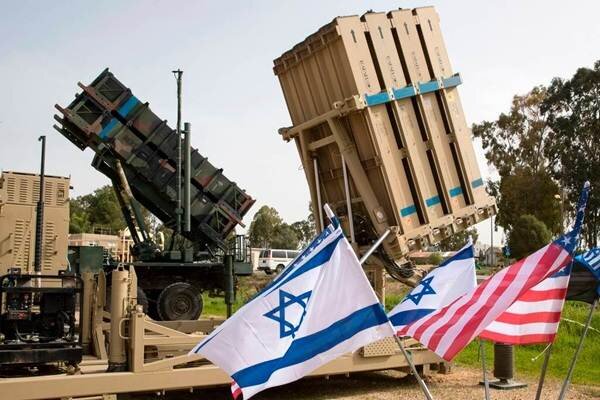
According to the International Desk of Webangah News Agency, the current debate over a new U.S. arms package for the Israeli regime, estimated at around $2.8 billion and including 40,000 2,000-pound bombs and 20,000 penetration warheads, has once again brought to the forefront fundamental questions about Israel’s war economy.
While this package is still under preliminary review by Congress, a significant portion of its cost is slated to be covered by the U.S. Foreign Military Financing mechanism, meaning that a substantial part of Israel’s arms expenditure is effectively funded by U.S. government resources and, ultimately, American taxpayers.
However, Israel’s financial sustenance is not solely dependent on foreign aid. The regime possesses a robust domestic financial base, encompassing a thriving technology sector, exports of goods and services, military industries, natural gas reserves, and a capital market. This internal capacity enables the funding of its military endeavors through its national budget, tax increases, and debt issuance.
The core challenge lies in the perpetual need for sustained financial resources to support prolonged, multi-front conflicts. Increased defense spending has rendered the Israeli regime increasingly reliant on a blend of domestic revenue, borrowing, and U.S. military backing.
Taxes and Domestic Economy: War Funding from Israeli Pockets
The majority of the Israeli regime’s operational expenses are financed through domestic sources, with taxation forming the most critical pillar of these revenues. Throughout its occupation, the regime has resorted to raising tax revenues to offset a portion of its escalating defense expenditures.
The Bank of Israel’s 2025 annual report indicated that increased tax revenue, partly a result of fiscal measures equivalent to about 1.5 percent of the Gross Domestic Product (GDP), helped to curb the budget deficit.
A cornerstone of the Israeli economy is revenue generation from the technology sector, which has emerged as a primary engine for exports and capital attraction in recent years. According to an alleged report by the Israel Innovation Authority, the technology sector generated approximately 352 billion shekels in economic output in 2025, accounting for 18.3 percent of the GDP. Exports from this sector reached about $85 billion, contributing nearly half of the 2025 economic growth.
[data:image/svg+xml,%3Csvg%20xmlns=’http://www.w3.org/2000/svg’%20viewBox=’0%200%201149%20620’%3E%3C/svg%3E]The foregoing economic indicators emerge against a backdrop of political and military disputes and international criticism regarding Tel Aviv’s regional policies. Therefore, evaluating the regime’s economy cannot be done in isolation from these contexts.From another perspective, these figures suggest that the occupying regime’s economy possesses significant domestic resources, contrary to the image of an entity solely reliant on foreign aid. Nevertheless, these same data reveal a crucial vulnerability. The Israel Innovation report highlights a decline in the number of research and development employees within the occupied territories and an expansion of Israeli companies’ activities abroad. Consequently, a portion of the economic capacity that funds war expenses is simultaneously affected by the prevailing security and conflict environment.
The defense industry occupies a distinct position within this landscape. In 2024, Israel recorded a record $14.795 billion in arms export contracts, more than doubling figures from five years prior. Over half of these contracts were with European countries, and more than half of the deals exceeded $100 million in value. This industry serves as both a revenue source and a tool for expanding intervention and occupation for the Israeli regime.
The U.S. Role in Accelerating Israel’s War Machine
Alongside the domestic resources previously mentioned, U.S. support provides a fundamental distinction from other financial sources for the Israeli regime. Washington directly finances a portion of the regime’s weaponry and defense infrastructure from its own public funds.
[data:image/svg+xml,%3Csvg%20xmlns=’http://www.w3.org/2000/svg’%20viewBox=’0%200%20941%20620’%3E%3C/svg%3E]Under a ten-year memorandum of understanding between the two parties, the U.S. provides Israel with $3.3 billion annually in military financing and $500 million for joint missile defense programs between 2019 and 2028.While this figure, in isolation, does not explain the entirety of war expenses relative to Israel’s economic scale, its significance lies in the manner of expenditure. U.S. military financing is primarily allocated for the procurement of American military equipment and services, thereby fostering a connection where U.S. funds are linked to Israel’s military demands and the revenue of American arms manufacturers.
The extent of this dependency becomes clearer when examining Israel’s arms imports. According to the latest data from the Stockholm International Peace Research Institute (SIPRI), the U.S. supplied approximately 68 percent of Israel’s major arms imports between 2021 and 2025, with Germany ranking second at 31 percent. This reliance is even deeper in certain key areas; for instance, all of Israel’s active fighter aircraft during this period were supplied by the United States.
The $2.8 billion package under discussion fits precisely within this framework. Fox News has reported that the new proposal includes 20,000 MK-84 bombs, 20,000 BLU-117 bombs, and 20,000 I-2000 penetration warheads, with the majority of the cost to be covered by U.S. “Foreign Military Financing” sources. This plan is not yet finalized and must undergo the relevant legal procedures for arms sales.
[data:image/svg+xml,%3Csvg%20xmlns=’http://www.w3.org/2000/svg’%20viewBox=’0%200%20930%20620’%3E%3C/svg%3E]Thus, even when Israel finances the domestic costs of warfare and aggression through taxes and borrowing, a significant portion of its armament needs is met through another channel: a pathway linked to the U.S. public budget, White House decisions, and the capacity of American military industries. This very mechanism significantly extends the U.S. role in the perpetuation of the Israeli regime’s alleged war crimes far beyond the annual military aid figures.In sum, the financing of the Israeli regime’s wars is not contingent upon a single source but is shaped by a combination of domestic revenues, the regime’s borrowing capacity, export capabilities, foreign military support, and linkages with U.S. defense industries. However, the continuation of this pattern implies a further diversion of economic resources to military spending, increased pressure on the public budget, and deepening dependence on external support – a trajectory that escalates the economic and political costs of conflict for the Israeli regime, particularly as elections approach.