Iran Poised to Dominate Middle East as US and Israel Face Strategic Setback, Report Suggests
According to the International Desk of Webangah News Agency, the passage of time is increasingly illuminating the scope of American and Israeli failures in their aggressive actions against Iran, suggesting Iran’s superior position in future international calculations, according to independent analysts and theorists of international affairs.
In this context, the American magazine The Atlantic, in a report authored by American historian Robert Kagan, highlighted the failure of the American-Israeli campaign against Iran, stating that the balance of power in the Middle East is on the verge of a fundamental transformation that could elevate Iran to the dominant regional power. This is particularly evident after the recent conflict exposed the limitations of American and Israeli capabilities in subduing Tehran or compelling it to make concessions.
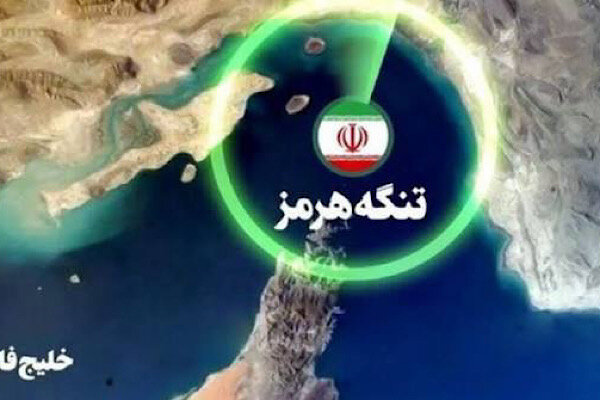
According to the report, Iran emerged from this conflict with enhanced ability to leverage the Strait of Hormuz as a strategic asset. The nation can now deter its adversaries with greater confidence and influence their vital interests without resorting to full-scale warfare.
Iran will be the dominant power in the Middle East
Consequently, the repercussions of this development are not confined to the region but may extend to the global economic order and international alliances. Moreover, the efficacy of sanctions systems has diminished, and the hesitations of American allies in Europe and Asia regarding Washington’s capacity for another major conflict have increased.
Kagan emphasized that “Iran will be the dominant power in the Middle East in the future,” adding that neighboring countries are now beginning to adapt to this new reality, and distant powers will follow suit.
He continued by stating that Iran does not need an agreement with the United States, as the premise that Iran is weaker or more vulnerable than it was two years ago has proven incorrect.
Aggression in the region proved American fragility
The Atlantic magazine added that Iran’s system resisted throughout the conflict without making any concessions. On the contrary, Iran exposed the weaknesses of the United States and the fragility of its neighbors. Iran’s strike on the Ras Laffan gas facilities belonging to the US in Qatar, in response to an American attack on Iranian gas facilities, demonstrated that Iranian missiles and drones are capable of inflicting significant damage on the Persian Gulf’s oil and gas infrastructure, potentially plunging the world into a prolonged economic crisis.
He noted that following this attack, Trump halted further American and even Israeli strikes on Iranian energy facilities, adding that ultimately, the military action ceased without Iran yielding any concessions. This development alone was sufficient to alter the balance of power between Iran and the United States.
Memorandum of Understanding was a Clear Victory for Iran
Robert Kagan described the signing of an interim memorandum of understanding between Iran and the United States as a clear victory for Iran, specifying that this understanding affirmed that the Islamic Republic of Iran, and no other country, would undertake the necessary “arrangements” to ensure the “safe passage of commercial vessels” through the Strait of Hormuz.
According to the report, the aforementioned memorandum of understanding granted no authority to the United States for future management of the strait. Instead, it stipulated that Iran, alongside the less influential Oman, would be the sole active party in managing the strait, even permitting Iran to levy fees on countries for safe passage after 60 days.
The article, referencing Iran’s reluctance to sign this agreement, indicated that the memorandum of understanding reflected America’s severe desperation and concessions to end the war, to the extent that the Iranians anticipated the United States would eventually withdraw, regardless of the outcome of any agreement.
Resumption of conflict threatens US interests globally
Kagan pointed to the revelation of critical reductions in American ammunition reserves to dangerous levels, stating that a major attack on Iran could jeopardize American interests elsewhere in the world. This is because a conflict could weaken the US in the event of China moving towards Taiwan or Russia attacking a NATO member. Furthermore, the scarcity of missiles reduces the risks associated with a widespread attack on Iran’s infrastructure.
Under these circumstances, the United States would be compelled to deploy more fighter jets with pilots within the range of Iranian air defense systems. This, in turn, increases the risk of American casualties and the threat to the region’s energy infrastructure.
The Atlantic magazine asserted that American actions clearly indicated Washington’s greater fear of escalation than Iran. Reports suggest that Trump told his advisors that he did not want to order further attacks.
Senior Iranian officials are now demanding the withdrawal of American forces, the lifting of the American maritime blockade and all sanctions, the release of Iran’s frozen assets, and war reparations. Iranian leaders believe these demands are unacceptable to Washington and, therefore, either aim to bring Trump to his knees or strive to achieve a better agreement.
Iran has made it clear for months that control of the strait is non-negotiable. Conversely, the claim by the Trump administration and media outlets regarding Iranian doubts is merely slander and falsehood.
Control of the Strait of Hormuz is more beneficial to Iran than a nuclear weapon
The report specified that for several months, Iran has been establishing control mechanisms over the Strait of Hormuz. The country has issued directives to ship owners and nations regarding the operation of this system. Iran has established the “Hormuz Strait System,” requiring shipping companies to register, obtain permits, follow routes designated by Iran, and pay insurance and security fees provided by Iran. Iran reserves the right to deny passage to vessels belonging to states it deems “enemies” and to demand compensation from countries that participated in attacks against Iran.
Kagan believes that Iran’s control over the Strait of Hormuz is a tool of power whose effectiveness surpasses even that of a nuclear weapon. In his view, control over the strait allows Iran to influence dozens of countries daily. Thanks to this control, Iran can reward its allies, punish its opponents, generate revenue, compel governments to reduce sanctions, and force them to carefully consider their opposition to Iran’s policies before acting. Iran can achieve all of this without firing a single shot.
Sanctions strategy is collapsing
Kagan is of the belief that the sanctions strategy was built on “international cooperation.” Therefore, countries dependent on access to the strait, such as Japan and South Korea, will be forced to choose between “ensuring reliable energy” and “participating in US-backed sanctions.” Thus, under the new order Iran is seeking to establish, the global sanctions regime is likely to be unstable.
Arab countries are forced to make peace with Iran
The article noted that in the new atmosphere, the positions of regional countries have changed. It added that the rulers of the Persian Gulf, who in the past relied on American security guarantees, have now been forced to make peace with a power that has proven its ability to defeat their “American patron.” In this situation, Iran will be able to resume its nuclear program without fear of another major attack. This reality alone will alter the regional balance of power.
According to Kagan, Iran has become bolder in using its control over the Strait of Hormuz and threatening American interests in neighboring countries and their energy infrastructure to deter any similar future attacks. Replenishing American missile reserves, including interceptor missiles, takes a significant amount of time and may be urgently needed elsewhere in the world in the coming years. Concurrently, Iran will continue its rearmament with the assistance of Russia and China.