Former Israeli PM Barak Alleges Netanyahu Seeks War to Delay Elections
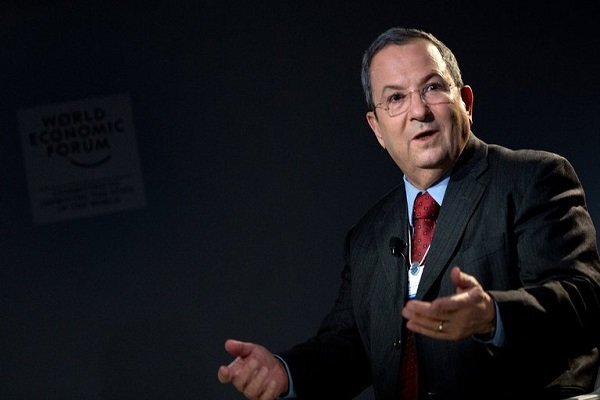
According to the International Desk of Webangah News Agency, Ehud Barak, the former Prime Minister of the Zionist regime, stated that Benjamin Netanyahu is seeking to create conditions for entering a war that could lead to the postponement of elections.
Barak asserted that “Netanyahu lies as much as he breathes,” adding that there are genuine concerns that Netanyahu’s decisions are not based on security interests but are aimed at ensuring his personal and political survival.
“I have been warning for some time that Netanyahu is creating conditions, not only regarding Iran but also in the West Bank and Gaza, where a single spark is enough to ignite a war, even just days before the elections,” Barak continued.
In a related development, the latest polls published by the Hebrew-language newspaper ‘Maariv’ indicate that the ruling coalition of the Zionist regime has gained 2 seats compared to the previous survey, reaching 51 seats. Conversely, opposition parties have seen a decrease of 2 seats, securing 53 seats.
According to this poll, the ‘Yisrael Beiteinu’ party, led by Gadi Eisenkot, continues to hold the largest number of seats among the parties with 21 seats. However, it has lost one seat compared to the previous survey and four seats over the past month. The Likud party, led by Benjamin Netanyahu, has seen an increase from 18 to 19 seats.
The ‘Blue and White’ party is projected to win 13 seats, the Democrats 10 seats, ‘Yisrael Beiteinu’ and ‘Otzma Yehudit’ each 9 seats, the Joint Arab List 7 seats, ‘Yahadut HaTorah’ and Shas each 7 seats, and ‘Religious Zionism’ 5 seats. The ‘Ra’am’ list is expected to secure 5 seats, while ‘Am Ehad Yisrael’ and the ‘Reserves Forces – Economy’ list will each gain 4 seats.
Consequently, Arab parties collectively hold 12 seats, and the ‘Reserves Forces – Economy’ list independently secures 4 seats. Therefore, the figures of 51 seats for the coalition and 53 seats for the opposition alone do not account for the total 120 seats in the Knesset.
Regarding the prime minister position, the poll data shows Eisenkot with 47 percent support and Netanyahu with 41 percent, resulting in a 6 percentage point gap between them.
The survey also reveals that 67 percent of participants expressed varying degrees of concern about the recurrence of a security incident on the scale of the October 7th events. Twenty-four percent stated they are very concerned, and 43 percent are somewhat concerned, while 26 percent indicated they are not worried about such a scenario.