Yemen Strikes Escalate, Intensifying Saudi Arabia’s Security and Economic Pressures
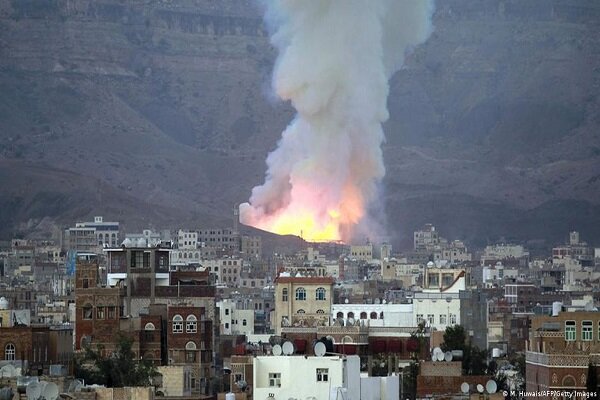
According to the International Desk of Webangah News Agency, escalating attacks from Yemen targeting airports, cities, and oil infrastructure in Saudi Arabia demonstrate that Riyadh’s re-engagement in the military campaign against Yemeni forces has not led to crisis containment as Saudi officials had anticipated. Instead, it has imposed fresh security and economic costs on the country. The October 10 attack on King Khalid International Airport in Riyadh, which the Saudi Civil Aviation Authority reported resulted in 12 deaths and 309 injuries, serves as the latest indication of the expanding scope of the conflict and the vulnerability of the kingdom’s strategic infrastructure.
At a time when Saudi Arabia has strived for years to become a hub for investment, tourism, and global events, repeated attacks on airports and oil facilities can directly impact these ambitions. The fundamental question now is whether Riyadh can achieve its desired outcome through intensified military operations, or if it will once again become embroiled in a protracted crisis with no clear end in sight.
From Military Intervention to Crisis Back on Saudi Soil
Saudi Arabia has been employing military and political tools for over a decade to solidify its influence in Yemen and prevent the expansion of opposing forces’ power. However, the experience of recent years has shown that military superiority and aerial attacks do not necessarily translate into achieving political objectives. After a period of de-escalation and attempts at dialogue, Riyadh re-entered a new phase of conflict this past summer, marked by intensified military operations and the resumption of cross-border attacks.
According to published reports, Yemeni forces, which have Saudi backing, have launched new operations to recapture areas controlled by opposing forces. Riyadh, in turn, supports these operations with aerial and military backing. However, the extension of attacks deep into Saudi territory indicates that the conflict zone is no longer confined to Yemen’s geography. Attacks on the airports of Riyadh and Abha, along with reports of a projectile striking near King Fahd Airport in Dammam, have heightened concerns regarding the security of Saudi Arabia’s air transport network and vital infrastructure.
The recent attack on Riyadh airport disrupted its operations for a period, forcing airlines to cancel or reroute some flights. These developments are not merely a military issue; airports are the gateways connecting Saudi Arabia’s economy to the world, and disruptions to their functioning can affect the movement of traders, tourists, and investors. From this perspective, what is unfolding is a form of pressure on Saudi Arabia’s airspace and communication infrastructure, pressure that Riyadh requires external defense support to contain.
Three Strategic Missteps by Riyadh and Limitations on U.S. Support
Michael Ratney, former U.S. Ambassador to Saudi Arabia, told CNN that a series of miscalculations by Riyadh contributed to the resurgence of the Yemen crisis. According to the report, the first issue relates to the rift between Saudi Arabia and the UAE and the withdrawal of Emirati forces from Yemen. This development disrupted the structure of local forces aligned with both countries, and Saudi Arabia was unable to quickly establish an effective replacement for the previous command and control system.
The second issue was an underestimation of the Yemeni forces’ capacity to sustain operations and expand their attacks. The continued attacks on targets within Saudi Arabia suggest that achieving air superiority or inflicting damage on military positions does not necessarily neutralize the opposing side’s capacity to continue the conflict. Therefore, even battlefield successes by Riyadh-backed forces do not guarantee an end to the crisis without command cohesion, sustained support, and the ability to hold captured territories.
The third misstep was an overreliance on direct U.S. support. The CNN report indicates that Mohammed bin Salman contacted Donald Trump requesting U.S. strikes against Yemeni forces, but the U.S. President refrained from direct involvement in such operations. Washington, instead, has sought to maintain its de-escalation efforts with Yemeni forces and provided support to Saudi Arabia, including intelligence backing and assistance in targeting.
The experience of 2025 is also significant for the White House. On March 15 of that year, the United States launched extensive operations against Yemeni force positions and announced a halt to its attacks on May 6, with Omani mediation. Reuters reported that these operations inflicted damage on Yemeni forces but did not eliminate their strength. This experience illustrates that aerial operations can impose heavy costs but do not, on their own, guarantee a stable change in the political and military equation.
Foreign Aid: A Solution to the Crisis or a Prelude to Escalation?
Saudi Arabia has also sought support from other countries to bolster its defensive capabilities. Reports indicate defense cooperation with France and the United Kingdom, as well as efforts toward security coordination with Turkey and Pakistan. The presence of American military advisors and the provision of intelligence support also show that Washington, despite its refusal of direct participation in attacks, has not severed its military relationship with Riyadh. Therefore, the main issue is not a complete lack of foreign support, but rather a disagreement over the scope and nature of intervention that the United States is willing to accept.
Michael Ratney’s analysis also pointed to U.S. military limitations, including pressure on the reserves of certain interceptor missiles, the need for repairs to some naval vessels, and damage to U.S. military facilities in the region. In such circumstances, direct entry into a new front could incur greater costs for Washington. These limitations, coupled with Trump’s desire to prevent the escalation of conflicts, may explain some of the reasons for U.S. caution regarding Saudi Arabia’s requests.
However, foreign defense assistance alone will not resolve the core issue. Enhancing interception systems can reduce the likelihood of some missile and drone strikes, but as long as the conflict in Yemen continues and the parties do not reach an understanding for a lasting political agreement, the possibility of repeated attacks will persist. On the other hand, an intensification of Saudi attacks might lead to a further expansion of Yemeni forces’ responses, increasing security costs for both sides.
Conclusion
The return of the Yemen crisis to Saudi Arabia should be considered one of the strategic consequences of years of blockade and continued transgressions against Yemen. Riyadh now faces a situation where the protection of airports and oil facilities, the preservation of its security credibility, and the advancement of its economic programs are simultaneously under pressure.
Yemeni forces, by expanding their attacks, have demonstrated their capability to impose costs on Saudi Arabia. The way out of this cycle lies neither in the endless intensification of attacks nor in sole reliance on foreign aid, but in the cessation of military actions, the protection of civilians, and the formation of a political agreement. Such an agreement should be based on the withdrawal of occupying forces from Yemen and the recognition of the legitimate government in Sana’a.
If Riyadh again believes it can quickly contain the crisis by increasing military pressure, it may face greater costs. What is unfolding today in Saudi Arabia’s skies serves as a warning about the limitations of military power in resolving conflicts with deep political and regional roots.