
Trump Challenges Zelensky, Citing Disagreements Over Russia Energy Deals
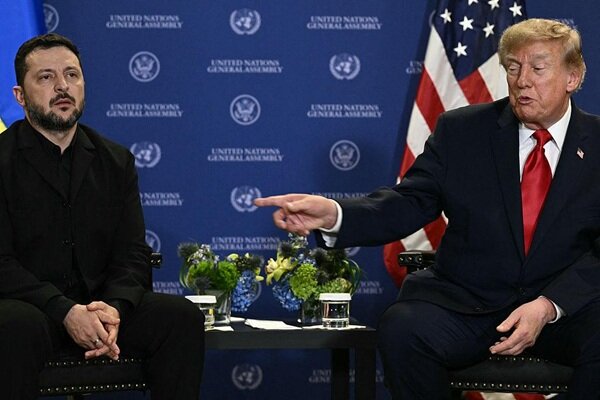
According to the International Desk of Webangah News Agency, U.S. President Donald Trump has intensified his criticism of Ukrainian President Volodymyr Zelensky, asserting that it is time for Ukraine to have a new president. This statement follows a widening rift between Washington and Kyiv concerning energy deals with Russia, the country’s fuel exports, and Ukraine’s ongoing strikes targeting Russian oil refineries.
Trump contends that Zelensky has not adequately pursued a settlement with Moscow and that Ukraine requires leadership capable of reaching an agreement. This stance emerges as the U.S. administration actively seeks a deal to facilitate Russian diesel exports to global markets. President Zelensky has characterized this proposed agreement as unjust, warning that it could boost Moscow’s revenues and enable Russia to sustain its military operations.
Disagreement Over Russia Fuels New Tensions
The latest discord between Trump and Zelensky transcends mere sharp exchanges between the two presidents. At its core lie divergent approaches to Russia: the U.S. administration prioritizes reaching an agreement and mitigating the economic pressures of the energy crisis, while the Ukrainian government fears that economic concessions to Moscow will bolster Russia’s capacity for military action.
Following discussions with Russian President Vladimir Putin, Trump announced an agreement to ease Russian diesel exports. This move aims to increase fuel supply and contribute to lower prices in global and U.S. markets. Kyiv, however, believes that revenues from Russian fuel sales could provide President Putin’s government with greater financial resources.
In response to this decision, Zelensky labeled it an unfair move, cautioning that easing export restrictions without reciprocal concessions from Moscow could primarily benefit Russia. Consequently, an issue viewed by Washington as part of energy market management has become a matter of national security and power balance on the ground for Kyiv.
Russian Refineries: A Point of Contention Over Fuel Prices
A primary focus of the disagreement is Ukraine’s offensive operations against Russian refineries and energy infrastructure. Kyiv views these actions as integral to its strategy for increasing Moscow’s economic costs and restricting its financial resources. Conversely, Trump has linked these operations to rising diesel prices in the United States and urged Zelensky to cease them.
The U.S. President alleges that Ukraine’s actions are detrimental to the global fuel market and are causing difficulties for American farmers and other consumers. This position gains added significance in the lead-up to U.S. midterm elections, where the cost of living and energy prices can significantly influence voter sentiment towards the incumbent administration.
However, attributing fuel price increases solely to Ukrainian actions fails to account for all market dynamics. Regional developments, disruptions in oil and refined product supply, and heightened uncertainty in global markets also play a role in price formation. From this perspective, Trump’s effort to curb Ukrainian operations against Russian refineries should be analyzed within the broader context of U.S. energy policy and economic priorities.
Energy Ceasefire: An Agreement Zelensky Was Unaware Of
The tension between the two sides took a new turn when Trump announced an energy ceasefire agreement between Russia and Ukraine, urging its immediate implementation. However, he provided no clear details regarding its execution mechanism, compliance monitoring, or response protocols for potential violations.
Zelensky’s reaction further compounded the existing ambiguities. The Ukrainian president stated he had no knowledge of the announced agreement in this form and stressed that any halt in Ukrainian operations against Russian energy infrastructure must be reciprocated by Moscow ceasing similar actions against Ukrainian facilities.
Zelensky declared that his country is prepared to cease attacks on Russian refineries, provided Russia also halts its attacks on Ukrainian energy installations. He emphasized the necessity of mutual de-escalation measures, signaling that Kyiv is unwilling to relinquish one of its pressure tools without concrete assurances.
This divergence raises a crucial question about the negotiation process: are Washington and Moscow advancing arrangements that Kyiv is not yet privy to, or does Trump’s announcement reflect an attempt to impose a new framework rather than a finalized agreement? The continuation of attacks on energy infrastructure post-ceasefire announcement further fuels doubts about the agreement’s operationalization.
Why is Trump Talking About a New Ukrainian President?
Trump’s remarks regarding the need for a new presidential election in Ukraine underscore his escalating political pressure on Zelensky. Trump stated that Ukraine needs leadership capable of reaching a deal with Russia, a result Zelensky has thus far failed to achieve.
However, these statements do not necessarily indicate that Washington has made a definitive decision to sideline Zelensky or has completely withdrawn its support for Ukraine. What is currently clear is the growing divergence over the conditions for an agreement with Russia and Kyiv’s willingness to accommodate the U.S. administration’s demands.
In response to Trump’s suggestion of leadership change, Zelensky emphasized that the choice of president rests with the Ukrainian people. He also noted that holding elections under the current circumstances requires a complete 60-day ceasefire, as martial law restrictions pose legal and practical obstacles to conducting normal elections.
Deal with Moscow or Maintain Ties with Kyiv?
For Trump, securing an agreement with Russia could serve as both a diplomatic achievement and a tool to address domestic economic pressures. Lower fuel prices, reduced costs from the ongoing conflict, and demonstrating the administration’s ability to compel foreign parties toward negotiation are among the objectives that could influence the White House’s calculations.
However, for Ukraine, an agreement that increases Russia’s revenue or sustains its operational capacity, without sufficient security guarantees, carries significant risks. From Kyiv’s perspective, halting pressure on Russian energy infrastructure would only be acceptable if Moscow reciprocates by ceasing similar actions against Ukrainian facilities, ensuring a mutually implemented agreement.
Consequently, the current dispute is not solely about Zelensky’s person but about who will bear the costs of reaching an agreement and what assurances will exist that economic concessions to Russia do not bolster its position. Trump’s stern stance indicates that the Washington-Kyiv relationship has reached a critical juncture. Nevertheless, it is premature to speak of a definitive end to U.S. support for Ukraine or a final decision to change its leadership. The trajectory of developments will depend on whether Zelensky is prepared to align with Washington’s proposed framework and whether Trump can compel Moscow to adhere to reciprocal commitments.
Ultimately, the central question remains whether Trump’s pursuit of a swift agreement with Putin will lead to de-escalation or if the disagreement over economic and security concessions will deepen the rift between the United States and Ukraine.


