
Europe Faces Energy Crisis as Winter Looms: A Test of Resilience
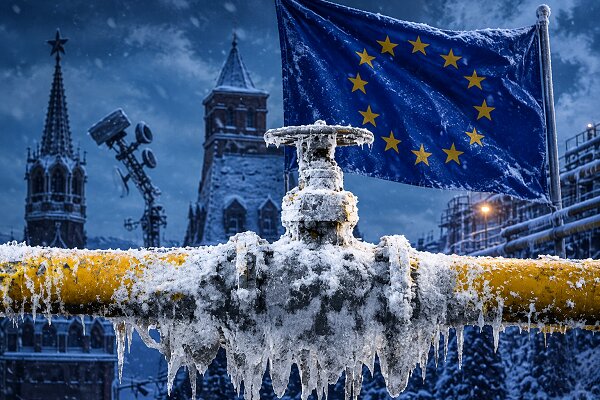
According to the International Desk of Webangah News Agency, Europe’s energy market is grappling with a significant rise in costs and concerns over stable gas supplies as the cold season approaches. Unprecedented increases in energy procurement expenses have once again underscored the vulnerability of the European economy to developments beyond its borders. Ursula von der Leyen, President of the European Commission, stated on October 5th, 2026, that since the commencement of aggressive actions by the United States and the Zionist regime against Iran, gas prices in Europe have surged by 140 percent, diesel prices have doubled, and the cost of fossil fuel imports for the European Union has risen by 100 billion euros – an increase occurring without additional energy entering the continent.
This warning comes at a time when Europe must simultaneously manage the economic repercussions of rising prices, conserve its gas reserves for the approaching colder months, and ensure the continuous supply of energy to households and industries. The insecurity of strategic energy transit routes and the ongoing war between Russia and Ukraine further complicate the fuel supply outlook.
The core question remains: Can Europe, amidst these geopolitical pressures, secure its necessary energy for the cold season at an affordable cost and prevent a widespread crisis in its economy and citizens’ livelihoods?
A Costly Cold Season: The Price of Europe’s Energy Strategy
Since the commencement of aggressive actions by the United States and the Zionist regime against Iran in February 2027, Europe’s energy market has experienced price hikes and anxieties regarding consistent gas supply. As of October 12th, 2026, European gas benchmark prices on the Dutch market reached approximately 83 euros per megawatt-hour, a significant increase from the 30 to 35 euros range prior to the crisis. Concurrently, EU gas reserves stood at approximately 73.6 percent of capacity on October 11th, 2026, a level still lower than that of the same period last year.
The European Network of Transmission System Operators for Gas (ENTSOG) issued a warning in its forecast for the 2026-2027 cold season, indicating that if liquefied natural gas (LNG) supply remains constrained, Europe’s reserves could fall below 30 percent by the end of the season. The combination of rising prices, low reserve levels, and global competition for gas reduces Europe’s margin of safety in the coming months, making the continent more susceptible to severe cold or further supply disruptions.
Observers note that the implications extend beyond increased electricity and heating costs, placing pressure on household purchasing power and industrial competitiveness. Higher energy prices inflate production costs for industries such as chemicals, plastics, and fertilizers, potentially leading to increased prices for goods, reduced corporate profit margins, and limited business operations.
The energy crisis on the eve of the cold season poses a significant challenge to Europe’s resilience.

Industries in Europe, already facing high energy costs and global competition, may see production reduced, investment delayed, and a shift of operations to regions with cheaper energy. These developments threaten industrial employment and Europe’s economic standing.
European governments are also facing financial constraints in supporting households and industries, as expanding subsidies and reducing energy taxes can increase pressure on public budgets. Proposals for windfall taxes on energy companies signal an effort to distribute the crisis’s cost among governments, consumers, and corporations.
However, financial support does not alleviate Europe’s reliance on energy imports, and the continent’s success in navigating the cold season depends on stable gas supplies and cost containment. Therefore, the energy shock impacts not only citizens’ livelihoods but also industrial competitiveness and the financial capacity of European governments, revealing the costs of the continent’s energy strategy.
Hormuz and Ukraine: Two Fronts of Europe’s Energy Crisis
Europe’s energy vulnerability is not solely limited to its gas reserves but also depends on the security of transit routes and the stability of producing regions. Approximately 20 percent of global LNG trade passed through the Strait of Hormuz in 2025; any disruption in this waterway could increase the cost of gas supply for Europe by reducing global availability and intensifying competition for existing cargoes.

Simultaneously, insecurity in the Bab al-Mandab Strait and the Red Sea could force ships to reroute via the Cape of Good Hope, increasing transit time and costs. Reports from summer 2026 indicated that some oil tanker routes have extended from approximately 19 days to nearly 48 days. Consequently, even without a complete cessation of exports, disruptions in these passages could impose fresh pressure on Europe’s energy market.
These risks have gained greater significance with the shift in Europe’s gas supply pattern following reduced imports from Russia. According to a 2026 report by the Agency for the Cooperation of Energy Regulators (ACER), LNG constitutes nearly half of the EU’s gas supply, with the United States providing about 58 percent of these imports in 2025.
While this diversification has reduced Europe’s dependence on a single supplier, it has made the continent more vulnerable to global price fluctuations and competition with Asian buyers. Restricted supply from the Persian Gulf can intensify competition for alternative cargoes and increase import costs.
In addition to transit route insecurity, the war between Russia and Ukraine exerts pressure on the European market through altered trade flows and damage to energy infrastructure. Russia supplied over 40 percent of the EU’s gas consumption in 2021, but this share has fallen to about 12 percent of the EU’s gas demand, according to this year’s ACER report.
However, reduced reliance on Moscow does not eliminate the war’s effects; Ukrainian attacks on Russian refineries can disrupt oil product supplies, and Russian attacks on Ukraine’s electricity grid and energy infrastructure increase pressure on the country ahead of the cold season. An Associated Press report on October 10th, 2026, also highlighted the continuation of these attacks and previous limitations on Russian diesel exports.
Collectively, these developments indicate that Europe’s energy security is simultaneously affected by the insecurity of maritime passages, competition for replacement cargoes, and the consequences of the Russia-Ukraine war, making the passage through the cold season more costly and unpredictable.
Can Europe Weather the Cold Season?
The European gas supply outlook report for 2026-2027, published by ENTSOG on October 8th, 2026, presents a dual picture of the continent’s preparedness. Europe’s gas infrastructure can still meet demand, but low reserve levels have diminished the margin of safety.

According to this report, EU underground gas storage facilities were only 72 percent full on October 1st, compared to about 83 percent during the same period last year. Conversely, Europe’s LNG import and regasification capacity reaches approximately 145 billion cubic meters during the cold season, which can help offset some of the reserve shortfall. Thus, Europe’s primary challenge lies not in a lack of import infrastructure but in securing sufficient cargoes and transporting them at a bearable cost.
Nevertheless, this assessment is heavily reliant on the continuous supply of LNG, and limited incoming cargoes could worsen the situation. If Europe’s access to this fuel remains restricted, reserves could decline to below 30 percent capacity by the end of the cold season, increasing vulnerability to late cold snaps and making it more difficult to refill storage in summer 2027.
Meanwhile, insecurity in the Strait of Hormuz and Bab al-Mandab can impact global supply and energy transit costs, while the Russia-Ukraine war exerts pressure on the market through infrastructure disruptions and altered fuel trade flows. Therefore, Europe’s ability to compensate for reduced reserves depends on actual access to cargoes, competition with Asian buyers, and the continuation of geopolitical disruptions.
In conclusion, while a widespread gas shortage in Europe does not appear certain based on current evidence, a reduction in the continent’s margin of safety is a probable scenario. Even if infrastructure prevents a broad physical shortage, rising prices could increase the cost of heating for households, industrial production, and government support measures. This cold season, Europe must simultaneously manage the consequences of the Russia-Ukraine war, the insecurity of energy transit routes, competition for replacement cargoes, and reliance on foreign suppliers. Consequently, the measure of successfully navigating the cold season is not merely preventing gas cutoffs but the ability to supply the required energy at an affordable cost for households, industries, and public budgets.


