
US-Israeli Military Drills Over Iraq Draw Criticism for Sovereignty Violations
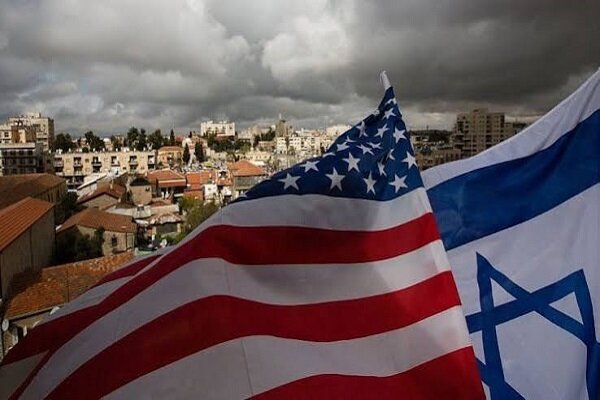
According to the International Desk of Webangah News Agency, electronic newspaper رای الیوم has reported on the circulation of media sources detailing a joint military drill between the United States and the Israeli regime over Iraqi airspace on the night of October 12. The report specified that F-16 and F-35 fighter jets, along with aerial refueling aircraft, participated in this exercise.
The author of the report highlighted the absence of any official reaction from the Iraqi government concerning this explicit violation of its airspace. The article posits that this drill directly contradicts Iraq’s stated position of non-involvement in regional conflicts and its commitment not to allow its territory or airspace to be used as a platform for attacks against neighboring countries, particularly Iran.
Coinciding with this incursion, Tom Barrack, the U.S. representative for Iraq and Syria, met with Iraqi officials, in the presence of the U.S. ambassador or chargé d’affaires to Iraq, and stated that the United States supports Nineveh Province and the strengthening of relations with it.
The article elaborates that this joint American-Israeli exercise carries several implications. Firstly, it suggests that the United States shows no respect for Iraqi sovereignty or its declared neutral stance in conflicts. Secondly, it implies that the U.S. maintains complete control over Iraq’s skies and airspace. Thirdly, it points to a contradiction between American rhetoric and actions regarding its relationship with Iraq. Fourthly, it suggests that U.S. decision-makers within the White House, State Department, War Department, and National Security Council have not expressed any concern about the impact of this joint drill with the Israeli regime on bilateral relations, instead appearing confident in the stability and continuation of these ties.
رای الیوم further notes that the Iraqi government has not lodged any protest against this violation, particularly given its execution with the participation of a regime that remains in a state of war or hostility with Iraq. The article concludes by emphasizing that while the U.S. continues to hold Iraqi oil revenues as leverage, this does not justify the government’s silence in the face of the American and Israeli encroachment on Iraqi aerial sovereignty.


