
Palestinian Politician Emerges as Potential Kingmaker in Israeli Parliamentary Elections
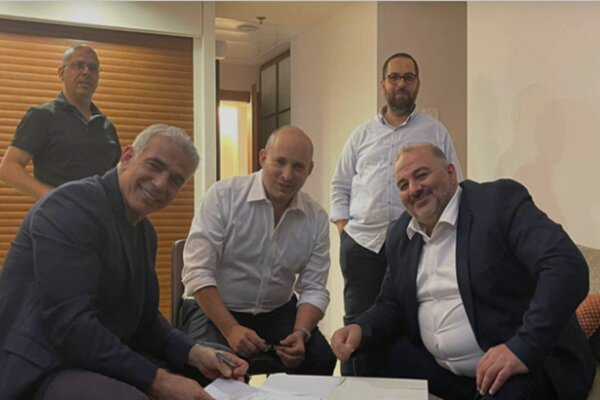
According to the International Desk of Webangah News Agency, As Israel stands on the cusp of its parliamentary elections, the contest for power may reach a critical juncture where the destiny of Benjamin Netanyahu could be determined not only by his Jewish rivals but also by the position of a Palestinian politician. Mansour Abbas, the leader of the ‘Ra’am’ party, is among the figures who, if election results align with poll predictions, could become a key player in coalition formation negotiations. This situation once again highlights the significance of Arab parties within Israel’s political structure.
The importance of this issue is not solely confined to the number of seats a party holds. Israel’s political system is built upon proportional representation and parliamentary coalitions. In such a framework, even a party with a limited number of seats can become influential if no bloc secures a majority. Consequently, Israel’s parliamentary elections, beyond the rivalry between Netanyahu and his opponents, could serve as a test of the extent of influence Arab representatives wield in the regime’s major political decisions.
The 61-Seat Equation: The Core Challenge of the Elections
According to a poll published in the Maariv newspaper on October 16, the parties currently in Netanyahu’s coalition are projected to win a total of 47 seats. With the addition of another small party, this number rises to 51 seats. Conversely, the main opposition parties to Netanyahu collectively hold 51 seats, increasing to 55 seats with the inclusion of another minor party. In the same poll, the Ra’am party, led by Mansour Abbas, was predicted to secure 6 seats, and the Joint List Arab party was predicted to win 8 seats.
These figures indicate that neither of the two main blocs, based on this projection, is capable of forming a government independently. Netanyahu’s coalition faces a deficit of 10 seats to achieve a parliamentary majority, while the opposition requires at least 6 more seats to reach the 61-seat threshold. In such circumstances, the stance of Arab parties could significantly impact the post-election negotiation process.
However, a distinction must be made between the number of seats held by Arab parties and their potential to translate these seats into executive power. Having representatives in the Knesset does not automatically guarantee participation in the government. Arab parties must decide whether they are willing to support a coalition, participate in government formation talks, or prefer to remain outside the cabinet. On the other hand, Jewish parties must also decide on their willingness to accept support from these factions.
Therefore, the 14 seats projected for the two main Arab factions do not mean these seats will necessarily align with Netanyahu’s opponents. Political differences, ideological considerations, and the opposition of some Israeli leaders to official cooperation with Arab parties could prevent this parliamentary capacity from translating into a stable coalition.
Mansour Abbas: An Experience Recorded in 2021
Mansour Abbas’s significance in this contest is not solely tied to recent predictions. He demonstrated in the 2021 elections that an Arab party with four seats could play a role beyond its numerical weight in a political stalemate. At that time, Benjamin Netanyahu, despite enjoying the support of a large political bloc, could not secure the necessary majority to form a government. Ultimately, a coalition comprising right-wing, centrist, and left-wing parties, with the participation of the Ra’am party, was formed and achieved a parliamentary majority. For the first time, an independent Arab party participated in Israel’s ruling coalition.
This experience revealed a crucial point about Israel’s political structure: when the rivalry between Jewish parties reaches a deadlock, Arab representatives can become a decisive factor in government formation. Mansour Abbas at that time sought to secure concessions for the Arab community in Israel, including in areas of budget, public services, and development of Arab-populated regions, through political participation.
Of course, this approach also faced criticism. Some Palestinian factions viewed cooperation with Israeli parties as a departure from Palestinian national demands. Conversely, proponents of this policy argued that participation in the power structure could enhance the ability to pursue the daily demands of Arab citizens. This divergence remains one of the primary challenges for Arab politics in Israel.
Are Netanyahu’s Opponents Willing to Cooperate with Arab Parties?
The core issue of the upcoming elections is not merely how many seats Arab parties will win; the more critical question is the extent to which these seats can be converted into political power. Even if Netanyahu’s opponents can achieve a majority numerically with the help of Arab parties, forming a government will still require agreement among factions that hold differing views on many political and security issues.
This matter is particularly significant because a segment of Israel’s political landscape ideologically or politically rejects cooperation with Arab parties. Consequently, a bloc might need the support of Arab representatives to form a government but simultaneously be unwilling to bear the political cost of such cooperation within Israeli society. Such a situation could complicate post-election negotiations and even lead to a continuation of the political stalemate.
Meanwhile, Mansour Abbas also faces limitations in playing a decisive role. He must balance the demands of Arab voters, internal differences within Arab factions, and the possibility of cooperation with Jewish parties. Supporting a government without guaranteed tangible gains for the Arab community could weaken his standing among a portion of his voter base. Conversely, complete non-participation in the government formation process might deprive his party of the opportunity for political influence.
Israeli Elections: A Contest for Power or a Test of a Taboo?
Israel’s parliamentary elections may once again demonstrate that winning an electoral race does not necessarily equate to the ability to form a government. In a system where a parliamentary majority depends on a coalition of several parties, a narrow difference in seat numbers can alter the negotiation trajectory and grant more bargaining power to parties that are seemingly smaller players.
However, it should not be concluded that Mansour Abbas will definitively be able to unseat Netanyahu. Polls provide a snapshot of the current competitive landscape, not the final election outcome. Moreover, even if the predictions materialize, they alone will not determine which parties will agree to cooperate or what kind of agreement will be forged to form a government.
What makes these elections politically significant is the potential return of the issue of Arab party participation to the center of power negotiations. If neither of the two main blocs can achieve a majority, Israeli party leaders will be compelled to decide between their ideological considerations and the necessity of forming a government. In such a scenario, Mansour Abbas could once again become a pivotal figure in negotiations; not because his party is the largest political force in Israel, but because a few seats in a non-majority parliament can sometimes hold more significance than dozens of seats in a larger bloc.
The ultimate question is: Will Israeli parties be willing to leverage the support of a Palestinian politician to gain power, or will they prioritize opposition to such cooperation over forming a more stable government? The answer to this question will impact not only Netanyahu’s political future but also the position of Arab parties within Israel’s power structure.


