
Global Media Assess Escalating Tensions Following Attacks in Persian Gulf
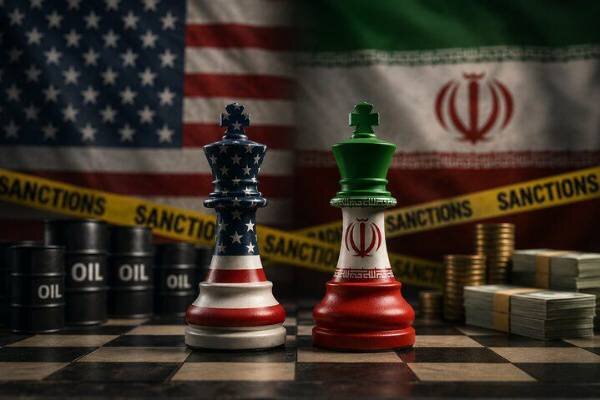
According to the International Desk of Webangah News Agency, international media have widely reported on the repercussions of the military actions involving the United States and Israel against Iran. These reports indicate that the stated objectives of these operations have not been met, and Western officials and American media acknowledge that the aggressors have faced strategic deadlock and field and political setbacks. The conflict, which began with extensive attacks and civilian casualties, including students, has rapidly assumed significant humanitarian, security, and economic dimensions, eliciting varied international media responses.
British media outlets highlighted the economic impact. Reuters, citing the International Monetary Fund (IMF), reported that the IMF forecasts a sharp decline in economic output for the Middle East, North Africa, and Pakistan in 2026 due to the war led by the United States and Israel against Iran. The IMF predicted a 1.3 percent contraction, followed by a 6.6 percent recovery in 2027, warning that further disruptions to energy production could worsen the outlook. The war’s effect is described as significant but uneven, with oil-exporting countries whose energy production and shipping were disrupted being more severely impacted than oil importers. The IMF’s baseline projection anticipates the conflict subsiding in early 2027, with trade gradually normalizing throughout the year, although the outlook is fraught with “exceptionally high uncertainty.” Key risks include greater disruptions to energy production and trade routes, which could drive up energy prices. External financial conditions may also tighten if investors reassess artificial intelligence-driven productivity gains and if rates rise amid inflation and fiscal concerns. Oil importers proved more resilient, supported by domestic demand, remittances, tourism, favorable financial conditions, and swift policy responses. Growth in the Caucasus and Central Asia is projected at around 5.2 percent in 2026 and 5 percent in 2027. The IMF urged policymakers to prioritize price stability, fiscal sustainability, central bank independence, and structural reforms to boost productivity and employment.
Associated Press reported that Iran announced seven oil tankers in the Strait of Hormuz caught fire or sustained damage overnight after being struck by Iranian attacks or colliding with naval mines. This significant figure was released amid rising concerns about the return of full-scale warfare. The report noted that these events occurred just days before the Israeli elections on October 27, where Benjamin Netanyahu might lose power, and ahead of the US midterm elections next month, where war-related inflation has angered voters. Concerns about renewed US and Israeli attacks on Iran have intensified. Danny Citrinowicz, a researcher at the Institute for National Security Studies in Israel and a former Iran specialist in the Israeli army and intelligence services, told AP that Netanyahu desires to attack Iran, and a clear electoral victory would make such an attack nearly certain. In contrast, Iranian state television, quoting the IRGC Navy, stated that if the United States continues to guide commercial vessels in the strait, it will target US military bases in the region. According to the UK’s Maritime Trade Operations, October saw the highest number of reported attacks on commercial shipping since March. Experts suggest that oil producers have found ways to maintain oil flow, albeit at an increasing cost. Iran has also declared its readiness for diplomacy while vowing to defend itself.
Arab media provided further analysis. Saudi newspaper Al-Jazirah, addressing the potential for heightened Washington-Tehran confrontation, suggested that Donald Trump might go beyond attacking Iran’s nuclear and missile facilities, targeting the country’s military, industrial, and economic capabilities, or even its political structure. The article posits that electoral calculations in the United States and Israel could influence the timing of any military escalation, with the period after the US midterm elections on November 3 appearing as a more opportune moment for a broad military decision by Trump, although field developments might accelerate this timeline. The memo also raises the possibility of Iran expanding the conflict to strategic waterways, Yemen, and the Persian Gulf states in response to US economic pressure and blockade. The author concludes that the coming weeks could be decisive for the future of Iran and the region, and this confrontation, unlike past crises, might deviate from the pattern of “escalation followed by negotiation.” Marwan Kabalan, writing for Al-Araby Al-Jadeed, suggested that Trump might use Israel’s military threat after the US and Israeli elections to compel Iran to accept Washington’s terms, while Netanyahu seeks objectives beyond a deal, including the fundamental weakening or overthrow of Iran’s system. The article warns that an attack on Iran’s energy facilities could provoke a Tehran response against Persian Gulf states, thereby expanding the war. This analysis cautions that the divergence of objectives between Trump and Netanyahu could draw the United States into a war driven not by Washington’s calculations, but by Netanyahu’s aims. Al-Jazeera, in a report dated October 21, 2026, examining the diminished prospects for diplomacy and the hardening of military stances by Washington and Tehran, explored the possibility of resuming a more intense war. The report indicates that US officials speak of reduced possibilities for achieving a political solution, while Iranian President Masoud Pezeshkian has stipulated the lifting of US pressures and threats as a precondition for negotiations. Analysts believe Washington might launch a large-scale attack either before or after the congressional midterm elections. In response, Iran is preparing to counter a potential attack, focusing on protecting its infrastructure, increasing the cost of US military presence, and expanding domestic pressure on the Trump administration. The report emphasizes that with the failure of mediation efforts and increased coordination between Washington and Tel Aviv, the likelihood of a return to more intense military conflict has risen.
Russian and Chinese media also covered the developments. Xinhua reported that the Islamic Revolutionary Guard Corps (IRGC) Navy announced on Thursday that seven ships in the waters around the Strait of Hormuz caught fire. According to the IRGC, four ships that had passed through an unauthorized route in the Strait of Hormuz and were transferring oil cargoes from one vessel to another in the northern and central parts of the Persian Gulf were targeted and caught fire. Three other ships collided with naval mines in the western Strait of Hormuz on Wednesday evening, forcing them to stop after explosions and fires. The IRGC Navy warned shipping companies about using unauthorized routes, stating that the US government’s insistence on encouraging ships to use unauthorized and mined routes has led to a daily increase in maritime incidents. The IRGC warned that if this trend continues by the US military, the scope of confrontation could expand to US military bases in the region. The force reiterated that it maintains control and management of the Strait of Hormuz. Xinhua added that Iran has imposed restrictions on the safe passage of ships belonging to or affiliated with the United States and Israel through this waterway following joint US and Israeli attacks on its territory on February 28. Russian newspaper Izvestia, in a report by Vladislav Petrov, stated that Moscow is prepared to mediate a resolution to the dispute between Iran and the United States if both parties desire. Andrei Rudenko, Russia’s Deputy Foreign Minister, reiterated this position, noting that Moscow’s previous proposals for resolving Iran’s nuclear issue have not yet yielded results. The report mentioned that Russia had previously proposed transferring Iran’s enriched uranium stockpiles to Russian territory, a proposal that, according to Vladimir Putin, was initially agreed upon by Iran, the US, and Israel, but after Washington changed its stance and insisted on transferring the uranium to the US, Tehran adopted a tougher position. The newspaper pointed out that with the ongoing disagreements over Iran’s nuclear program and shipping restrictions in the Strait of Hormuz, negotiations between Tehran and Washington are currently being pursued through intermediaries such as Qatar and Pakistan. A Russian analyst believes that Moscow’s relationships with Iran, Israel, and the United States could enable Russia to play a mediating role. Izvestia noted that despite Russia’s diplomatic capacity, the deep differences between the parties on the nuclear file and the lack of readiness for compromise make reaching an agreement difficult.


