Israeli Settler Violence and Palestinian Detentions Intensify West Bank Pressure
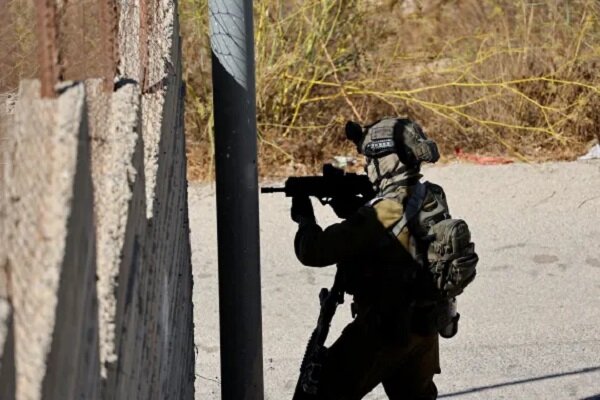
According to the International Desk of Webangah News Agency, recent months in the West Bank have witnessed more than isolated skirmishes between Israeli settlers and Palestinians. An investigative report by the Israeli newspaper Haaretz reveals a concerning pattern where settler attacks on Palestinian land and families are frequently followed by the intervention of Israeli military forces and the subsequent detention of Palestinians.
In this unfolding scenario, instead of military forces intervening to protect residents and their land, victims are often placed in a position of being accused. This trend could potentially be used as a tool for intimidation, punishment, and driving Palestinians away from their agricultural lands and pastures.
This portrayal comes from Haaretz’s investigative report, which was covered by Al Jazeera on October 21, 2026. The significance of this report lies in its examination of the issue not solely through the lens of settler violence, but also from the perspective of how Israeli military forces intervene and the repercussions this has on the daily lives of Palestinians.
Recurrent Scenario: Attack Begins, Victim Detained
Data compiled by the Defense of the Oppressed Human Rights Fund, cited in the Haaretz report, indicates that from the beginning of 2026 until October 15, 368 detentions suspected of being unlawful were recorded, involving 678 Palestinians, including 16 women. In 296 of these cases, the detainees were released without judicial proceedings.
These figures paint a picture of recurring detentions that, according to the report, primarily occurred in pastures, orchards, and even within Palestinian homes. The pattern described in the report typically begins with settlers entering Palestinian lands and engaging in altercations with residents. Subsequently, army forces arrive, handcuff the Palestinians, blindfold them, and in some instances, based on settlers’ accounts, accuse them of aggression. This process can lead to individuals defending their land or family finding themselves in the position of the accused.
Haaretz quotes Elisha Yarden, an activist from the “Hilltop Youth” movement, who admits they intentionally initiate “confrontations” and take pride in these actions. The importance of this statement is that the confrontation, in this narrative, is not merely an unintended consequence of local encounters, but can be a deliberate act to pressure Palestinians and compel them to abandon their lands.
Detention: A Tool Beyond Law Enforcement
Another section of the report focuses on the duration and conditions of detentions. According to military regulations cited by Haaretz, the initial detention period should not exceed three hours, and extending it for another three hours requires the permission of an officer. After this period, the individual must be either released or handed over for interrogation to the police or Israel’s internal security agency, Shin Bet. However, the report details cases where detentions lasted 10, 15, and even 22 hours. A 14-year-old teenager was also detained for two days.
Testimonies cited describe beatings, binding of limbs, deprivation of food and water, and leaving detainees in the cold. Four human rights organizations have described this process as an illegal use of detention authority for punishment and intimidation.
In its initial response to a complaint filed in the Supreme Court, the Israeli prosecution acknowledged that regulations may not have been followed in some cases and spoke of clarifying directives and implementing corrective measures. However, according to Haaretz, there is no clear indication of a change on the ground, and the judicial review of the complaint remains pending.
From an analytical perspective, the issue is not solely the prolonged duration of detentions. If repeated detentions, even without judicial proceedings, disrupt the lives of farmers and herders, the practical outcome can be denying them secure access to their lands. Under such circumstances, pressure on Palestinians could have similar effects on their lives and livelihoods without any official order for dispossession.
Role of Military Structures and Settlers
The Haaretz report also points to variations in intervention methods across different areas. In the southern Hebron region, a significant portion of detentions, according to the report, are carried out by regional defense units, whose members are selected from among settlers and play a military role around settlements. In the Jordan Valley region, regular army units are involved in these operations.
This overlap raises an important question about the boundary between protecting civilians and defending settler interests. When military forces intervene in situations where settlers are identified as the initiators of conflict, how the two parties are treated and the degree of impartiality in law enforcement become fundamental issues. The recurrence of a pattern where settler attacks are accompanied by Palestinian detentions inherently underscores the necessity of a serious review of military forces’ conduct and accountability of responsible institutions.
Violence With Diplomatic Costs
The international dimensions of this trend have also become more apparent in recent weeks. According to Al Jazeera, on October 17, members of a European diplomatic delegation were injured and their vehicles damaged near the village of Al-Taybeh. A day earlier, American photographer Heidi Levine was attacked near Abu Falah in the northern Ramallah and transferred to the hospital.
Following these incidents, U.S. Secretary of State Marco Rubio called on Israel to take action against these attacks. Belgium has also spoken of the possibility of pursuing European sanctions against those responsible for the violence. Such reactions indicate that settler violence, in addition to its direct human consequences, can incur increasing political and diplomatic costs for Israel.
However, Lazar Berman, a writer for The Times of Israel, in an analysis referenced by Al Jazeera, believes that Benjamin Netanyahu has refrained from strongly condemning these actions, attributing them to fringe groups. Berman associates this approach with political considerations and Netanyahu’s dependence on his far-right allies, including Bezalel Smotrich and Itamar Ben-Gvir. While this is the writer’s assessment, it clearly highlights the potential conflict between effectively addressing settler violence and the coalition considerations of the Israeli government.
Conclusion
Haaretz’s report presents a picture of a situation where attacks on Palestinians may be accompanied by detentions, intimidation, and restricted access to their lands. In such circumstances, the measure of Israel’s performance is not solely the number of condemned attacks or declared directives. It should be assessed by whether the attackers are held accountable, whether Palestinians receive effective protection, and whether illegal detentions cease.
If this pattern continues, the consequences could extend beyond any single conflict, weakening the daily security of Palestinians, harming agricultural and pastoral livelihoods, and increasing pressure to abandon their homes and work lands. From this perspective, what matters is not merely the occurrence of violence, but how Israel’s military and judicial structures respond to it.
Accountability for this situation necessitates independent investigations into each case, access for victims to effective complaint mechanisms, and prosecution of the perpetrators of violence, regardless of their identity. Until the gap between official commitments and the reality on the ground is bridged, claims of procedural reform cannot dispel concerns about the use of detention as a tool to pressure Palestinians.