
US-Venezuela Strategic Oil Deal Details Revealed, Favoring American Interests
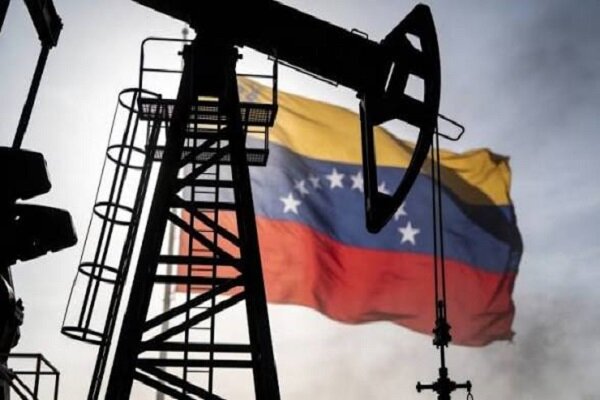
According to the International Desk of Webangah News Agency, details of a controversial oil deal between the U.S. administration of President Donald Trump and Venezuela have been disclosed by ProPublica, as reported by Al Jazeera and Mehr News Agency.
The 18-page strategic partnership agreement, signed by U.S. Secretary of State Marco Rubio and Secretary of War Pete Hegseth with Venezuelan counterparts, is described as a heavily one-sided document favoring the United States in its pursuit of Venezuela’s oil resources. The terms reportedly prioritize American interests across all dimensions, with no explicit mention of the Venezuelan government’s role or potential benefits for the nation’s citizens.
A particularly contentious aspect of the announced agreement involves Trump’s chosen business partner, Alejandro Betancourt, a Venezuelan businessman with international operations who is reportedly under investigation for money laundering in three countries.
The deal purportedly ensures Betancourt’s continued tenure as CEO of NABEP for the acquisition of Venezuelan oil. It stipulates that the U.S. government will collaborate with NABEP to establish a seven-member board of directors to oversee the project for an initial term of 15 years. Sources indicate this structure is intended to prevent future U.S. and Venezuelan leaders from dissolving or revoking the project.
Signatories and Financial Allegations Associated with the Deal
Orlando Alvarado, alongside Betancourt, Hegseth, and Rubio, reportedly signed the document on behalf of the company. Alvarado previously held senior positions in several of Betancourt’s companies, including a financial director role at an energy firm implicated in financial scandals a decade ago.
Core Content of the Agreement
ProPublica’s reporting suggests that key aspects of the plan diverge from the official public statements made by the Trump administration. While Trump claimed the contract would secure U.S. dominance over Venezuelan energy resources for the coming century, the agreement’s text allegedly indicates that U.S. rights would expire before half that period concludes.
Furthermore, contrary to Trump’s assertion that the deal would guarantee approximately $200 billion in revenue and taxes for Venezuela, the agreement reportedly contains no explicit commitment from Betancourt’s company to disburse these funds.
According to one of three supporting documents reviewed by ProPublica, the agreement grants the U.S. the right to purchase 20% of NABEP’s oil at a discounted price of $30 per barrel, which is less than one-third of recent oil sale prices.
Reasons for Confidentiality of Agreement Details
A primary reason for the confidentiality surrounding the agreement’s details is its classification as a “sensitive” government document. This classification is typically used to protect various federal documents, including personal information and details pertaining to ongoing law enforcement operations. Additionally, the document reportedly includes a non-disclosure clause prohibiting Betancourt’s company from revealing the “existence and terms” of the agreement with the U.S. government.
Another factor contributing to the secrecy of this oil accord is the potential for negative reactions and public resistance within Venezuela. Critics in Venezuela have already characterized the document as a blatant appropriation of the country’s valuable natural resources by the United States.
Analysis by ProPublica indicates that the contract’s provisions overwhelmingly serve U.S. interests and aim to cement the Trump administration’s influence over Venezuelan oil resources indefinitely.
Management Structure and U.S. Control Over Venezuelan Oil
According to the document, the majority of the seven-member board of directors must be U.S. citizens at all times, and the U.S. government reserves the right to appoint a non-voting observer to join the group. Betancourt, as CEO, is the only board member directly appointed by this agreement. The initial board is tasked with developing a mechanism for selecting new members.
Notably, no provisions are made for the participation of the Venezuelan government in the board’s composition.
The agreement also purportedly provides long-term protection for Betancourt and undisclosed investors. The contract requires a supermajority of five votes to remove Betancourt as CEO, alter the board’s composition, or execute any transactions with shareholders other than the U.S. government.
Mandatory 20% Discount for Up to 50 Years
In addition to the 20% discount on NABEP oil for the United States, Washington is consistently granted “first priority” to purchase all of the company’s remaining oil production for the next 50 years. This includes an irrevocable right to purchase all of the company’s oil resources in the event of a national emergency declared by the U.S.
The U.S. also benefits from a “fully prevailing government” status, which obligates Betancourt’s company to report any other commercial agreements it enters into and to extend similar terms to Washington if those agreements prove profitable.
Capitulation Law Against Venezuela
In the event of any dispute, Venezuela will have no right to challenge the agreement in its own courts. The agreement stipulates that any disagreements between the company and the U.S. must be resolved under U.S. law, not Venezuelan law.
The parties explicitly state that any civil litigation must be filed in the “U.S. District Court for the Northern District of Texas.” This is reportedly the same judicial body frequently utilized by the Department of Justice during the Trump presidency to obtain favorable rulings.


