
US Influence Looms Over Brazil’s Presidential Election Amid Geopolitical Race for Rare Earths
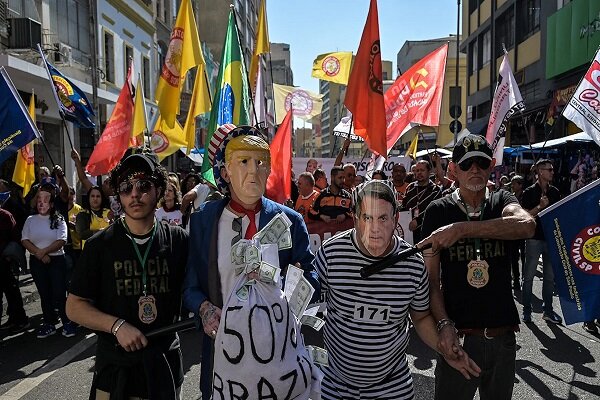
According to the International Desk of Webangah News Agency, new data published by Al-Akhbar newspaper, citing Mehr News Agency, indicates that Brazil’s upcoming presidential election runoff is unfolding as a critical geopolitical battleground for control of vital resources and rare earth elements in Latin America, extending beyond the domestic left-right political divide.
The presidential race in Brazil is exceptionally close. In the initial round, right-wing candidate Flavio Bolsonaro, son of former President Jair Bolsonaro, secured approximately 47% of the vote, narrowly leading left-wing candidate Luiz Inácio Lula da Silva, who garnered 45%. This outcome has positioned Brazil for a pivotal second round that could reshape the nation’s economic and foreign policy trajectory.
Analysis suggests that behind the scenes of this electoral contest lie ambitious economic projects orchestrated by the United States, aimed at leveraging Brazil’s vast resources. Brazil, holding an estimated 23% of the world’s rare earth element reserves, has become a focal point for global powers. Leaked documents reportedly reveal US political efforts to support Flavio Bolsonaro’s campaign, ostensibly to gain control over these critical resources under a potential Bolsonaro presidency.
Proposed plans, reportedly put forward by individuals aligned with US interests within Bolsonaro’s campaign, advocate for Brazil’s transformation from a raw material exporter to a processing and manufacturing hub for mineral resources targeting Western markets. These proposals outline foreign investments ranging from $50 billion to $100 billion for developing mining infrastructure and creating up to one million jobs. The overarching strategy aims to integrate Brazil’s supply chain with US demand in sectors such as artificial intelligence, defense industries, and electric vehicles.
A key dimension of this competition involves the United States’ drive to reduce global dependence on China for rare earth metals. Washington is employing economic instruments, notably substantial contracts with mining companies like ‘USA Rare Earth,’ to establish alternatives to China’s existing supply chain. Given China’s dominant position in rare earth processing, the US is targeting 2028 and beyond, seeking to shift the industry’s center of gravity to Latin America.
This economic rivalry has transformed Brazil into a battleground between major global powers. While the left-leaning faction favors maintaining close ties with China and expanding trade with Beijing, the right-wing faction is aligning with Washington’s policies, seeking to increase US intervention in modernizing the mining sector and strengthening political connections with the United States.
The tense political climate is further exacerbated by political accusations. Reports have emerged concerning significant foreign investments allegedly supporting Bolsonaro’s campaign, which could contravene Brazil’s stringent electoral laws prohibiting foreign contributions. Nevertheless, these legal challenges have not impeded the progress of conservative forces in the electoral race.
Brazil’s runoff election represents more than just a change in government; it will determine the country’s position within the global supply chain for future technologies. The victory of either faction will not only influence Brazil’s domestic policies but also impact the balance of power in the competition between the United States and China over crucial global resources. Brazil currently stands at a critical juncture, tasked with navigating a difficult equilibrium between national sovereignty and economic-political dependence on the United States.


