
UNESCO Report Reveals 20 Percent Increase in Journalist Casualties Amid Global Conflicts
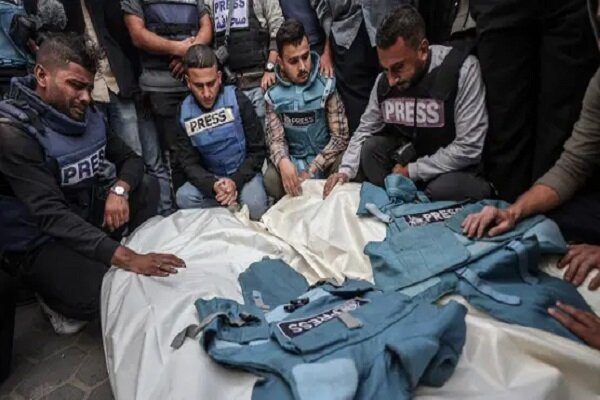
According to the International Desk of Webangah News Agency, the United Nations Educational, Scientific and Cultural Organization (UNESCO) has released a comprehensive report revealing that the number of journalists killed in the line of duty during 2024 and 2025 has increased by nearly 20 percent compared to the 2022-2023 period, totaling 189 fatalities.
Based on documentation provided by the Director-General of UNESCO regarding the safety of media workers and the persistent threat of impunity for perpetrators of crimes against them, 127 of these deaths occurred in active conflict zones. Furthermore, assessments show that 40 percent of the journalists killed in these areas were targeted by drone strikes.
Among various nations, Palestine recorded the highest toll with 62 casualties, followed by Mexico with 17 and Sudan with 14. Additionally, ongoing hostilities and armed conflicts in Ukraine resulted in the deaths of 12 media personnel during the same timeframe.
The UN agency has warned of escalating dangers facing both local and foreign journalists on the battlefield, citing incidents such as becoming caught in crossfire and facing targeted attacks even in locations far removed from front lines. Moreover, in four separate countries, 36 media workers lost their lives in temporary housing and operational work environments, while in one specific military strike, nine journalists were killed simultaneously.
UNESCO also noted that over the past two decades, it has documented 1,600 journalist fatalities, yet only 14 percent of these cases have been thoroughly investigated and resolved. Nevertheless, evaluations indicate that the proportion of unresolved cases in countries free from armed conflict has decreased from 94 percent in 2012 to 77 percent in 2026.
Khaled El-Enany, Director-General of UNESCO, emphasized that upholding press freedom is more critically important than ever. He pointed out that this freedom faces severe threats in both war-torn regions and areas devoid of active conflict, with media professionals continuing to pay an exorbitant price.


