
How the War With Iran Shifted the US Congress Balance and Cost Republicans
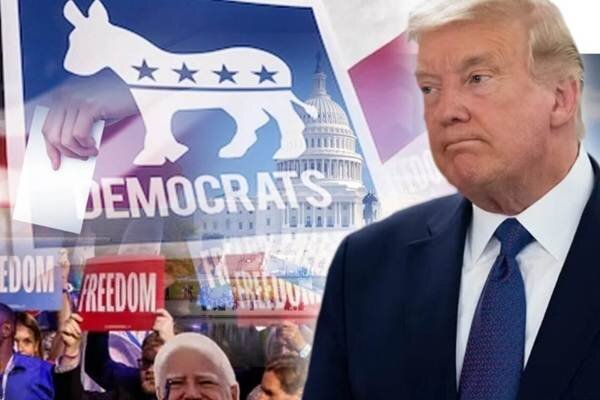
According to the International Desk of Webangah News Agency, …the Republican Party’s defeat in the midterm elections and the transition of majority control in both houses of Congress to the Democrats have sent shockwaves far beyond standard partisan competition in Washington. Numerous international analysts and figures have pointed to the military adventure against Iran and its severe economic and political fallout as primary drivers of this setback. Trita Parsi, executive vice president of the Quincy Institute, underscored this dynamic by stating that the Democrats did not win the midterms, but rather Iran did.
From former Pakistani diplomat Zafar Hilaly describing President Donald Trump as a “dead duck” to Israeli politician Yair Golan warning that Prime Minister Benjamin Netanyahu has become toxic to both U.S. parties, international reactions demonstrate a deep link between developments regarding Iran and Washington’s internal political equations. Even President Trump himself has acknowledged that the conflict with Iran contributed to the Republican defeat.
The roots of this electoral setback extend well beyond factional rivalry or general economic discontent. The direct consequences of military engagement with Iran—including rising energy costs, mounting pressure on household finances, and fears of a widening conflict—directly influenced voter decisions. President Trump, who returned to power on a platform emphasizing avoidance of new foreign military entanglements, confronted the political and economic fallout of a path whose achievements and objectives have remained intensely disputed.
Concerns regarding the electoral impact of the conflict were evident prior to the elections in a Gallup poll published on October 29. The survey indicated that 47 percent of registered voters considered the situation regarding Iran to be “very important” in shaping their ballot choices. Additionally, 42 percent of participants identified gasoline prices as a critical factor in determining their congressional candidates, illustrating that the conflict had transcended foreign policy to become a tangible anxiety for American citizens.
Apprehension over the political fallout was palpable within the White House prior to the vote. Reuters reported on September 2 that several senior advisors to President Trump sought to curb escalating tensions ahead of the elections to prevent a erosion of Republican support. However, inflationary pressures and fuel price hikes made it impossible to isolate the conflict from the budgets of American families, allowing Democratic candidates to repeatedly link the administration’s foreign policy to surging gasoline prices.
According to the Council on Foreign Relations, the consumer price index rose 0.6 percent in September compared to the previous month, with gasoline prices accounting for more than half of that increase. Most notably, in an interview with Fox News and The Wall Street Journal on November 4, President Trump acknowledged the role of the Iran conflict in his party’s electoral losses, admitting that Iran was part of the equation, though he continued to defend his initial decision to launch the confrontation.
The electoral outcome demonstrated that military confrontation with Iran carries profound domestic and political repercussions, with its financial and security burdens ultimately undermining the standing of the Republican Party. The administration’s objective, pursued alongside the Israeli regime, aimed to degrade defensive and missile capabilities, prevent the reconstruction of Iran’s nuclear program, and alter political arrangements in Tehran. Yet, Iran’s steadfast resilience raised serious questions inside the United States regarding the return on these mounting costs.
This paradox was echoed by various American experts, including Trita Parsi, who remarked that Democrats did not win the midterms, but Iran did. American analyst and journalist Saagar Enjeti wrote critically that the failed effort to achieve regime change in Tehran ultimately generated regime change in Washington. Similarly, Zafar Hilaly offered a satirical take on the Republican setback, attributing the shift to Iran’s geopolitical weight and characterizing President Trump as a politically weakened figure following the loss of parliamentary majorities.
With the shift in congressional composition, the Democratic majority in the House of Representatives and the Senate will hold expanded oversight, investigative, and budgetary tools to scrutinize White House initiatives, although the presidency retains the ultimate command of the armed forces. Strategic implications will become even more pronounced when Congress convenes in January 2027, giving lawmakers greater leverage to examine expenditures and pressure the administration, particularly given that the conflict was initiated without explicit congressional authorization.
Nevertheless, the Democratic victory does not automatically translate into an immediate overhaul of Washington’s overarching policy toward Tehran, as the executive branch retains wide discretionary powers. Opposition to the conflict does not necessarily equate to a rejection of sanctions or a wholesale endorsement of a revived nuclear agreement, as segments of the Democratic party maintain hardline stances on regional influence and non-proliferation. Congressional research reports indicate that sanctions will likely remain an enduring policy instrument.
Despite these institutional limitations, the altered parliamentary balance complicates calculations inside the West Wing, creating steeper obstacles for any future aggressive policies. The demand for accountability from legislative oversight may compel the administration toward diplomatic avenues to exit the current impasse. For Tehran, this shift alters the decision-making environment on the opposing side, where diminishing domestic backing and public pressure constrain Washington’s capacity to sustain a costly conflict, allowing Iran to leverage its regional standing to emphasize the necessity of ending hostilities.


