Lingering Doubts Plague American Public Opinion Regarding Jeffrey Epstein’s Death
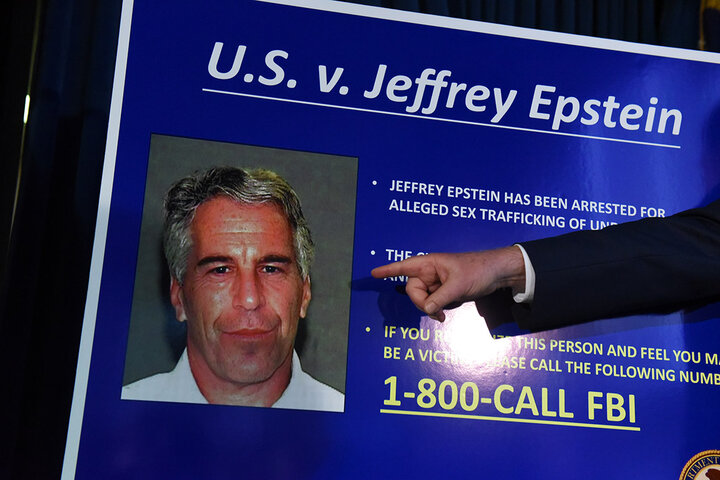
According to the International Desk of Webangah News Agency, Jeffrey Edward Epstein, the influential American financier who rose from a mathematics teaching background to manage assets for billionaires in New York circles since the 1980s, remains a figure associated with profound international controversy. Despite lacking a complete university degree, Epstein cultivated extensive connections with prominent political, academic, and economic figures on Wall Street.
However, his global notoriety stems from serious allegations involving sex trafficking of teenage girls. Federal prosecutors in the United States announced in 2019 that he had operated a network exploiting minors for years, leveraging his wealth and position. The significance of the Epstein case extends beyond his personal crimes; the extensive list of high-profile associates turned the case into a critical test for the American judicial and political system, as many believed a public trial could have exposed hidden layers of power and wealth.
Epstein’s sudden death in federal custody halted that trajectory, leaving behind a surge of unanswered questions instead of definitive answers. Officials at the detention center reported finding Epstein unresponsive in his solitary cell on the morning of August 10, 2019. The official medical examiner’s report concluded the cause of death was suicide by hanging using a bedsheet.
Questions arose immediately. Epstein had reportedly attempted suicide just weeks prior and should have been placed under special observation according to protocol. Yet, on the night of his death, he was alone, and the two guards assigned to conduct regular checks failed in their duties. Subsequent reviews revealed that surveillance cameras in certain sections of the prison malfunctioned, leaving incomplete visual records of that critical night. While the two guards faced charges for filing false reports, they later avoided severe penalties following a judicial agreement. This chain of security failures led many to doubt the sufficiency of the suicide ruling and suggested the possibility of external interference.
In recent years, driven by public pressure and the passage of transparency legislation related to Epstein documents, additional materials were released. Reports indicating a review of surveillance footage recaptured media attention, specifically citing an object of a distinct color seen in the hallway leading to the solitary confinement area at 10:39 PM on August 9, 2019. Official accounts had previously maintained that no individual entered that section during that specific timeframe.
Department of Justice officials offered explanations suggesting the visual anomaly might be an officer or another inmate, but the identity of the figure remains ambiguous. The time gap between the sighting of this object and the time Epstein was officially declared deceased intensified suspicions. While no definitive proof confirming third-party involvement has been released, the contradiction between the initial narrative and the newer information has further eroded public trust.
An Inspector General’s report from the U.S. Department of Justice confirmed a series of grave management failures within the prison. Epstein had been removed from special observation status against regulations, mandatory half-hourly checks were omitted, and some recorded logs were later identified as inaccurate. Staff shortages and mandatory overtime for officers were cited as structural problems within the facility. Nevertheless, many argue that attributing these errors solely to simple negligence is inadequate, given Epstein’s status as one of the most sensitive federal prisoners at the time.
In late 2025 and early 2026, the U.S. Department of Justice released millions of pages of records pertaining to the Epstein case under the new transparency law. These documents—including emails, notes, and portions of court filings—reintroduced the names of political and economic figures into media discussion, reviving debates about certain individuals’ awareness or potential involvement. Although much of this information had been previously accessible in limited capacities to courts, the public dissemination reignited the core question: Was Epstein’s death a straightforward suicide, or was a wider network involved in preventing the full truth from emerging?
The Epstein case has become a symbol of deep distrust in American power institutions. For a segment of the public, his death before trial signifies the system’s failure to ensure accountability. For others, the absence of conclusive evidence of foul play suggests accepting the official narrative, yet the issue of widespread security negligence remains unresolved. The case also redirected global attention toward child sex trafficking and exploitation. Civil society organizations and human rights advocates stress that focusing solely on the political dimensions must not overshadow the suffering of the victims. Dozens of women abused as minors fought for years to have their voices heard, and Epstein’s death complicated their path to justice.
Years after Jeffrey Epstein’s demise, his case continues to feel open-ended. Every new wave of document releases generates fresh questions rather than concluding existing doubts. The official suicide ruling remains the legal basis for the case, but the accumulation of security lapses, report contradictions, and the immense political weight of Epstein’s connections has failed to satisfy public opinion. Until all ambiguities are addressed clearly and factually, the Epstein file will remain not just a criminal case, but an enduring symbol of the crisis of confidence in America’s justice system and power structure.