
Iran’s Regional Influence Shifts Dynamics as Arab Nations Embrace New Understanding
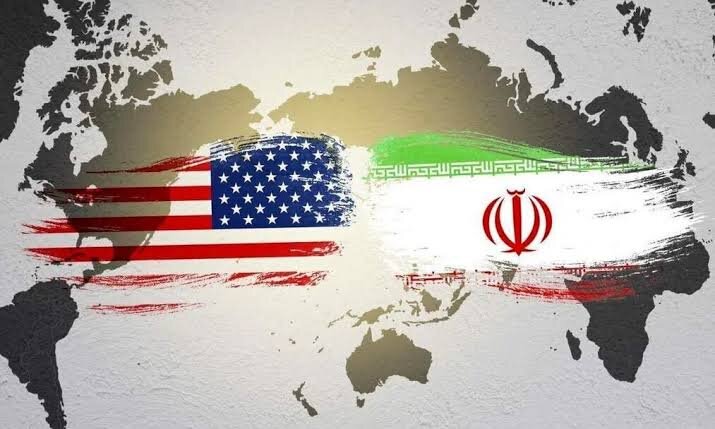
According to the International Desk of Webangah News Agency, a recently signed 14-point understanding between Iran and the United States, widely featured in international media, is more than a temporary pause in recent tensions; it represents a demonstrable shift in the balance of power within West Asia.
While the Israeli regime views this development with considerable anger and concern, numerous Arab countries in the region have expressed welcoming sentiments. This reception is not indicative of resolved disputes with Tehran, but rather a recognition that sustainable arrangements for the security of the Persian Gulf, maritime navigation in the Strait of Hormuz, energy market stability, and regional crisis management are unattainable without Iran’s active participation.
From this perspective, the Arab governments’ endorsement of the ceasefire and the Iran-U.S. understanding serves as a timely political acknowledgment of Tehran’s solidified position, rather than mere alignment with Washington. In this process, Iran has succeeded in positioning itself not as a subject of pressure and marginalization, as Israel desired, but as a principal architect of regional security and economic equations—a reality that its Arab rivals, albeit with caution, have been compelled to accept.
Several factors contribute to the positive reception by Persian Gulf Arab states toward the ceasefire and the interim agreement between the United States and Iran:
1. Divergent Arab and Israeli Calculations: Regional Security Versus Protracted Conflict
The Arab nations’ welcome of the Iran-U.S. understanding stems from a fundamental difference in their strategic calculations compared to Israel. The Israeli regime perceives this agreement as an impediment to its project of weakening Iran, as a cessation of hostilities and the initiation of a political process would constrain Tel Aviv’s ability to continue its acts of sabotage and military and security transgressions.
Conversely, Arab governments in the region, particularly those bordering the Persian Gulf, view the crisis through a different lens. For them, direct conflict between Iran and the United States poses a direct threat to their ports, refineries, shipping lanes, energy markets, foreign investment, and internal stability. Therefore, unlike the Israeli regime, which erroneously believes that continued tension and crisis can serve as a tool to contain Iran, Arab nations have realized that prolonged conflict will not only fail to sideline Iran but will plunge the entire region into a cycle of insecurity, with Arab governments bearing the brunt of the costs.
2. Hormuz: Iran’s Power Manifested as Geopolitical Reality
The Strait of Hormuz in this agreement transcends a mere technical clause on navigation; it stands as a symbol of Iran’s geopolitical power. A significant portion of global oil, gas, maritime trade, and energy security passes through a waterway where Iran possesses direct influence.
This reality has prompted Arab nations, even those that have strived to limit Tehran’s role in recent years, to adopt a positive stance toward the recent understanding. This is because the reopening of shipping lanes and the de-escalation of tensions in Hormuz are not achievable without Iran’s presence and consent. Essentially, Hormuz has underscored that Iran’s power is not confined to military or political domains but is intrinsically linked to the nexus of the global economy and regional security—a crucial point where any sustainable agreement must acknowledge Tehran’s role.
3. Acknowledging Iran’s Reality Following Failed Policies of Exclusion or Containment
In recent years, Arab countries have attempted to curtail Iran’s regional influence by relying on U.S. support, security alignment with the Israeli regime, and diplomatic pressure. However, recent developments have demonstrated the failure of policies aimed at either eliminating or completely containing Tehran. Iran has not only remained a significant player in regional dynamics but has also emerged as a key party in brokering ceasefires, ensuring the security of Hormuz, influencing the future of Lebanon, stabilizing energy markets, and facilitating negotiations with the United States during critical junctures.
In this context, the Arab embrace of the agreement should not be interpreted as full trust in Iran, but rather as a pragmatic acknowledgment of a strategic reality: without Iran, no stable security architecture can be designed for the Persian Gulf and West Asia. This marks a pivotal moment where Tehran has elevated its standing from being a subject of pressure to a decisive party in shaping regional outcomes.
4. Arab Economies and the Imperative for Peace
The ambitious economic projects spearheaded by Saudi Arabia, the UAE, Qatar, and other Arab governments are predicated on a shared assumption of “regional stability.” Saudi Arabia’s Vision 2030, Dubai and Abu Dhabi’s pivotal roles in global finance and trade, Qatar’s liquefied natural gas (LNG) exports, air routes, ports, tourism, and the attraction of foreign investment are all fundamentally incompatible with protracted warfare and maritime insecurity.
Consequently, the understanding between Iran and the U.S. represents more than just a diplomatic development for Arab nations; it serves as a form of political insurance for their economic futures. The subsequent decline in oil prices following the agreement’s announcement signaled the global market’s assessment of the deal as a risk-reduction measure and a step toward restoring economic order. In this scenario, Arab states were compelled to choose between aligning with Israel’s animosity and safeguarding their economic interests, opting for the latter by welcoming the agreement and recognizing Iran’s role in regional stability.
5. Ending the Israeli Regime’s Monopoly on Defining Regional Threats
One of the most significant implications of the recent understanding is that Arab countries have resisted fully aligning their security calculations with the perspective of the Israeli regime. Tel Aviv endeavors to portray Iran as an absolute and insurmountable threat, best countered through sustained pressure. However, Arab governments are now more aware than ever that transforming the region into a perpetual war zone is detrimental to their economic prosperity and national security.
While they may harbor concerns regarding Iran’s regional influence, these concerns do not automatically translate into an endorsement of the Israeli regime’s war-centric strategy. The Arab welcome of the agreement signals that the emerging regional order can no longer be solely shaped by Tel Aviv’s demands. Instead, it must incorporate the considerations of Arab nations, the economic needs of the Persian Gulf, and Iran’s established position.
6. Lebanon and the Axis of Resistance: Israeli Concerns, Divergent Arab Calculations
The clauses pertaining to de-escalation in Lebanon and the calming of regional fronts are particularly sensitive for the Israeli regime, which views them as constraints on its operational freedom against Hezbollah and the Axis of Resistance. However, for many Arab governments, the expansion of conflict from Lebanon to the Persian Gulf, or its transformation into a war of attrition between Iran, the United States, and Israel, represents a profound security nightmare.
From their standpoint, even if they disagree with some of Iran’s regional policies, a cessation of hostilities and Iran’s engagement in a process of understanding are preferable to the continuation of hostilities that could simultaneously destabilize Iraq, Syria, Lebanon, Yemen, and critical energy routes. Thus, the recent agreement once again demonstrates that Iran is not only a key player in the Persian Gulf but also in the Eastern Mediterranean and the security of the Levant, rendering its exclusion from any regional equation impossible.
7. The Role of Mediators: The Region’s Return to Diplomacy Centered on Iran’s Acceptance
The welcoming roles played by Qatar and Saudi Arabia, along with the engagement of Oman and other regional mediators, indicate a desire by Arab countries to move beyond the periphery of crisis and actively participate in shaping the post-conflict regional order. Crucially, this participation is framed not by Iran’s exclusion but by dialogue with Iran.
Regional mediation became feasible only when Arab parties acknowledged that Tehran must be at the center of discussions, not outside them. This development represents a strategic achievement for Iran, as the new diplomatic process positions Tehran not as an object of collective pressure, but as a principal party in understandings and the architect of regional stability. In other words, Arab diplomacy, following the recent crisis, has been compelled to embrace pragmatism—a pragmatism that acknowledges Iran’s rightful place in regional affairs.
8. Failure of Order-Building Against Iran: Acceptance of Iran’s Seat at the New Regional Table
The recent understanding between Iran and the United States underscores the impasse reached by projects designed to establish a regional order centered on the U.S., the Israeli regime, and certain Arab states, explicitly excluding Iran. Had Iran been an isolated and easily removable player, ceasefires, the Strait of Hormuz, oil, Lebanon, maritime security, and final negotiations would not have been contingent upon direct agreements with Tehran.
The reality, however, proved contrary, with the U.S. compelled to engage Iran in an understanding, a move welcomed by Arab governments who realized that excluding Tehran is neither feasible nor cost-effective. From this vantage point, the Arab welcome of the agreement signifies an acceptance of Iran’s seat at the table of the new regional order—an order that, while perhaps not yet finalized, can no longer be drafted by disregarding Iran’s power.
The principal victory for Iran in this understanding should not be sought solely within the economic, oil, or security clauses of the text. Rather, it resides at a higher strategic level: the solidification of Iran’s position as a power indispensable to resolving any major crisis in West Asia. The Israeli regime is incensed by this development as it halts the path of maximum pressure and the endeavor to eliminate Iran’s role. Arab nations, conversely, have welcomed it, recognizing that the cost of ignoring Iran outweighs the cost of engagement. Therefore, the current understanding is less a temporary ceasefire and more a harbinger of a shifting balance, where Iran has successfully compelled regional rivals and a key trans-regional player to acknowledge Tehran’s integral role in the security of the Persian Gulf, energy stability, and the region’s political future.


