
Israel’s Actions in Southern Lebanon Raise War Crime Allegations Under International Law
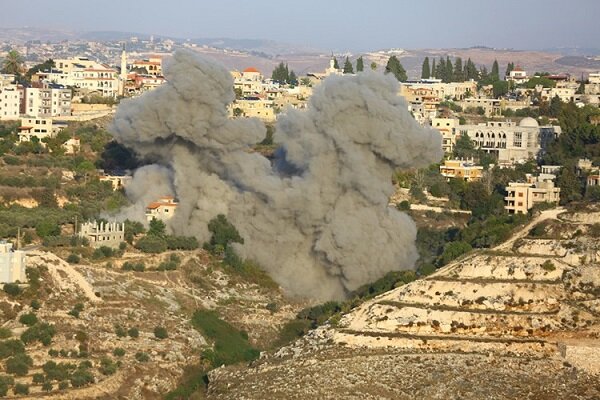
According to the International Desk of Webangah News Agency, a report by Al Mayadeen network, citing data published by the Mehr News Agency, has highlighted the Israeli army’s strategy of destroying residential areas and villages in southern Lebanon, along with essential infrastructure and livelihoods.
The report emphasizes that international humanitarian law extends beyond protecting civilian lives during wartime to encompass the safeguarding of property, ensuring inhabitants’ survival in their territories, and preserving the social and cultural bonds that constitute their collective identity.
International legal frameworks, including Article 53 of the Fourth Geneva Convention, prohibit the destruction of private or public property under military occupation, unless necessitated by imperative military requirements. Furthermore, Article 8 of the Rome Statute of the International Criminal Court defines widespread destruction of property and its appropriation without military necessity as a war crime, carrying individual criminal responsibility.
Article 7 of the same statute stipulates that the forced displacement or widespread and systematic persecution of populations can be classified as crimes against humanity.
The actions attributed to the Israeli regime in southern Lebanon are described not merely as the destruction of buildings and infrastructure but as a systematic policy aimed at the complete physical eradication of villages, preventing residents from returning, and altering the demographic and geographical realities of the region.
Israeli Minister of War, Yisrael Katz, has claimed that hundreds of thousands of Shia residents in southern Lebanon will not return to their homes. Such statements are deemed illegal under Article 2 of the Convention on the Prevention and Punishment of the Crime of Genocide.
International judicial precedents, including the proceedings of the International Criminal Court, assign significant weight to public statements made by state officials, often considering them as relevant evidence to establish criminal intent. Consequently, when large-scale destruction operations are accompanied by explicit declarations preventing the return of a specific population group or the annihilation of their foundational existence, these statements become part of the evidence used to understand the true objectives of the adopted policy and determine its legal nature in southern Lebanon.
From a legal perspective, large-scale forced displacement, prevention of return, destruction of civilian property, and the elimination of living infrastructure for a specific group, if proven to be carried out extensively or systematically against civilians, can constitute war crimes and crimes against humanity.
An examination of the Israeli regime’s actions in southern Lebanon reveals three fundamental elements: the widespread destruction of villages and civilian areas, public statements by officials regarding the non-return of Shia residents to their homes, and the targeting of Shia geographical territories in southern Lebanon. The convergence of these elements suggests that the Israeli regime’s policy extends beyond its declared security objectives.
The complete destruction of southern villages, their erasure, and the prevention of residents’ return, coupled with official declarations from Israeli leaders, strongly suggest the commission of war crimes and crimes against humanity under international law. This situation necessitates independent and comprehensive investigations into the potential occurrence of genocide, compelling the Lebanese government to review Article 13 of the Framework Agreement.


