
New Security Architecture Urgently Needed for Persian Gulf Amidst Dual Challenges
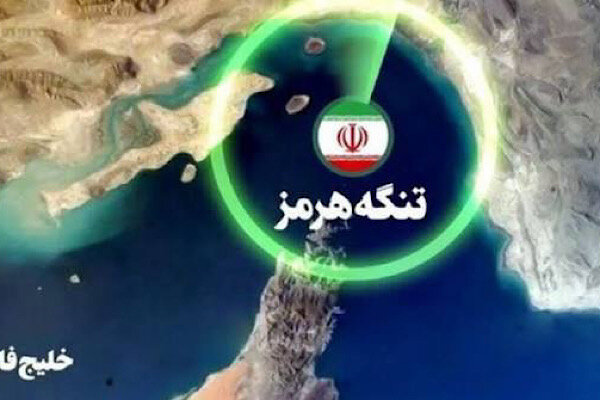
According to the International Desk of Webangah News Agency, contemporary history of the Persian Gulf reveals few periods marred by such simultaneous security crises. The confluence of Iran’s nuclear dispute, great power competition, regional Arab states’ security concerns, and the military presence of extra-regional actors has created an environment where the distance between political crisis and military confrontation has drastically diminished.
The fundamental question arises: why does the shadow of military tension in the Persian Gulf, particularly in the Strait of Hormuz, invariably intensify whenever the path of nuclear diplomacy between Iran and the West reaches an impasse? The answer extends beyond the political differences between Iran and the United States, stemming from a complex interplay of factors including strategic competition among major powers, regional actors’ security anxieties, the failure of confidence-building measures, shifting power balances, and the absence of a stable framework for dispute management.
The Strait of Hormuz transcends its status as a mere geographical waterway; it is a nexus where global energy security, regional geopolitics, and military competition converge. This maritime passage stands as one of the world’s most critical energy arteries, and any instability within it carries repercussions far beyond the Persian Gulf’s borders. However, Hormuz’s significance is not confined to oil and maritime trade; it has become symbolic of a deeper issue: how interstate competition can escalate from political pressure and deterrence to military conflict, a progression rooted in crisis escalation and the failure to manage competition effectively.
The Iranian nuclear crisis has been a pivotal security issue in the international system for the past two decades, demonstrating that even profound state disagreements can be managed through diplomacy, especially when coupled with widespread mistrust. The 2015 nuclear agreement between Iran and the P5+1 was an example of the international community’s endeavor to prioritize negotiation over confrontation. While it did not resolve all disputes between Iran and the West, it provided a relatively predictable framework for crisis control for a period.
The U.S. withdrawal from the agreement in 2018 and the subsequent return to a policy of maximum pressure significantly weakened this framework. Consequently, Tehran-Washington relations entered an phase where economic sanctions, political pressure, reciprocal actions, and military posturing became the primary tools of engagement. This dynamic fosters a dangerous cycle: political and economic pressure leads to heightened perceptions of threat, which in turn strengthens deterrent measures and military presence. The opposing side interprets these actions as threatening, increasing the likelihood of crisis escalation. This phenomenon is known in international relations as the ‘security dilemma,’ wherein a state’s efforts to enhance its own security are perceived as threatening by other states.
In such an environment, the actual behavior of actors is less critical than their perception of each other’s intentions. As Robert Jervis has shown, many international crises arise not from aggressive intent but from misperceptions, incomplete information, and differing interpretations of the other party’s actions. Major crises often begin not with a conscious decision to wage war, but through a series of reciprocal reactions that propel actors toward a state neither initially intended.
Deterrence, a central concept in international relations and security studies, is classically viewed as successful when messages are clear, red lines are defined, and communication channels are open, as articulated by Thomas Schelling. However, in environments devoid of political trust, deterrence can yield different outcomes. When one party enhances its deterrent capabilities through military development, troop deployment, or power projection, the other may interpret these actions not as defensive but as preparation for aggression. This creates a paradox: each side’s pursuit of security exacerbates the other’s sense of insecurity.
The Strait of Hormuz exemplifies this predicament. Within its confined geography, the distance between a ‘deterrent message’ and a ‘perceived threat’ is exceedingly short. Military movements, drills, political warnings, limited naval operations, or retaliatory actions all carry strategic messages, but these are not always received as intended by the sender. Consequently, the primary risk in Hormuz is not solely the military power of the parties involved, but the danger of misperception among actors operating in a low-trust, high-tension environment.
The significance of the Strait of Hormuz cannot be explained solely by the volume of energy transit; it is a confluence of several security domains, each capable of impacting regional stability. Firstly, global energy security, given that a substantial portion of world energy trade passes through this route. Secondly, the strategic rivalry between Iran and the United States, a primary architect of the region’s security order for decades. Thirdly, the security concerns of Persian Gulf Arab states, which have forged close ties with external powers for their security. Fourthly, the presence of extra-regional powers that view the Persian Gulf as integral to their broader geopolitical calculations.
According to Barry Buzan’s theory of ‘regional security complexes,’ the security of states within a region is so interconnected that their security threats cannot be analyzed in isolation. The Persian Gulf is a prime example of such a situation, where the security of Iran, regional Arab states, maritime navigation, and the interests of global powers are all enmeshed in a complex web of interdependence. Yet, the core problem lies in many actors continuing to define security through the lens of competition and power balancing, where one country’s increased security is often interpreted as another’s decreased security.
While the Persian Gulf is frequently associated with security crises today, its history is not solely one of competition and conflict. Centuries of trade, navigation, migration, cultural exchange, and economic interaction have characterized the communities on both sides of the Gulf. Historically, the region’s ports served not only as economic hubs but also as bridges connecting diverse societies and civilizations. Acknowledging this historical legacy does not negate today’s political realities; regional states possess differing interests, security concerns, and perceptions of threat. Nevertheless, historical experience suggests the Persian Gulf has potential beyond purely security-driven dynamics, capable of transitioning from perpetual competition to a form of ‘competition management.’
A fundamental issue plaguing the Persian Gulf is the absence of a comprehensive and universally accepted security architecture. The current security model has largely rested on three pillars: the presence of foreign powers, military deterrence, and a balance of power among regional actors. While this model has, at times, prevented large-scale wars, it has failed to address the core problem of a lack of sustained trust. This architecture suffers from at least three significant weaknesses: First, an over-reliance on external actors, with regional security being predominantly provided from outside rather than built by regional states themselves. Second, a lack of indigenous crisis management mechanisms; in critical situations, the absence of direct and stable communication channels between actors heightens the risk of misperception and miscalculation. Third, the dominance of a zero-sum logic, where the security of one state is often defined by the insecurity of another, leading to perpetual competition rather than security cooperation.
The reality is that differences between Iran, the United States, and regional countries will not disappear in the short term. Therefore, a realistic objective is not to eliminate competition, but to establish mechanisms for its management. Crisis management in the Persian Gulf must be pursued on three levels: First, crisis prevention through establishing communication channels, increasing military transparency, and reducing misperceptions. Second, crisis control, which involves preventing limited incidents or miscalculations from escalating into widespread confrontation. Third, addressing the root causes of crises by reducing mistrust, fostering regional dialogue, and defining common interests among actors. Sustainable security in the Persian Gulf requires a multi-layered framework encompassing political dialogue, military confidence-building, maritime security, economic cooperation, and dispute management.
In this context, nuclear diplomacy cannot be viewed in isolation from the regional security environment. Iran’s nuclear issue is not merely a technical matter but an integral part of the broader competition over the region’s security order. Consequently, any lasting solution must address not only nuclear concerns but also the security anxieties of other actors. Neglecting any of these dimensions risks paving the way for the return of crisis.
The Strait of Hormuz stands at a historical crossroads. One path leads to a cycle where mistrust, pressure, power displays, and reciprocal actions continuously generate new crises. Along this route, every measure taken to enhance one party’s security can be perceived as a threat by another, reactivating the cycle of escalating tensions. The alternative path involves moving towards an order where competitions are managed, and political disagreements do not devolve into military confrontations. Sustainable security in the Persian Gulf will not be achieved by eliminating an actor, perpetual pressure, or the unchecked presence of foreign powers. Security will be stable only when regional and extra-regional actors acknowledge that in a highly interconnected environment, no country’s security can be built solely upon the insecurity of others.
The central issue for Hormuz is not which side will prevail in a short-term competition; the fundamental question is whether regional and global actors can establish mechanisms to prevent war before political crises ignite into conflict. The future of the Persian Gulf depends less on the number of naval vessels, the volume of armaments, or the intensity of economic pressures, and more on the actors’ ability to construct common rules, manage competition, and foster a minimal level of trust. Hormuz can remain a symbol of confrontation and crisis escalation, or it can become the starting point for a dialogue that grounds regional security not on elimination and threat, but on the management of differences and mutual acknowledgment of interests.


