
Icelandic Voters Reject Resuming EU Membership Talks in Referendum
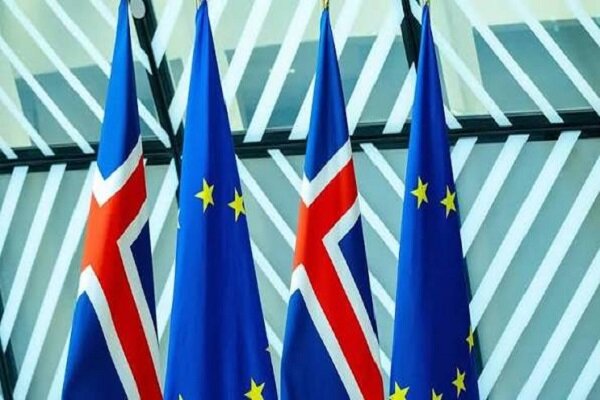
According to the International Desk of Webangah News Agency, Icelandic citizens have narrowly voted against resuming membership negotiations with the European Union, a decision seen as a setback for Brussels’ ambitions to integrate a wealthy and strategically located member in Northern Europe.
The Icelandic public has rejected the resumption of negotiations for their country’s accession to the European Union in a referendum, with a narrow margin. Data published by the Mehr News Agency indicates that the opponents of resuming membership talks have prevailed.
With almost all votes counted, 52.5 percent of voters opposed resuming negotiations, while 47.5 percent were in favor. A very small number of votes remained in one of the six electoral districts, a district whose results also favored the opponents, making the possibility of the final result changing extremely slim.
The Icelandic government had described the vote as a decisive opportunity to determine the country’s future path regarding the European Union prior to the referendum. Katrín Jakobsdóttir, the Prime Minister of Iceland, who had supported the ‘yes’ option in the weeks leading up to the vote, expressed hope after the results that the referendum would not lead to societal division.
She stated that many people, particularly in rural areas, are concerned about the implications of EU membership for agriculture, fisheries, and natural resources, and that the government would consider these concerns in any potential negotiations.
Supporters of resuming negotiations argued that closer ties with the European Union could help reduce high interest rates and improve economic conditions, while also providing greater security for Iceland amidst increasing geopolitical instability. They cited the war in Ukraine and the stances of U.S. President Donald Trump regarding Greenland as factors.
Conversely, opponents warned that EU membership could undermine Iceland’s national sovereignty and its control over fishing waters. Issues related to agriculture and fisheries hold significant economic and identity importance for the country, and a considerable portion of the opposition stemmed from these concerns.
Iceland first applied for EU membership in 2009, following a financial crisis that had put the country’s economy under pressure. Negotiations were halted in 2013 under a government that opposed the European Union. Recent geopolitical developments, from conflicts in the Middle East to U.S. import tariffs, had once again made the discussion of EU membership a significant political issue in Iceland.
The referendum was held at a time when the European Union hoped to add a wealthy and strategically positioned member in the Arctic region; however, the referendum’s outcome indicates that the Icelandic people are currently not prepared to resume the membership negotiation process. The outcome is a blow to Brussels’ efforts to attract a wealthy and strategic member in Northern Europe.


