Libya Agreement Paves Way for Elections in Two Years
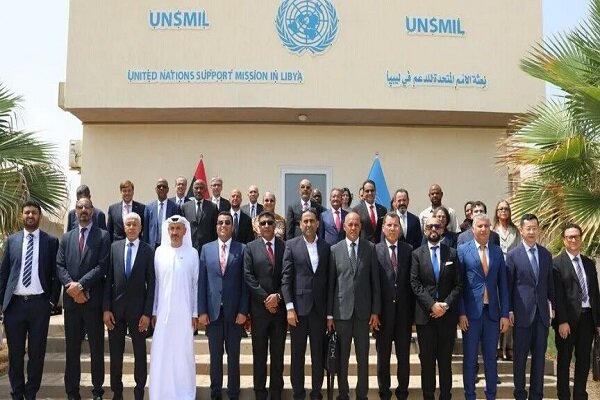
According to the International Desk of Webangah News Agency, a landmark agreement has been finalized in Libya, marking a crucial step towards national elections within the coming two years. The accord, signed at the headquarters of the United Nations Support Mission in Libya (UNSMIL), is the culmination of four months of deliberations and seven rounds of talks that commenced in Rome and concluded in Tunis. The “4+4” limited dialogue committee, comprising four representatives from the Government of National Unity and four from the General Command of the Eastern Libyan forces, engaged in intensive negotiations with UN mediation since April 2026 to achieve this agreement.
Hanna Tetteh, the Special Envoy of the United Nations to Libya, stated during the signing ceremony that the agreement is a significant step forward. She emphasized that the primary focus now is on implementing its provisions within the designated timeframe. The European Union delegation welcomed the agreement, recognizing it as an effective measure towards the “integration of state institutions” and commending the political commitment demonstrated by the Libyan parties.
In response to the accord, Abdul Hamid Dbeibeh, the Prime Minister of the Government of National Unity, hailed the development as a stride towards ending transitional periods and returning power to the will of the people. Similarly, Khalifa Haftar, the Commander-in-Chief of the Eastern Libyan forces, expressed his satisfaction with the negotiation outcomes, noting that the agreement will assist in resolving long-standing issues that have hindered the realization of the Libyan people’s desire for elections.
Libya has been experiencing a deep political divide between its eastern and western regions since 2014. This new agreement is a component of the UN’s roadmap, designed to resolve the crisis between the two rival administrations—the Dbeibeh government in the west and the Osama Hamad government in the east—and to achieve lasting stability, a goal pursued since the fall of Muammar Gaddafi’s regime in 2011.