Russian Publication: Naval Clash With Iran Exposes US Navy Weaknesses
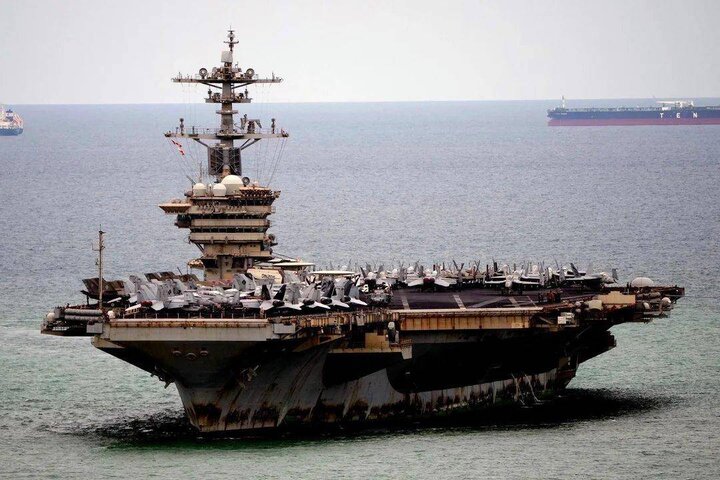
According to the International Desk of Webangah News Agency, a Russian author and analyst named Alexander Timokhin, writing for the Russian publication Vzglyad, stated that the American aircraft carrier USS Abraham Lincoln docked in Pattaya, Thailand, on Wednesday, September 2nd, after an eight-month mission, visibly covered in rust. This marked the first time the vessel had anchored since its extended deployment.
The carrier’s mission reportedly became a significant embarrassment for the United States due to reports of crew problems, including hunger, severe psychological stress, and even suicide attempts.
The article posits that the core of these issues lies in the failure of U.S. naval strategy. It suggests America lacks a clear understanding of how to employ its fleet in future large-scale conflicts and struggles to define the fleet’s exact nature, consequently hindering its ability to plan for future development.
Timokhin noted that extensive discussions about the future of the U.S. Navy have yielded no clear vision. He referenced Admiral Arthur Cebrowski, a proponent of “network-centric warfare,” who stated, “If you do not build your own future, you will become a victim of the future that is built for you.” The U.S. Navy, according to Timokhin, is currently experiencing precisely this predicament. He argued that confrontations with Iran, which have similarly strained the U.S. Navy as in previous conflicts, have brought these internal issues to the forefront of media attention and parliamentary scrutiny.
The Russian author observed that blaming rivals is unproductive and that the emergence of these problems in the United States paves the way for change. He indicated that a fierce power struggle is underway, with figures from the Democratic Party amplifying the incidents involving the USS Lincoln. Pressure on President Trump, he suggested, could intensify these difficulties, even though such problems also existed during previous Democratic administrations. Ultimately, Timokhin concluded, the situation within American society points to a high probability of change that could manifest through various avenues.