Israel Plans ‘Grey Line’ Strategy for Reduced Southern Lebanon Occupation
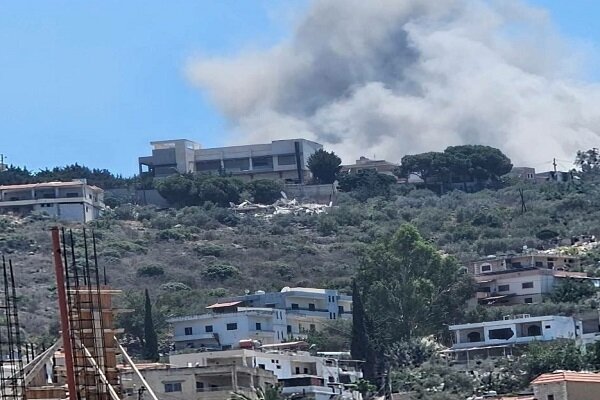
According to the International Desk of Webangah News Agency, Al-Mayadeen news outlet has reported on a new Israeli strategy in southern Lebanon, referred to as the ‘Grey Line.’ This initiative is part of a broader operational approach by the Israeli regime, which claims to have “operational control” over the Al-Taher heights. This strategically positioned hill, approximately 600 meters high and about 15 kilometers from the border, overlooks the region and connects southern sites to the ‘Tuffah’ area.
While the Israeli army asserts that it has cleared Hezbollah tunnels beneath the hill, a Lebanese military official stated that Israeli forces control the southern entrances and are monitoring the northern sector via drones. However, the extent of their penetration into the tunnel network remains unclear.
Concurrently, Israeli attacks have intensified across occupied areas in southern Lebanon. In recent days, Israeli forces destroyed the ‘Ghandour’ hospital in Nabatieh Fawqa and damaged the Ministry of Finance building, civilian facilities, and homes. The official Lebanese news agency reported that on September 7, eleven individuals, including two children and two paramedics, were killed in Kfar Remman, located in the Nabatieh region.
These developments occur as an Israeli media agency, citing security officials, reported that Tel Aviv is considering reducing its current occupied zone to a strip 3 to 4 kilometers deep. This move aligns with the ‘Grey Line’ plan, which involves new military construction within the area, though it has yet to receive approval from Tel Aviv’s political leadership.
Southern Lebanon Navigates Three Illusory Lines
Following recent discussions about the ‘Grey Line,’ it can be inferred that southern Lebanon is currently subject to three distinct lines, each with fundamentally different implications:
The first is the ‘Blue Line,’ demarcated by the United Nations in 2000 to confirm Israel’s withdrawal. While not a final international border, it serves as the operational reference for the UN between Lebanon and Israel.
The second is the ‘Yellow Line,’ declared by the Israeli army during the current conflict. In April, a map was released outlining a security zone extending ten kilometers deep with approximately twenty new military sites. This reflects Israel’s security doctrine, which posits that ‘Israel’s security borders’ expand to wherever its soldiers can reach.
The third is the ‘Grey Line.’ This is not yet an official line but rather an Israeli project aimed at reducing the depth of occupation in Lebanon. However, a reduction in occupied territory does not necessarily equate to a diminished scope of influence. Tel Aviv seeks to maintain oversight and fire control over wider areas by controlling heights like ‘Al-Taher’ and utilizing fortified sites and drones for reconnaissance and air superiority, even while occupying a smaller land strip.
Tel Aviv’s current conduct in southern Lebanon is reminiscent of the ‘security belt’ model that concluded in 2000. The old security belt relied on the deployment of Antoine Lahd’s mercenary forces, whereas the potential new belt might depend on fewer personnel, more fortified sites, and expanded air and fire control.
Despite the ongoing Israeli occupation, UN Security Council Resolution 2790 emphasizes the ‘Blue Line,’ urging Tel Aviv to withdraw its forces from north of it and dismantle buffer zones within Lebanese territory. Additionally, the ‘UNIFIL’ forces deployed in Lebanon have deemed the Israeli occupation and the establishment of buffer zones a violation of Resolution 1701. Consequently, any transition from the ‘Yellow Line’ to the ‘Grey Line’ will not be considered a legal ‘withdrawal’ unless it culminates in a return to the ‘Blue Line.’
U.S. Role in Implementing Israel’s ‘Grey Line’ Plan
Meanwhile, the United States has adopted a complex diplomatic approach in navigating the current circumstances. The framework agreement reached on June 26 links the “restoration of the Lebanese army’s authority and the disarmament of non-state groups” with “Israel’s gradual withdrawal from Lebanese territories.” During the Rome talks in July, an agreement was reached on a structure for “pilot areas” where the Lebanese army would be deployed concurrently with Israeli forces’ withdrawal. However, the first trial in the Western Zawtar region highlighted the model’s difficulties, revealing challenges such as gunfire near Lebanese army units, extensive village destruction, disputes over disarmament verification, and the absence of a comprehensive withdrawal timeline.
Al-Mayadeen concluded by stating that the transition to the ‘Grey Line’ plan might indeed signify a tangible reduction in the occupied area in Lebanon. However, if this situation becomes established within Lebanese territory, it will create a different paradigm based on reduced physical presence on the ground and increased remote control.