Europe Faces Winter Gas Shortages Amidst Declining Reserves and Rising Prices
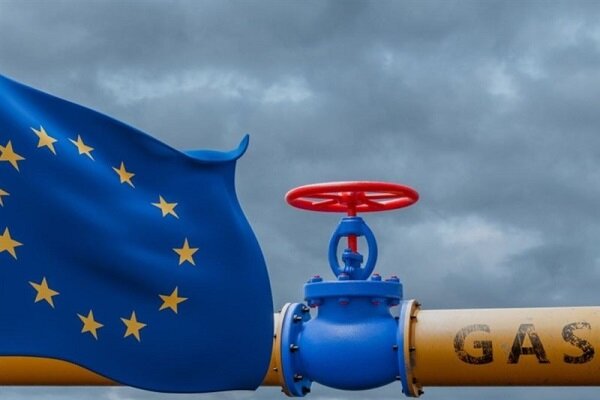
According to the International Desk of Webangah News Agency, Europe is heading into winter with gas reserves below typical levels, while reduced liquefied natural gas (LNG) arrivals from the Persian Gulf are intensifying market pressure. European gas prices reached a more than three-and-a-half-year high on September 8. Qatar, a major global LNG exporter, has suspended shipments to Europe and Asia until autumn due to extraordinary circumstances stemming from the ongoing conflict, impacting a substantial portion of its export capacity.
Data from Gas Infrastructure Europe indicates that as of September 14, EU gas reserves were approximately 68% full, equivalent to 772 terawatt-hours. This figure falls short of the customary 90% target typically achieved before winter.
Regarding prices and reserves, Bill Farrenprice, a researcher at the Oxford Institute for Energy Studies, noted that gas prices have now hit their highest point since the beginning of the current crisis, although they remain below the peak levels seen in 2022. Elisa Pascu, a senior European gas analyst, cautioned that the quantity of stored gas is not the sole concern; Europe’s capacity for rapid gas withdrawal during periods of peak demand is also crucial. She stated that Europe is prepared for a normal winter but lacks sufficient safety margins for an exceptionally cold one.
Estimates from the firm Energy Aspects suggest that European reserves could reach approximately 75 billion cubic meters, or 69% of capacity, by the end of October. This would be the lowest level recorded in roughly 14 years. The firm considers reserves between 88 and 90 billion cubic meters by early November to be relatively secure but deems achieving this level unlikely under current conditions. The consultancy Wood Mackenzie forecasts that European gas reserves could drop below 70% if the Strait of Hormuz remains closed for an additional two months. Goldman Sachs estimates that European gas prices could exceed 100 euros per megawatt-hour in December to ensure adequate supply.
However, experts emphasize that their primary scenario does not involve Europe running out of gas, and the market can stabilize through price adjustments and reduced consumption.
Among the countries lagging in their storage programs are Germany, France, the Netherlands, and Slovakia. As of September 14, Germany’s reserves stood at 55.8%, the Netherlands at 52.5%, France at 76.7%, and Slovakia at 52.4%. Germany, as Europe’s largest gas market, is considered the most vulnerable, and a depletion of its reserves could impact neighboring countries. The United Kingdom also faces increased vulnerability due to its limited seasonal storage capacity and reliance on Norwegian gas and LNG during peak demand periods.
Experts predict that severe cold spells, further reductions in reserves, and additional disruptions to LNG or pipeline gas supplies could lead to significant shortages in Europe. Conversely, a mild winter could alleviate some of the pressure. The European Commission has asserted that current conditions do not signify an immediate gas supply crisis, and the European Union is better prepared than during the energy crises of 2021 and 2022, partly due to a more diversified range of sources and increased LNG import capacity.
According to Farrenprice, the reopening of the Strait of Hormuz is one of the most significant factors that could reduce pressure on the European gas market and prices.